


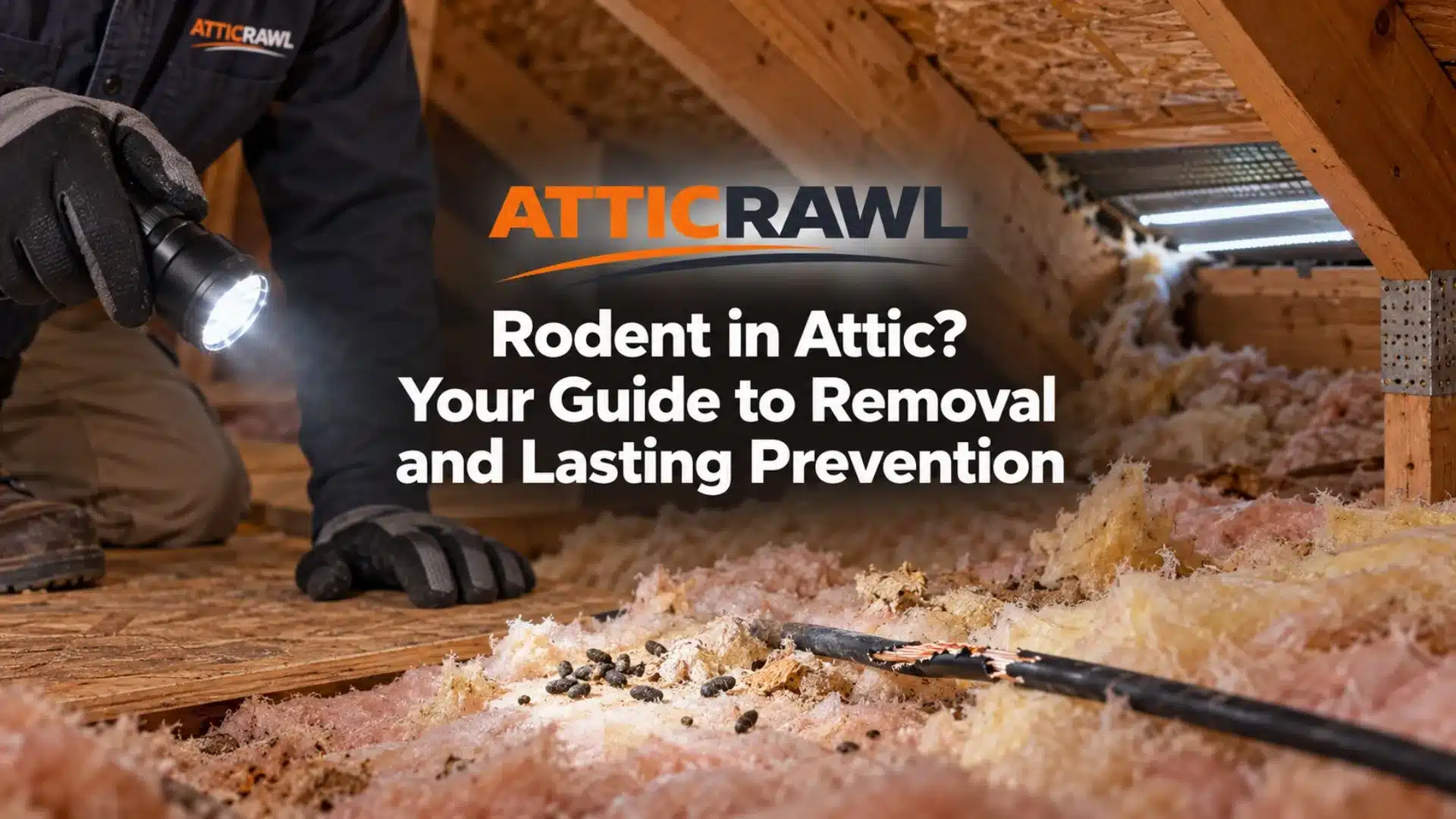
Scratching above the bedroom ceiling or an unfamiliar smell near the attic hatch can quickly become a worry. You might wonder whether there’s a rodent in my attic and what to do next.
A rodent in attic storage or insulation needs a response that fits the animal involved. So today, we’ll help you recognize the evidence, decide which removal steps are appropriate, and understand what keeps the problem from coming back.
How Can You Tell Which Animal Is in Your Attic?
You can narrow down the animal in the attic through activity timing, sounds, droppings, and nesting evidence. These clues become more useful when you consider them together.
Here are the main differences:
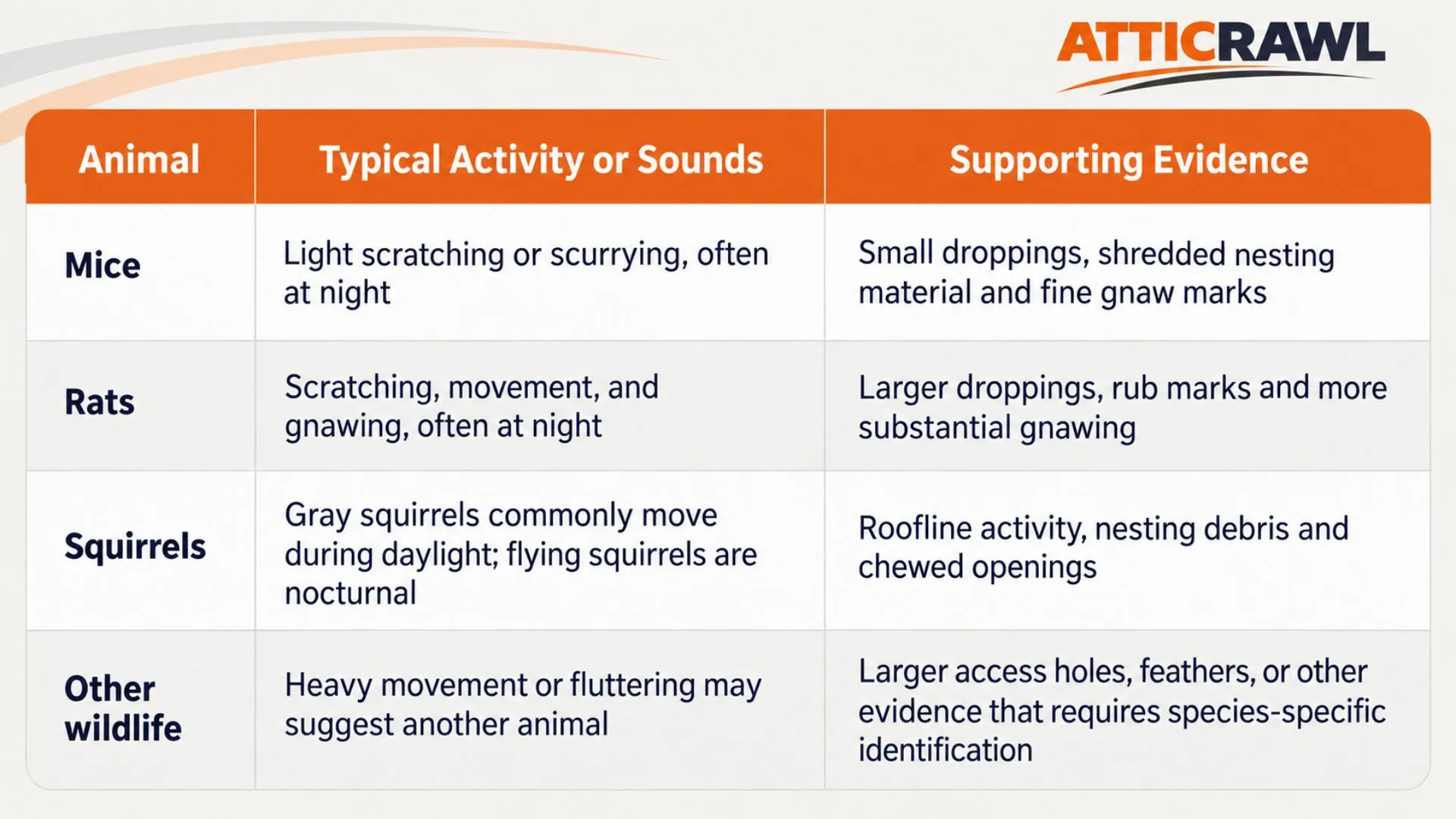
So, do you suspect a rodent in the attic at night? Mice and rats are possibilities, but flying squirrels can also be active after dark. Sound alone cannot confirm the species or tell you how many animals are present. Our guide to common causes of scratching noises in the attic explains those distinctions.
Rodent activity in attic storage areas may leave evidence behind boxes or beside framing. However, rodent droppings in attic corners could remain from an older infestation. Existing gnaw marks have the same limitation, so we recommend documenting what you can see safely and checking for changes.
Attics are a recognized trouble spot. In a September 2022 NPMA/Harris Poll survey of more than 2,000 U.S. adults, 17% of homeowners who had encountered rodents reported finding them there. That figure describes homeowners with previous rodent encounters.
What to Do About a Rodent in Attic Spaces
Effective rodent control in attic spaces requires a plan for the animals, their access routes, and any damage left behind. The appropriate response depends on what the inspection reveals.
How Do Rodents Get in Attic Spaces?
Rodents enter through damaged soffits, fascia gaps, unscreened vents, and openings around utility lines. Some reach these openings from nearby branches, while others find access lower down the house.
Once inside, rodents can travel through connected wall cavities and emerge upstairs. That explains why rodents in the attic and walls may belong to the same infestation, even when you hear movement on different floors. According to the CDC, mice can squeeze through an opening about ¼ inch wide, roughly the width of a pencil.
Openings provide access, while shelter and nearby food or water help sustain activity. We recommend checking reachable areas from the ground or another secure position. Use a flashlight where necessary, but leave roof inspections and inaccessible areas to professionals. Never step onto unsupported attic surfaces to investigate a suspected opening.
How to Get Rid of Rodents in Attic and Walls
Remove attic rodents through species-appropriate control, coordinated exclusion, and follow-up checks. Before you buy equipment, establish what animal is present and whether you can reach the affected area safely.
Use this rodent in the attic removal checklist to plan the work:
- Check whether access is safe. Unstable footing, damaged wiring, inaccessible wall cavities, or extensive contamination call for professional assistance. Avoid cutting into walls or pouring chemicals into cavities to chase an animal out.
- Match the method to the animal. Animal in the attic removal methods vary by species. Mouse and rat trapping differs from squirrel exclusion, and dependent young need professional assessment. Read how to remove squirrels from an attic safely if the evidence points to squirrels.
- Choose suitable traps for mice and rats. Use correctly sized snap traps according to their instructions, along confirmed travel routes. Keep them inaccessible to children and pets. The CDC advises against glue and live traps for household mouse and rat control.
- Coordinate removal with exclusion. Closing an active wildlife opening without a removal plan can trap animals inside. The sequence should account for the species and any young present, so avoid assuming that every opening should be closed immediately.
- Check the result. Inspect traps regularly and record fresh evidence. Continued activity means the control plan needs reassessment.
We also advise caution with poison. Indiscriminate use can expose children, pets, and other animals, and a poisoned rodent may die somewhere you cannot reach.
Assess Contamination and Repair the Damage
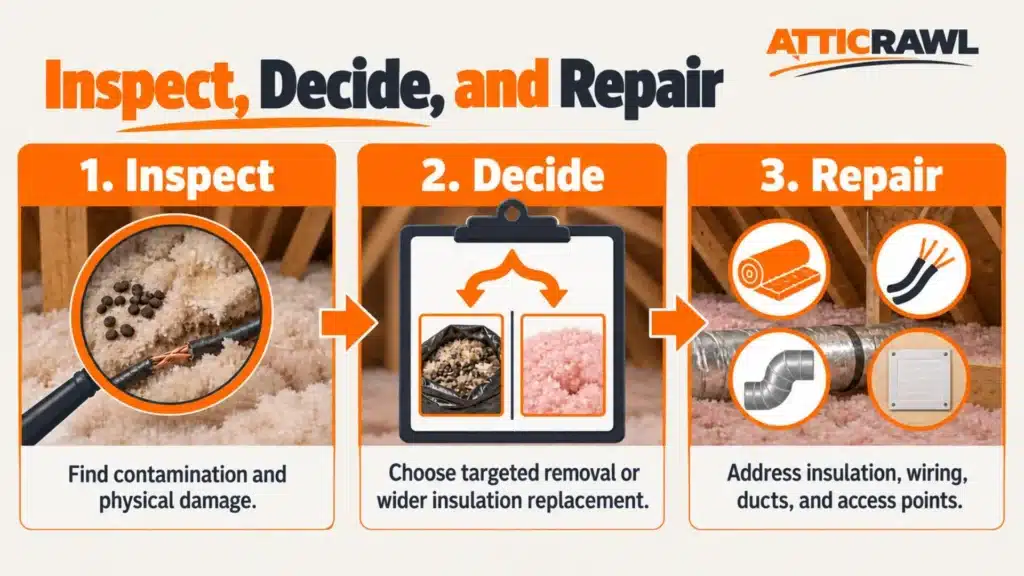
After removal, the attic may still contain urine, feces, nesting material, and persistent odors. A rodent attic clean-up should address the affected materials and surfaces before the space returns to normal use.
Rodents in attic insulation can leave it torn, compressed, or contaminated. But finding one dropping does not automatically justify replacing everything. We recommend an inspection that establishes how far contamination extends and whether targeted removal is practical.
Pro tip: Our other guide explains when pest-damaged attic insulation needs replacement and what should inform that decision.
Other rodent-in-attic problems involve chewed wiring or damaged ducts. A qualified electrician should assess affected wiring, while an appropriate contractor should inspect duct damage and determine the necessary repairs. These issues deserve attention even if the noises have stopped.
Ask for the findings to be documented so you understand which areas need work and why. That also makes it easier to compare repair proposals. Extensive contamination or waste in hard-to-reach spaces warrants professional assistance.
Prevent Another Infestation
Exclusion work needs occasional attention because a house changes over time. Weather damage or later repairs can create a new opening after the original problem has been resolved.
Here are the maintenance priorities:
- Repair vulnerable openings. Use durable, gnaw-resistant materials suited to the gap, such as appropriately fitted metal mesh or flashing. Exposed foam alone should never be treated as a complete barrier.
- Protect ventilation openings. Suitable guards or screening can restrict access while preserving airflow. Avoid covering vents with solid material or obstructing the attic’s ventilation path.
- Reduce roof access. Address branches that provide a direct route to the house. Arrange professional tree work where height, power lines, or heavy limbs make the job unsafe.
- Manage food and shelter. Secure pet food, birdseed, and trash in sturdy containers. Reduce unnecessary storage clutter so potential nesting areas are easier to inspect.
- Reinspect after changes. Check vulnerable areas after storms, roof repairs, or utility installations. Deal with fresh damage before it develops into an established access route.
A rodent-proof attic depends on sound repairs and continued maintenance. The CDC’s prevention guidance supports this combined approach to exclusion, food control, and shelter reduction.
Who to Call for Rodents in Attic Spaces?
Atticrawl helps homeowners in New Jersey and Eastern Pennsylvania with attic inspections, rodent removal, and proofing. Our professional rodent proofing and removal service starts with an assessment of the animals, entry points, and conditions involved.
Our animal in attic removal recommendations reflect what that inspection reveals. Depending on the findings, the work may involve removal, contamination cleanup, and access-point sealing that preserves appropriate ventilation. Affected insulation may also need attention, and we can explain whether additional removal or replacement work is appropriate.
That assessment gives you a clearer basis for deciding what your attic needs. The scope depends on its condition, so services should be confirmed in your estimate.
Contact Atticrawl to arrange a home visit and request a free estimate.
Make the Next Step Count
A rodent in attic spaces deserves an informed response. Start with the evidence you can observe safely, and let that guide your next decision. If activity continues or you cannot reach the affected area without risk, arrange an assessment promptly rather than leave the problem unresolved.
FAQs
How Can You Safely Clean Rodent Droppings Without Getting Sick?
Reduce exposure through wet disinfection, gloves, and handwashing. CDC guidance recommends 30 minutes of ventilation, so leave during that time. Soak waste for five minutes or the label’s specified time, then wipe up, discard, and disinfect surfaces. Never dry-sweep or vacuum droppings.
How Much Does Professional Attic Rodent Removal Cost?
Professional attic rodent removal typically costs about $232 to $807, with a national average near $433. Your final rodent in attic removal cost may rise if the job includes exclusion, attic cleanup, contaminated insulation removal, or repairs to wiring, ducts, and entry points.
Will Rodents Leave the Attic on Their Own?
Rodents may leave temporarily to forage, but homeowners should never rely on them abandoning an established shelter. A quiet evening does not confirm that the space is empty. We recommend checking for continued activity before assuming the problem has resolved itself.
How Long Does It Take to Get Rid of Attic Rodents?
Timing varies with species, access, and infestation size. For mice and rats, the CDC recommends continuing trapping until one full week passes without captures or new signs. That is a monitoring benchmark. Insulation replacement and other restoration work can require additional time.



Recent Comments