


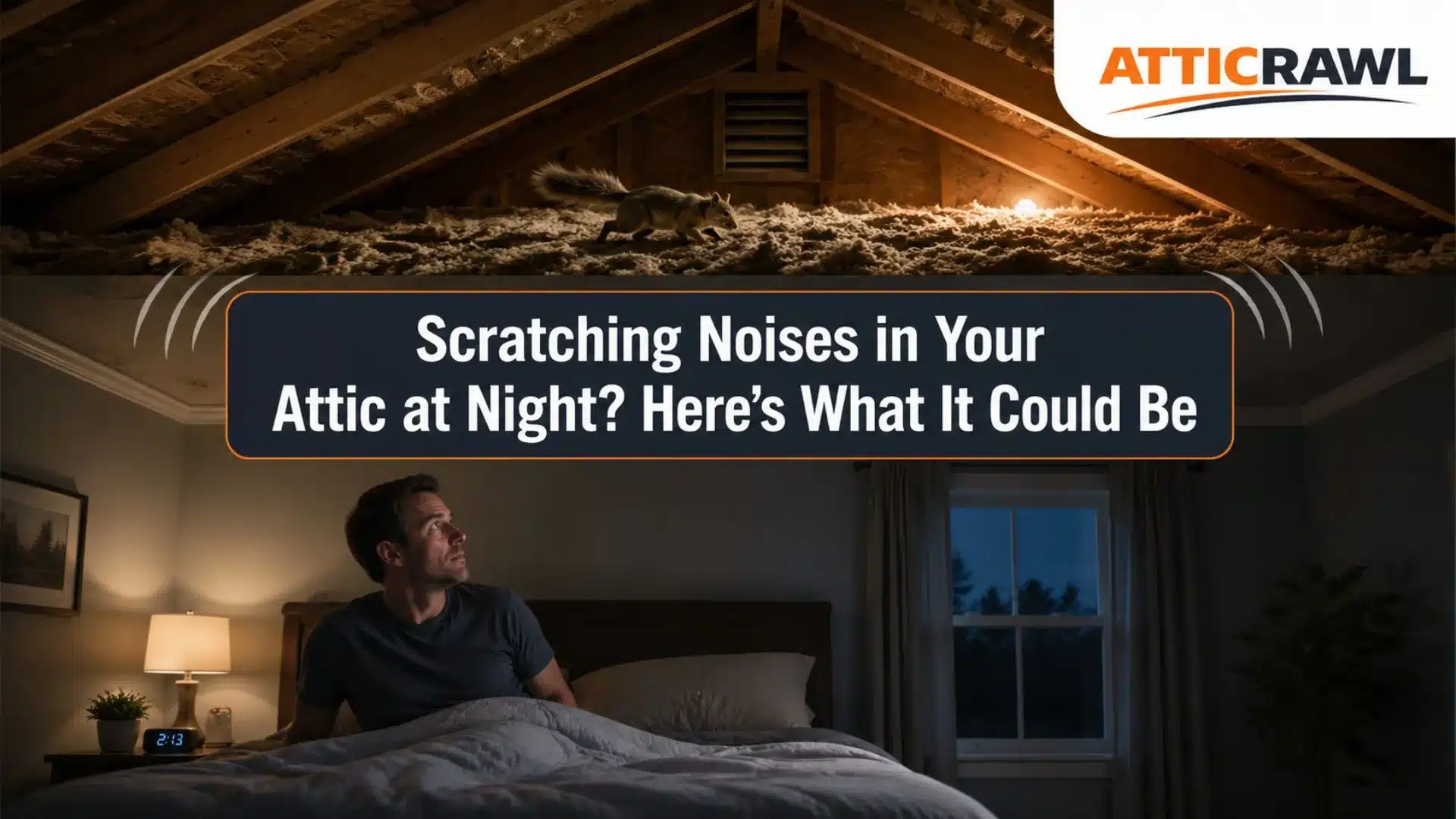
After the house becomes quiet, movement above the ceiling can feel much louder and more worrying. Squirrels may be responsible, although mice, rats, raccoons, bats, birds, and even parts of the house can create similar sounds.
When we hear scratching noises in attic spaces, we can narrow the source by comparing the timing, sound pattern, location, and visible evidence before we decide what to do next. And in this guide, we’ll explain what those clues mean, which signs to check, and when to call a professional.
What Usually Causes Scratching Noises in the Attic at Night?
The most common causes are mice, rats, and flying squirrels, as well as raccoons, bats, and birds.
Faint scratching noises at night usually point toward small rodents or flying squirrels, while slower footsteps and heavier thumps may suggest a raccoon. Fluttering and chirping can come from bats or birds near a vent or chimney.
But ordinary gray squirrels are mainly active during daylight, so repeated movement in the middle of the night makes them a less likely match.
Match the Sound, Time, and Location to the Likely Cause
Sound can sometimes mislead, but timing can always help. So, here are the patterns you should remember:
| Sound | Most common timing | Likely cause | Where it may be heard | Next clue to check |
| Light scratching or quick scurrying | Night | Mice, rats, or flying squirrels | Attic floor or wall cavities | Droppings and small entry gaps |
| Chewing or gnawing | Night or early morning | Rodents or squirrels | Rafters, vents, or wall voids | Gnaw marks and damaged materials |
| Heavy footsteps or thumping | Night | Raccoon | Open attic areas or soffits | Large opening and strong odor |
| Rolling or dragging | Morning or afternoon | Gray squirrel | Attic floor | Nuts and nesting material; chewed vents |
| Fluttering or chirping | Dusk, dawn, or daytime | Bats or birds | Vents, chimney, or roofline | Guano or feathers; visible flight activity |
| Ticking/ popping/ tapping | Predictable intervals | HVAC, pipes, roof materials, or house movement | Near ducts, pipes, or roof framing | Connection with weather or system use |
What Could Be Making the Noise?
The source could be a squirrel, rodent, raccoon, bat, bird, or part of the house. Timing narrows the list, while movement and nearby evidence help confirm it.
Here are the likely explanations.
Squirrels
Squirrels can follow two very different attic activity patterns. Gray and flying squirrels may use similar entry areas, yet their schedules differ.
Gray Squirrels
Gray squirrels make louder sounds as they run, chew, move stored food, or build nests during the morning and late afternoon. They are mainly active in daylight, so regular movement in the middle of the night is less characteristic. Nearby branches, damaged vents, soffit gaps, and roofline openings provide useful clues.
Flying Squirrels
Flying squirrels are nocturnal and may create quick, light movement that resembles mice. From our experience, we may hear scurrying across rafters, soft scratching near roof openings, or short bursts after dark. University of Nebraska guidance reports that their colonies may contain as many as 40 squirrels, so the activity can seem widespread.
Mice and Rats
Mice and rats create faint scratches, short runs, and repeated gnawing after dark. But keep in mind that insulation can change how loud they sound, which makes size hard to judge.
They are most active at night and can enter through a ¼-inch opening, about the diameter of a pencil. So, look for droppings, grease marks, nest material, utility gaps, and gnaw marks.
Raccoons
Raccoons usually sound heavier than rodents or squirrels. You may hear slow footsteps and dragging sounds as well as loud thumps, repeated scratches, or calls from young animals.
They can enter through an opening about 3.5 inches in diameter. Damaged soffits, roof edges, vents, and larger gaps may reveal the access point.
If you need to learn more about Raccoon management, make sure to check out this video:
Bats and Birds
Bats may scratch softly around dusk and before dawn. They may also rustle, flutter, or chirp. Birds are more likely to flutter, tap, or chirp during the day near chimneys, vents, and roof edges. Our advice to you is to avoid disturbing a suspected bat roost or sealing its opening before a professional identifies what is inside.
To learn more about this, feel free to check out this YouTube video as well:
Non-Animal Causes
Wildlife is one possible source. Wood or metal may pop as temperatures change, and loose roof materials can tap in the wind. Branches can scrape the roof, while pipes and HVAC ducts, as well as ceiling fans and normal house movement, can create similar sounds.
We recommend checking whether the noise follows weather and heating cycles, water use, or fan operation.
Pro tip: Nighttime attic activity can leave insulation compressed or contaminated. Check out our guide to knowing when insulation needs replacement.
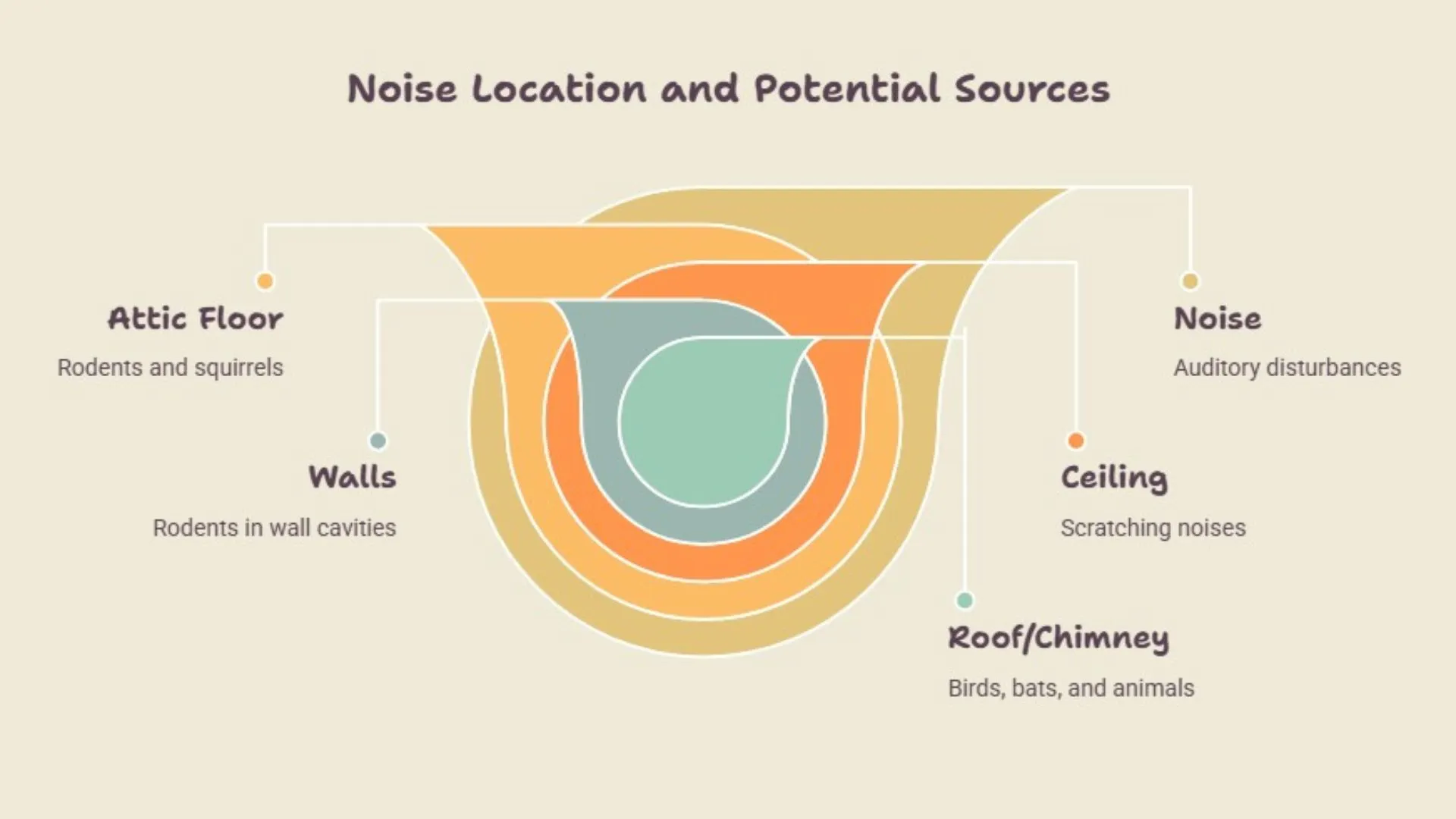
Does the Location of the Noise Help Identify It?
Yes, location shows whether the activity is inside or on the roof. So, here are the main areas:
- Across the attic floor: Rodents, squirrels, or larger animals may travel between nests and food.
- Inside a ceiling: Scratching noises in ceiling areas may point to activity above one room, damaged ducts, or recessed fixtures.
- Inside the walls: Hearing scratching noises in the walls at night may indicate rodents traveling through pipes, cables, and wall cavities along the framing.
- Near a chimney or vent: Birds, bats, squirrels, or raccoons may use an exterior opening.
- Directly on the roof: Birds, branches, loose materials, or an animal outside may be responsible.
What Signs Should You Look for Before Entering the Attic?
We recommend looking for clues that are visible from living areas or from the ground outside. This keeps the early inspection safer and may reveal enough evidence to guide the next step.
Here are the signs worth checking:
- Droppings or guano
- Gnaw marks
- Shredded or displaced insulation
- Nesting material
- Urine or animal odors
- Damaged vents, soffits, fascia, or roof edges
- Grease marks around openings
- Feathers or stored food
- Pets that repeatedly stare at one ceiling or wall area
You should stay out of an attic with unstable flooring, exposed wiring, heavy contamination, strong odors, or an unidentified large animal.
What Should You Do When You Hear Scratching?
You can document the activity, inspect only safe areas, and avoid trapping an animal inside. Careful observations help a professional. Here’s what we recommend doing:
- Record the time, duration, and frequency.
- Describe whether the sound is light, heavy, fast, slow, vocal, or repetitive.
- Identify the room and structural area where it is loudest.
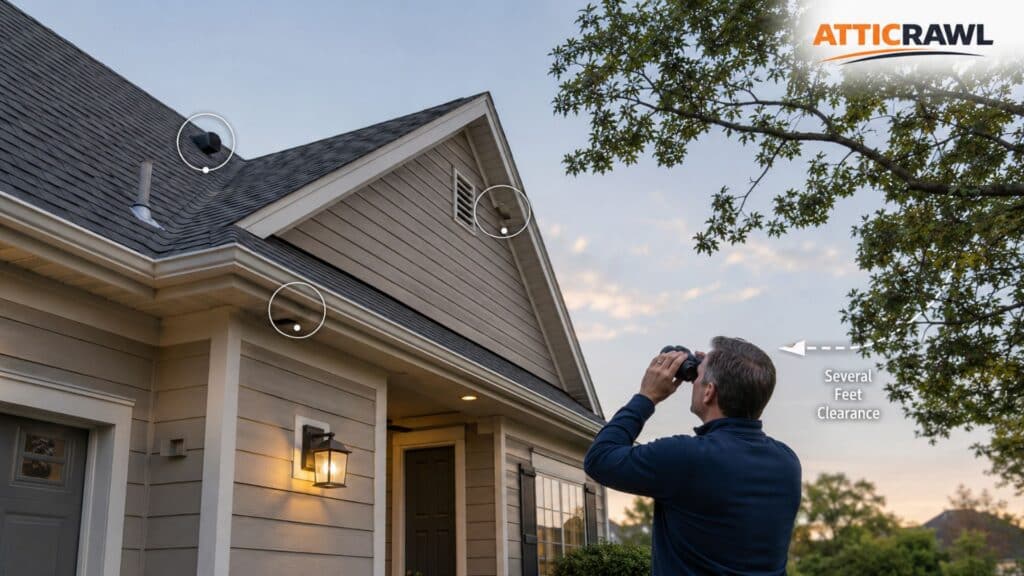
- Check accessible exterior areas from the ground for holes, damaged vents, and nearby branches. University extension guidance recommends keeping branches about eight feet from a building because squirrels can use nearby limbs to reach the roof.
- Leave openings alone until the animal and any young have been removed.
- Avoid poison, unsafe roof access, and contact with droppings or disturbed insulation.
- Contact a professional when the animal remains unidentified or when contamination and damage appear.
Pro tip: Hearing noises at night? Check out our guide to choosing a reliable insulation removal contractor before hiring a professional.
How Atticrawl Can Help With Animals in Your Attic
Atticrawl can help homeowners in New Jersey and Eastern Pennsylvania identify the source, address entry points, and restore affected attic areas. Our team can inspect for animal activity, hidden gaps, contaminated insulation, droppings, odors, damaged ducts, and related conditions.
We provide rodent proofing and removal for intruders such as mice, rats, squirrels, raccoons, bats, and possums. Also, our wider services include entry-point sealing, droppings and dead-animal removal, sanitation, damaged-insulation removal, duct repair or replacement, and new insulation installation.
If you’re a homeowner who needs a clear diagnosis and a complete plan, you can schedule a professional attic inspection with Atticrawl today.
FAQs
Can a Small Animal Sound Much Larger in an Attic?
Yes, a small animal can sound much larger because ceilings, joists, ducts, and open attic cavities can amplify every step. For that reason, one loud scratching sound at night should be compared with timing, location, and physical evidence.
Why Does the Scratching Stop When Someone Approaches?
The scratching may stop because rodents and other animals freeze when they detect movement or vibration below them. Mice can detect movement from at least 15 feet away, so they may become silent as soon as someone enters the room or approaches the attic opening.
Can You Identify an Attic Animal by Sound Alone?
Sound can narrow the possibilities, although it rarely confirms the animal by itself. Timing, location, droppings, and nest material provide stronger clues. Entry points, odors, and inspection findings can then support the identification.



Recent Comments