


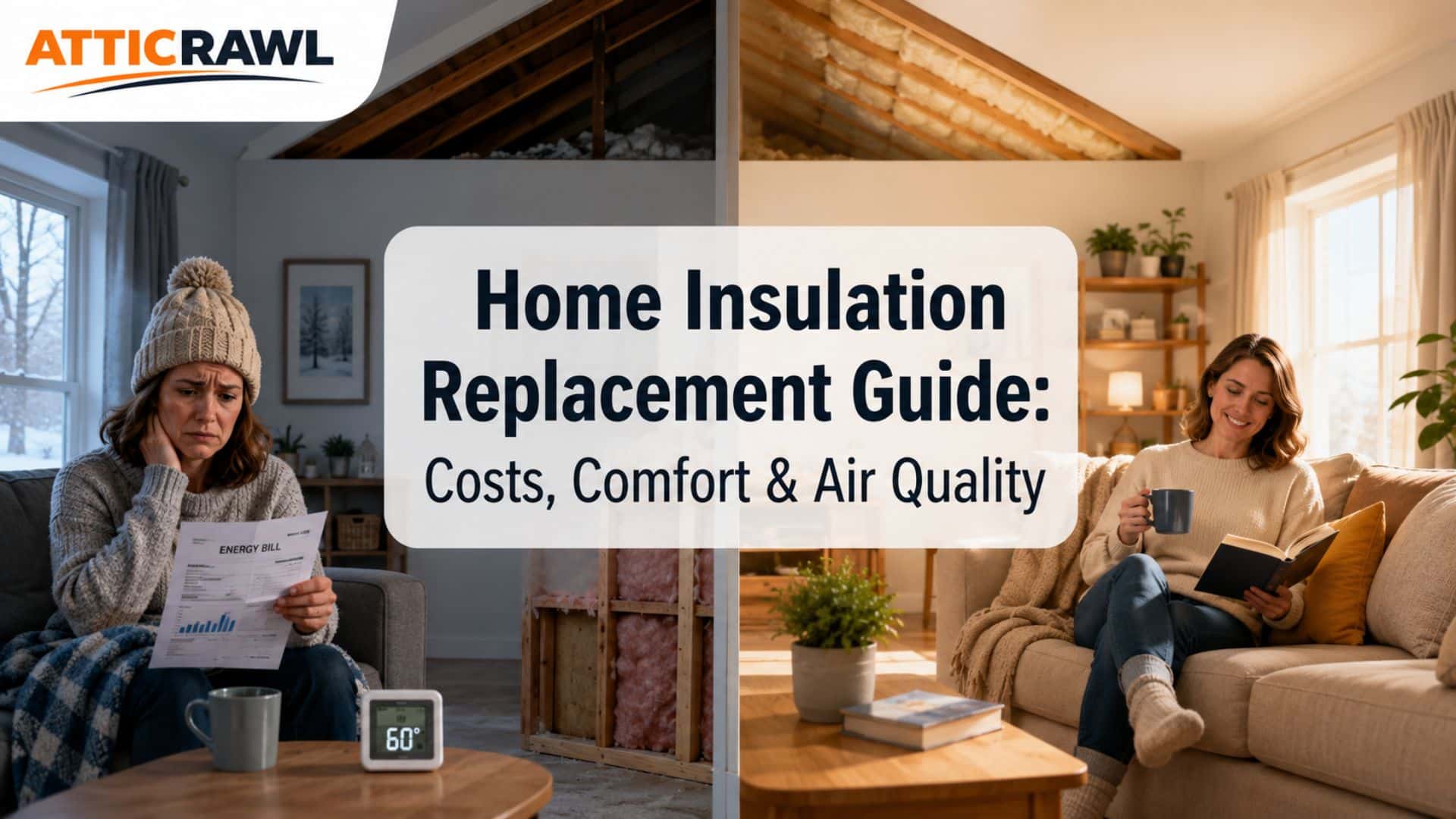
Drafty rooms, cold floors, uneven temperatures, rising bills, and musty odors can all point to insulation trouble. Home insulation replacement becomes necessary after moisture, pests, compression, disturbance, or poor installation reduces how well the material works.
Still, full removal is not always the right answer. In this article, we’ll explain when to replace insulation, when to add more, and what a complete project should cover.
Does Home Insulation Need to Be Replaced?
Yes, insulation needs replacement when damage, contamination, or poor coverage keeps it from doing its job. Age should prompt an inspection rather than automatic removal. At Atticrawl, we assess its condition, coverage, current R-value, contamination risks, and the source of any damage before recommending the right next step.
The 2020 Residential Energy Consumption Survey counted 21.29 million homes described as poorly insulated and 3.63 million as uninsulated. Together, they represented about 20.2% of surveyed homes.
Here are the main reasons a replacement may make sense.
Water, Mold, or Persistent Dampness
Wet insulation can settle, lose thermal performance, develop musty odors, and add to existing moisture trouble. Before new material goes in, repair the source. That may involve a roof leak, plumbing problem, condensation issue, or ground moisture inside a crawl space.
Rodent or Pest Contamination
Pests may leave droppings, urine, food, and nesting material inside insulation. They can also tear batts, damage ducts, and chew electrical wiring. Contaminated areas may need professional removal, cleaning, sanitation, and entry-point sealing before fresh insulation can be installed safely.
Compression, Settling, Gaps, or Physical Damage
Flattened batts and settled loose-fill insulation hold less trapped air, so their performance can drop. Disturbed sections and uncovered cavities also allow heat to pass more easily. Minor settling may need a top-up. Extensive damage can make full replacement more sensible.
Comfort and Energy-Waste Warning Signs
Pay attention to unexplained bill increases, drafts, cold floors, stubborn hot or cold rooms, and an HVAC system that runs frequently. These symptoms deserve an inspection first because damaged ducts, leaky windows, rim joists, and attic air gaps can cause similar trouble.
Should You Replace the Insulation, Add More, or Fix Another Problem?
Sometimes existing insulation still has useful life left. A proper inspection separates material failure from a smaller air leak or coverage problem.
Here is a practical decision guide:
| Inspection finding | Likely next step |
| Dry, clean, evenly distributed insulation | Keep it if coverage and R-value are sufficient |
| Clean insulation that has settled | Seal leaks and add compatible material |
| Local damage after the source is repaired | Replace the affected area |
| Widespread dampness, mold, pests, or deterioration | Remove and replace affected material |
| Drafts with insulation in good condition | Check gaps, rim joists, and ducts |
| Suspected asbestos-containing material | Stop work and arrange professional testing |
What Happens During an Insulation Replacement Project?
An insulation replacement project removes damaged material, corrects the cause, seals leaks, and installs suitable new insulation. Each stage matters. A national Weatherization Assistance Program evaluation linked work-quality problems with low savings in about one in five low-saving homes. Ceiling insulation and missed wall cavities were common issues.
A complete attic insulation removal and replacement project usually follows these steps:
- Inspect the attic, walls, basement, or crawl space.
- Check for moisture, pests, duct damage, and air leaks.
- Repair the source of water or contamination.
- Complete home insulation removal and safe disposal.
- Clean and sanitize affected surfaces when needed.
- Seal gaps around pipes, wiring, fixtures, and framing.
- Review ventilation and moisture control.
- Install material suited to the location and climate.
- Check for compression, gaps, and missed cavities.
Careful installation affects actual performance, so the final inspection deserves real attention.
Choosing the Right Replacement Insulation
The right material depends on location, climate, moisture exposure, cavity depth, ventilation, fire rules, budget, and local code. R-value measures resistance to heat flow. Suitable levels change according to the building component and climate.
Here are the main options:
| Material | Common applications | Main consideration |
| Fiberglass batts | Attics, walls, floors, rim joists | Must fit without gaps or compression |
| Blown fiberglass or cellulose | Attics and enclosed cavities | Works well in irregular spaces |
| Mineral wool | Walls, floors, fire-sensitive areas | Dense and moisture-resistant, though usually costlier |
| Foam board | Crawl spaces, basements, exterior assemblies | Joints need proper sealing |
| Spray foam | Leaky cavities and difficult spaces | Requires careful selection and installation |
How Replacement Can Improve Comfort and Energy Bills
Replacement can improve comfort and lower energy use when failed insulation and air leaks are treated together. The practical improvements may include:
- More consistent room temperatures
- Fewer drafts and cold floors
- Less summer heat entering through the attic
- Lower heating and cooling demand
- Less strain on HVAC equipment
Actual savings still vary. Climate, energy prices, existing conditions, workmanship, and household habits all affect the final result.
How Insulation Replacement Affects Indoor Air Quality
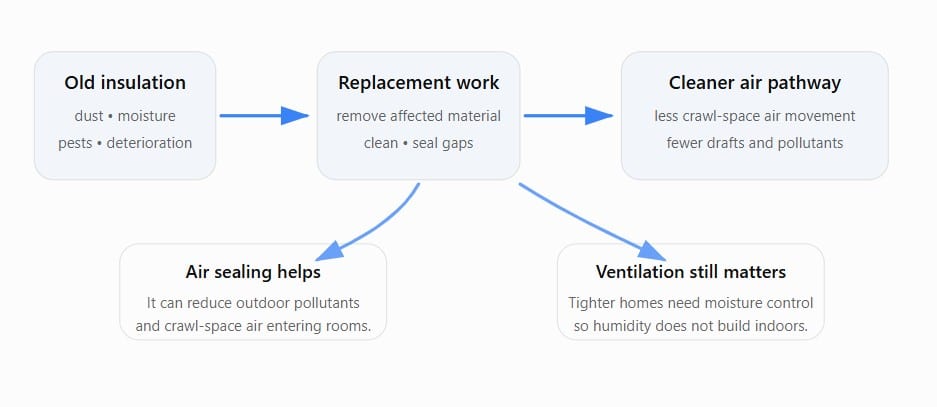
Insulation replacement can support indoor air quality when it removes material affected by dust, moisture, pests, or deterioration. This matters because the EPA says people spend about 90% of their time indoors. Air sealing may also reduce the movement of outdoor pollutants and crawl-space air into occupied rooms.
Still, tighter homes need suitable ventilation and moisture control. Without them, pollutants and humidity can build up indoors. We also recommend leaving suspected asbestos-containing insulation undisturbed. A qualified professional should test it before anyone begins removal or renovation work.
What Affects the Cost of Insulation Replacement?
The price depends on the project’s size, location, access, material, required R-value, labor, and preparation. A home insulation replacement cost may also include disposal, air sealing, pest cleanup, sanitation, moisture repairs, ductwork, and wall or ceiling access.
Attics are usually easier to reach than enclosed wall cavities, so wall projects may require more labor and repairs. We recommend requesting an on-site inspection and an itemized estimate. It should explain every preparation, removal, installation, and cleanup charge.
How Atticrawl Can Help Restore Your Insulation System
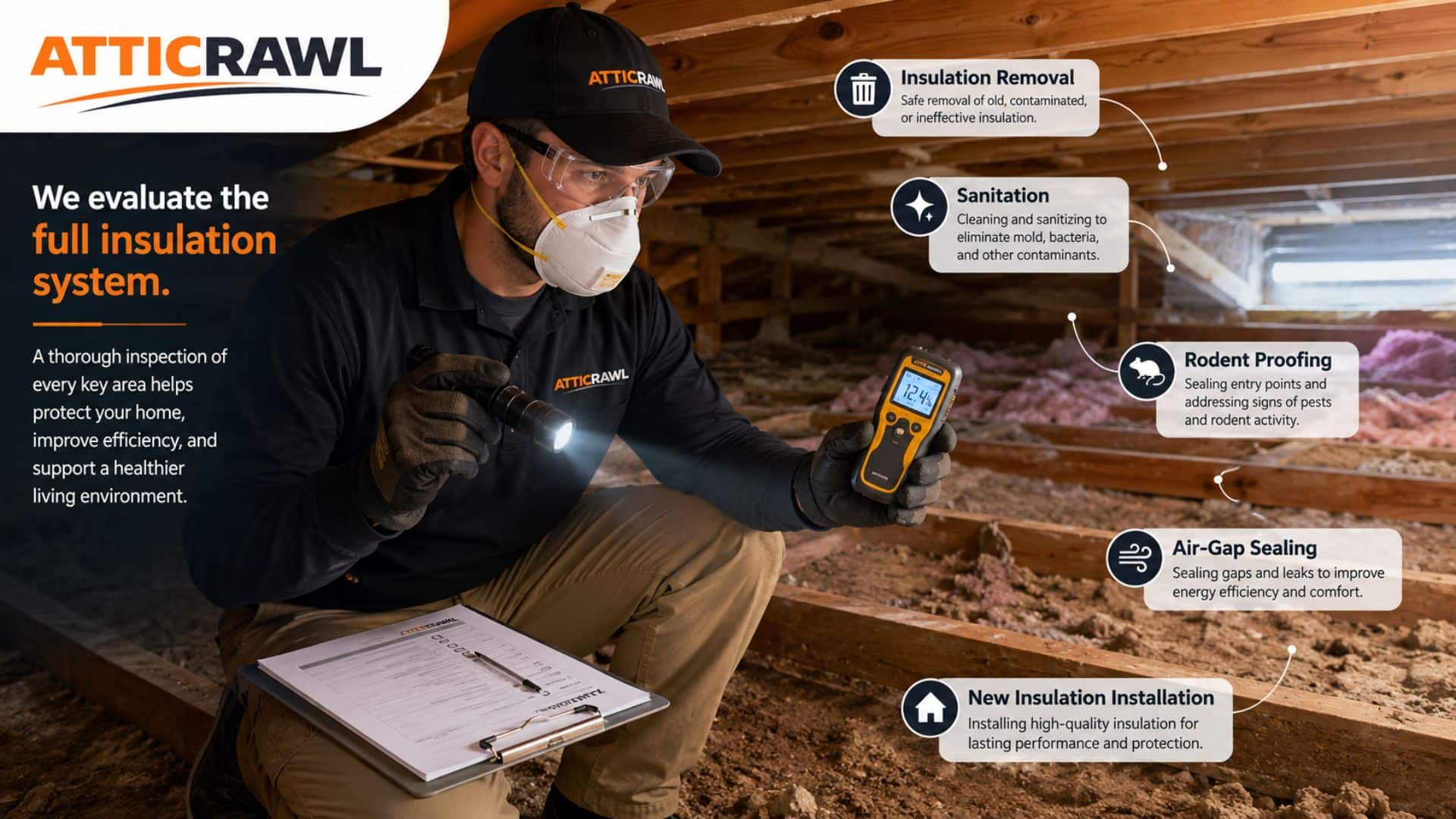
At Atticrawl, we help homeowners throughout New Jersey and Eastern Pennsylvania address connected attic and crawl-space problems. Our team can inspect the affected area and handle damaged insulation removal, cleaning, sanitation, rodent proofing, air-gap sealing, and new insulation installation. We can also repair or replace damaged ducts and insulate basement rim joists to improve comfort and energy performance.
If ground moisture contributed to the damage, we can install a vapor barrier or provide crawl-space encapsulation. With more than 33 years of field experience, Atticrawl offers free estimates across the area.
If you’re looking for crawl space insulation services, schedule a home visit with us. We can identify which parts of the system need attention and explain the appropriate next steps.
Frequently Asked Questions
How to Replace Insulation in Walls?
Wall insulation is replaced after the cavity is opened through drywall, exterior cladding, or small access holes. The crew repairs moisture and air leaks, follows electrical safety precautions, removes damaged material where accessible, and installs insulation that suits the wall assembly.
How Often Should Insulation Be Replaced?
Insulation has no universal replacement schedule. Some materials can last for decades in dry, stable conditions. We recommend judging it through condition and performance. Water exposure, pests, compression, disturbance, contamination, and poor coverage are stronger reasons for replacement than age.
Can New Insulation Be Installed Over Old Insulation?
Yes, new insulation can be added over existing material if the old layer is dry, clean, uncontaminated, and compatible. First, check its coverage and seal accessible air leaks. Remove damaged sections and correct moisture or pest problems before adding anything.
How Much Is Attic Insulation Replacement?
The price depends on attic size, access, material choice, required R-value, removal volume, and disposal costs. Contamination, air sealing, ventilation work, and structural repairs can raise the total. An on-site inspection provides a much more useful estimate than a flat online figure.
How Do I Choose Insulation Replacement Near Me?
Choose a licensed and insured insulation removal contractor with experience in removal and contaminated spaces. Review its cleanup procedures, customer feedback, and written estimate. We also recommend checking if the company handles connected problems such as air leaks, moisture, pests, and damaged ducts.=-



Recent Comments