

Is your floor too cold to put your feet on? Serving the New Jersey Area & Eastern Pennsylvania

33+ Years of Service

Fully Licensed, Bonded & Insured

30K+ Satisfied Customers
The rim joist is one of the leakiest parts of most houses, and almost nobody knows it is there. It is the band of framing that sits on top of your foundation wall, right where the basement meets the outside. In a lot of homes it has no insulation at all, or a scrap of fiberglass stuffed in that does next to nothing. Cold air pours in through it all winter, which is a big reason the floor above feels cold and the furnace never seems to catch up.
Sealing and insulating the rim joist is one of the cheapest ways to make a house more comfortable. We have been doing it across New Jersey and Eastern Pennsylvania for 33 years. Book a free in-home inspection and we will show you exactly where the cold is getting in.
What the Rim Joist Is, and Why It Matters
The rim joist, sometimes called the band joist, is the perimeter framing that sits on top of your foundation and closes off the ends of your floor joists. It is thin wood with a lot of seams, sitting right at the line between your heated basement and the cold outside. Left bare, it acts like a row of open windows you cannot see. It lets drafts in, lets your heat out, and can collect condensation that leads to mold and rot over time.
Because it is tucked down at the top of the basement wall, most homeowners never notice it. But it is one of the first places a good contractor looks when a house is drafty or expensive to heat.
Signs Your Rim Joist Needs Attention
- Cold floors on the first level all winter, no matter how high you set the heat
- Drafts near the top of the basement walls or where the wall meets the floor above
- Heating bills that feel too high for the size of the house
- Bare framing or old fiberglass falling out along the top of the foundation
- Condensation or a musty smell in the basement
- Mice getting in down low, near the foundation line
How We Air-Seal and Insulate the Rim Joist
- Free in-home inspection. We check every rim joist bay around the basement, look for drafts and gaps, and note any old insulation that needs to come out.
- Clear out the old material. Any loose or fallen fiberglass comes out. Fiberglass stuffed into a rim joist does almost nothing to stop air, so it is not worth leaving in.
- Air-seal the gaps first. This is the step most people skip, and it is the one that matters most. We seal the seams and gaps around each rim joist so air stops moving through before we add any insulation.
- Insulate every bay. With the air sealed, we insulate each rim joist bay so it actually holds heat instead of leaking it.
- Close off pest entry points. The rim joist line is a common way in for mice, so we seal the openings we find while we are down there.
- Walk it with you. We show you what we sealed and insulated so you can see the difference for yourself.
Benefits of Rim Joist Insulation
Warmer floors and no more drafts
Sealing and insulating the rim joist cuts off one of the biggest sources of cold air in the house, so the floor above feels warmer and the drafts stop.
Lower heating and cooling bills
Once the rim joist stops leaking air, your system does not have to run as hard to keep the house comfortable, and that shows up on the bill.
Protection against moisture and mold
Air sealing the rim joist also cuts down the condensation that forms there in cold weather, which is what leads to mold and wood rot if it is left alone.
One less way in for mice
The gaps around a bare rim joist are an easy entry point for mice. Sealing them while we insulate closes that door.
What Does Rim Joist Insulation Cost in New Jersey?
It comes down to how much rim joist there is to cover, how easy the basement is to work in, the condition of what is there now, and the material we use. It is one of the more affordable improvements you can make, and it often pays part of itself back through lower heating bills. We give you an exact price after the free inspection.
Why Homeowners Choose AtticRawl
- 33 years on attics, crawl spaces, and basements, and not much else. This is the work we know cold.
- More than 30,000 homes done, and over 65 million square feet of work behind us.
- Licensed, bonded, and insured.
- Our own crews, not subcontractors. The people who quote your job are the ones who show up to do it.
- Free home visits with no pressure, a straight assessment, and an exact price before any work starts.
Serving New Jersey & Eastern Pennsylvania
We are based at 34 Green Street, Unit B, in Woodbridge, NJ, and our crews are out at homes across New Jersey and Eastern Pennsylvania every week.
We work all over Middlesex County, including Woodbridge, Edison, Old Bridge, South Brunswick, New Brunswick, South Amboy, and Spotswood. We also cover Monmouth County (Aberdeen, Hazlet, Holmdel, Manalapan, Manasquan), Union and Essex (Elizabeth, South Orange, Cedar Grove, Fairfield), and Bergen County (Teaneck, Ridgewood, Allendale). On top of that we serve Sussex and Morris County towns like Sparta, Andover, and Mountain Lakes, plus the Lehigh Valley over in Eastern PA, including Allentown, Bethlehem, and Easton.
Do not see your town? Call us anyway. If you are anywhere in New Jersey or Eastern Pennsylvania, chances are we cover you.
Frequently Asked Questions
What is a rim joist, and what is a band joist?
They are the same thing. It is the framing that sits on top of your foundation wall and caps off the ends of your floor joists, right at the line between the basement and the outside. It is a common spot for air leaks and heat loss.
Why is rim joist insulation worth it?
It is one of the cheapest ways to make a house warmer and cheaper to heat, because the rim joist is often completely uninsulated and leaking air. Fixing it improves comfort on the floor above and lowers your energy bills.
Do I need air sealing or just insulation?
Both, and the air sealing comes first. Insulation alone does not stop air from moving through the gaps. We seal the seams and gaps, then insulate, so the rim joist actually holds heat.
Will rim joist insulation fix my cold floors?
It makes a real difference, since a bare rim joist is a major source of the cold air that chills the floor above. In some homes we pair it with other air-sealing work, and we will tell you at the inspection what your house needs.
Can it help keep mice out?
Yes. The gaps around a bare rim joist are a common entry point for mice, and we seal them while we insulate.
Do you offer free inspections?
Yes. We come out, check every rim joist bay, and give you an exact price before any work starts. Call 800-682-1602 to set it up.
Reach out to an expert today.
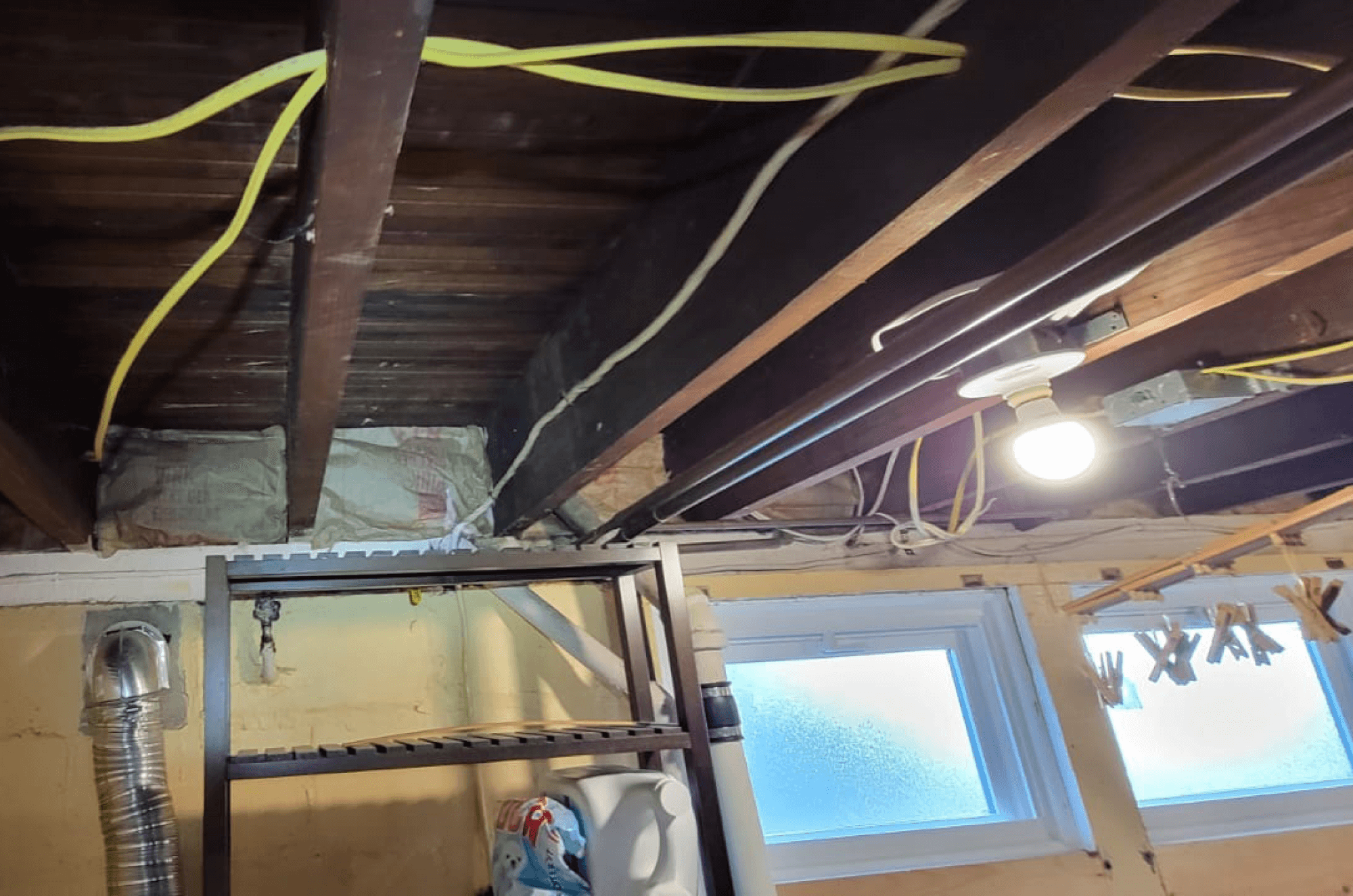

What is rim joist insulation?
Rim joists form the primary structure of the floor and are supported at their ends by the house’s foundation. Rim joists usually look like wooden squares running around the top perimeter of your basement walls. Their main purpose is to support the weight of the floor above them.
Without insulation, the only barrier between the inside of your home and the outdoors is the siding or brick. The rim joist typically spans the perimeter of your house, near ground level, and often includes has various openings for pipes that bring utilities into the home. When rim joists are under-insulated or neglected, especially in older homes, drafts enter through the basement sill plate, draining energy and making the floors cold. By properly insulating and air sealing your basement rim joists, your home will be able to keep heat in and unwanted drafts out.
Our team is eager to address your concerns and answer any questions you may have.
Reach out today to consult with an expert.
Schedule your free in-home rim joist inspection by one of our trained professionals.