


Scratching, running, or chewing above the ceiling can make you wonder if there is a squirrel in your attic, especially when the noise keeps returning around the same time each day. Some homeowners also spot a squirrel slipping under a roof edge or through a damaged vent.
But acting too quickly can make the situation worse if dependent young are still inside or an animal gets sealed in. So today, we’ll walk through removal, trapping, exclusion, cleanup, and prevention in a practical order.
How to Get Rid of Squirrel in the Attic Safely
The safest way to remove attic squirrels is to identify how they are getting in, check for dependent young, choose an appropriate removal method, confirm every animal has left, and then repair the openings.
That order matters more than people sometimes realize. We’ve seen plenty of wildlife problems become harder once a homeowner closes the wrong opening too early.
Here are the steps that make the process easier to control.
1. Identify the Active Entry and Exit Route
Before actually trying to get rid of a squirrel in the attic, first figure out which opening the animal is actually using.
From the ground or another safe viewing point, check the roofline, soffits, fascia boards, vents, flashing, and other visible gaps. Watch for fresh chewing, disturbed materials, staining, or repeated squirrel traffic around one spot.
Keep the active opening available while you plan the removal. Permanently closing it too early can trap squirrels inside, which can lead to more chewing as they search for another way out.
2. Check for Baby Squirrels Before Starting Exclusion
Nesting season changes the whole removal process because an adult squirrel that keeps returning may be caring for young nearby.
Pay attention to repeated trips through the same opening, activity concentrated in one attic area, or softer noises coming from a nest location. If those clues suggest dependent young, professional wildlife help is usually the safer route.
Young gray squirrels typically remain in the nest for 10 to 12 weeks, according to Alabama Cooperative Extension. During that period, installing a one-way exclusion door can separate them from their mother and leave them trapped inside.
3. Choose Between One-Way Exclusion and Trapping
There are several ways to remove attic squirrels, and they solve slightly different problems.
A homeowner researching how to catch a squirrel in the attic may assume a cage trap is always the main solution. In practice, one-way exclusion often deals with the actual entry route more directly.
Here are the main options to compare:
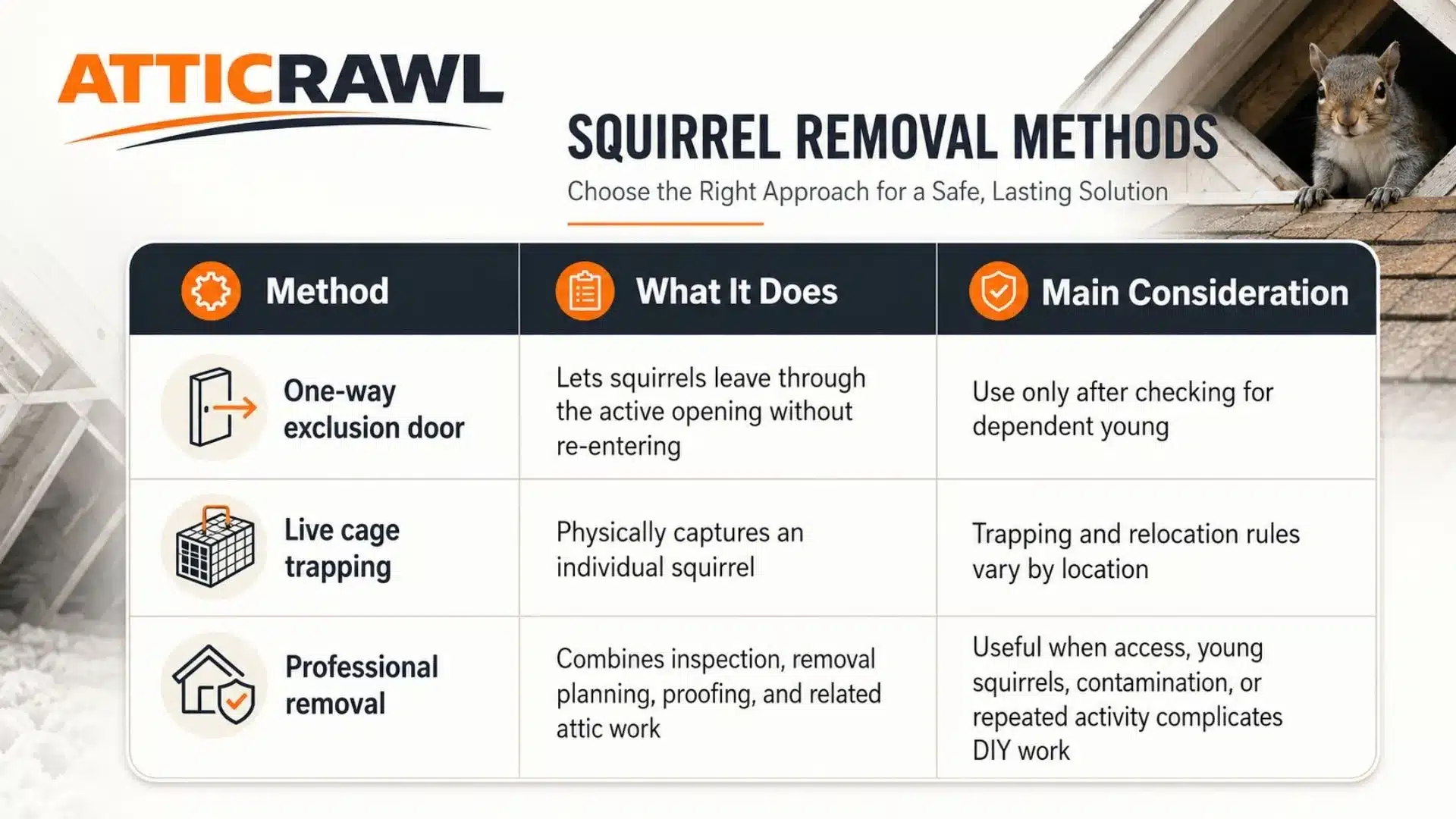
If you are trapping a squirrel in the attic, check your state and local wildlife rules before setting or relocating any animal. Alabama Extension advises that nuisance-squirrel traps should generally be checked at least once every 24 hours, although legal requirements vary by state and municipality.
4. Confirm Every Squirrel Has Left Before Sealing the Opening
One squirrel leaving the house does not prove the attic is empty.
After a one-way device goes up, give the process enough time to work and continue checking for sounds, movement, or activity around the opening. Weather, temperature, nesting behavior, and additional squirrels can all affect how quickly the attic clears.
Maine wildlife officials recommend leaving a properly fitted one-way exclusion door in place for at least seven days, with more time during cool or rainy weather. Once you are confident the animals have left, remove the temporary device and repair the opening right away.
5. Seal and Squirrel-Proof the Entry Points
Once the attic is clear, the next job is making the opening difficult to use again.
Damaged soffits, fascia boards, vents, roof penetrations, flashing, and similar weak points may need durable repairs. Soft fillers can look finished from the ground and still fail quickly once a squirrel starts chewing.
Oregon State University recommends covering vulnerable areas around vents, chimneys, and roof penetrations with ¼- to ½-inch welded-wire mesh where appropriate. Plastic screening and expanding foam by themselves are easier for squirrels to damage.
If the opening stays usable, another squirrel can eventually take advantage of it.
6. Clean Contamination After the Animals Are Gone
Once the squirrels are out, the attic may still contain nesting material, urine, droppings, food debris, and contaminated insulation.
This is where we recommend slowing down. Dry sweeping or vacuuming can disturb contaminated particles and spread them into the air.
CDC guidance says urine, droppings, nests, and nearby material should remain visibly wet with disinfectant for at least five minutes before removal. Dry droppings should never be swept or vacuumed.
Heavily contaminated insulation may need to be removed instead of surface-cleaned. When contamination covers a large area or attic access is difficult, professional cleaning and sanitation can make the job safer and more thorough.
7. Prevent Another Squirrel From Moving In
Prevention starts with checking the repair you just made, and then looking beyond that single hole.
Inspect nearby vents, roof edges, soffits, fascia, and other potential weak spots. Keep vent covers in good condition and reduce easy food sources around the home where practical.
Branches can also give squirrels a direct route toward the roof. Oregon State University recommends keeping branches at least 10 feet from buildings, although nearby fences, utility lines, and other launching points can still provide access.
If squirrels are in the attic again after a previous removal, another opening may have been missed or the earlier repair may have failed.
Do Squirrel Repellents Work in an Attic?
Squirrel repellents can sometimes make an attic less comfortable for a short period, but physical exclusion and permanent repairs are usually more dependable.
Odor products, predator scents, lights, noise devices, and similar deterrents may encourage movement in some situations. Still, an open roof gap gives the animal a reason to keep returning.
Oregon State University rates physical exclusion as very effective and low risk. Repellents are considered only somewhat effective because squirrels can become used to smells that do not create an immediate threat. Many commercial products also have limited scientific testing and may need reapplication about every two weeks and after heavy rain.
So, if you are considering a squirrel in attic repellent, treat it as a temporary tool rather than the main fix.
Here’s how to apply a squirrel repellent:
What Damage Can a Squirrel Do in the Attic?
A squirrel can damage insulation, wiring, wood, vents, duct-related materials, and stored belongings while it nests and moves through an attic.
Some problems stay concentrated around the entry point, while others spread as the animal travels or builds a nest. We usually recommend checking the full area after removal instead of assuming the damage is limited to one visible spot.
Here are the main areas worth inspecting:
- Insulation: Squirrels may tunnel through, compress, tear, or contaminate insulation with urine, droppings, and nesting material. If the affected area is extensive, check out our other guide on when pest-damaged attic insulation needs replacement.
- Electrical wiring: Repeated gnawing can damage insulation around wires and expose conductors.
- Wood and structural materials: Squirrels may enlarge existing holes as they continue chewing around an entrance.
- Vents and duct-related materials: Entry attempts and nesting activity can affect nearby covers, connections, or surrounding materials.
- Stored items and attic debris: Nesting material and food caches can spread through more than one part of the attic.
That kind of squirrel in attic damage is one reason an inspection after removal matters.
Squirrel in the Attic Removal Cost: What Affects the Price?
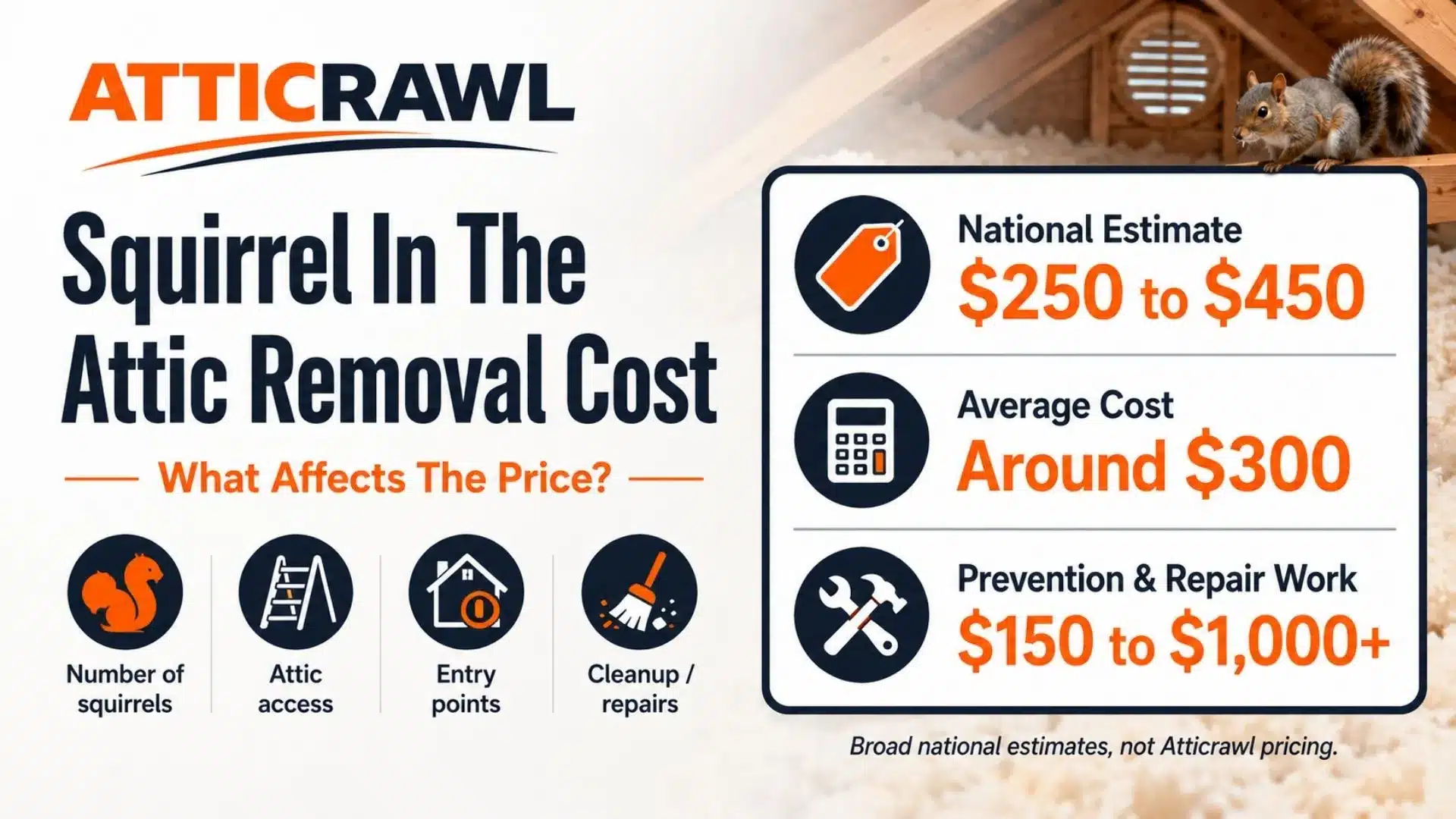
For context, Angi’s 2026 national estimate puts professional squirrel removal at around $250 to $450, with an average near $300. Prevention and repair work may add another $150 to $1,000 or more.
The cost of removal depends on how many squirrels are present, how difficult the attic is to access, which method is used, how many openings need attention, and whether young squirrels are involved. Cleanup, structural repair, contamination, and damaged insulation can raise the final price as well.
Those numbers are broad national estimates rather than Atticrawl pricing. A proper inspection is usually the only way to understand what a specific home actually needs.
Squirrels in Attic Removal NJ: How Atticrawl Can Help
If you’ve been searching squirrel in attic removal near me on Google, repeated noises, droppings, damaged insulation, or an active roof opening may mean the problem has moved beyond a simple trap.
Atticrawl serves homeowners across New Jersey and Eastern Pennsylvania, and we specifically handle squirrels as part of our rodent proofing and removal work. Our team can locate hidden entry points, seal openings while maintaining proper ventilation, remove contamination, and address related attic conditions.
Depending on what the squirrels affected, Atticrawl can also help with cleanup, sanitation, insulation removal, and attic restoration. You can learn more about our squirrel removal and rodent proofing services if the activity keeps returning or the attic needs a more complete inspection.
Final Thoughts on Removing and Preventing Attic Squirrels
Successful squirrel control comes down to a full process. First, make sure every animal has left. Then repair the access point, check the attic for contamination or damage, and inspect nearby weak spots that could become the next entrance.
A little patience during removal can save a much bigger repair later, especially when nesting activity or several squirrels are involved.
FAQs
Are Squirrels in My Attic?
They may be if you hear fast running, scratching, chewing, or repeated movement near the roof. Other signs of a squirrel in the attic include nesting material and droppings. To learn more, go over our other article about what a squirrel in the attic sounds like to learn more!
Are Squirrels in the Attic Dangerous?
Yes, a squirrel in your attic can create property and sanitation concerns. The bigger risks usually come from chewed wiring, contaminated nesting areas, droppings, and damaged building materials. Wild squirrels can also bite or scratch if cornered, so direct handling should be avoided.
Who Should You Call for Squirrels in the Attic?
For homeowners in New Jersey and Eastern Pennsylvania, Atticrawl is one option for professional help. Our work includes squirrel removal, locating hidden entry points, rodent proofing, sealing access areas, and connected attic cleanup services when contamination or damage is present.
How Does a Squirrel Get in the Attic?
Squirrels often enter through damaged soffits, fascia gaps, roof vents, loose materials, or openings around roof penetrations. They can also enlarge an existing hole through repeated chewing, especially when the attic offers a dry and protected nesting area.
Will Squirrels Leave the Attic on Their Own?
Squirrels may leave the attic during the day to find food, but that does not mean they have abandoned the space. If the attic provides a protected den or nest site, they can keep returning. Another squirrel may also use the same opening later.
Is It a Squirrel or Rat in the Attic?
Squirrels are usually active during the day, while rats are more active at night. The timing and location of the noises can help you tell which animal is inside. We wrote a guide on the common causes of scratching noises in the attic, so feel free to read it to learn what you’re dealing with.



Recent Comments