

Hearing scratching, scurrying, chewing, or tapping above the ceiling at night can be unsettling. The sound may seem like it is coming from one spot, but attic noises can travel through joists, insulation, and drywall.
A squirrel in the attic sounds are typically quick and light, although other animals can make similar noises after dark. We’ll explain how to compare sound patterns, timing, visible signs, risks, and safe next steps.
What Does a Squirrel in the Attic Sound Like at Night?
A squirrel in the attic can sound like fast scurrying, light running, scratching, clawing, gnawing, tapping, or small objects rolling across the attic floor. The exact sound depends on the type of squirrel, where it is moving, and what part of the attic it is using.
Timing matters here. Pests in the Home, a Cooperative Extension resource, says squirrels are diurnal, and early morning is when homeowners are most likely to hear squirrel activity in the attic. Common noises include scratching, running, climbing, and clawing. So, if you hear activity near sunrise, during the day, or around dusk, gray squirrels may be more likely.
A repeated squirrel in attic sound at night may point to flying squirrels or another nocturnal animal. Flying squirrels are active after dark, while rats, mice, bats, and raccoons can also create nighttime attic sounds. Even a small animal can sound loud because drywall, insulation, joists, and empty attic space can amplify movement.
Is the Sound Really a Squirrel or Another Animal?
The sound may be a squirrel, although timing, weight, speed, and location can help separate squirrels from other attic pests. This distinction matters because the right next step depends on what animal is actually inside. A light tapping sound at night can mean something different from heavy dragging or slow scratching in one spot.
The University of Georgia Extension notes that attic noise at night may point to mice, bats, or flying squirrels, while attic noise during the day may point to gray squirrels.
Here are the main sound clues to compare:
| Animal | Common sound | Most common timing | What it may mean |
| Gray squirrel | Fast running, scratching, chewing, clawing | Morning, daytime, dusk | Likely nesting, entering, or moving through attic insulation |
| Flying squirrel | Fast tapping, light scurrying, repeated movement | Night | Nocturnal squirrel activity, sometimes multiple animals |
| Rat or mouse | Lighter scratching, chewing, small running sounds | Night | Rodent activity in attic, walls, or insulation |
| Raccoon | Heavier thumping, dragging, slow movement | Night | Larger animal, possible nesting or damage |
| Bat | Faint scratching, fluttering, slow movement in one area | Dusk or night | Possible roosting near attic gaps |
This comparison will not confirm the animal on its own, but it gives you a better starting point before you inspect the home or call a professional.
Main Sound Clues That Point to Squirrels in the Attic
Squirrel sounds usually come from movement first and vocal noises second. That means you are more likely to hear feet, claws, chewing, or nesting activity than clear animal calls. Still, squirrels can make more sounds than many homeowners expect. Robert Lishak’s gray squirrel vocalization study recorded 5,000 vocalizations from 82 squirrels and grouped them into 11 call types.
Here are the squirrel sounds worth listening for.
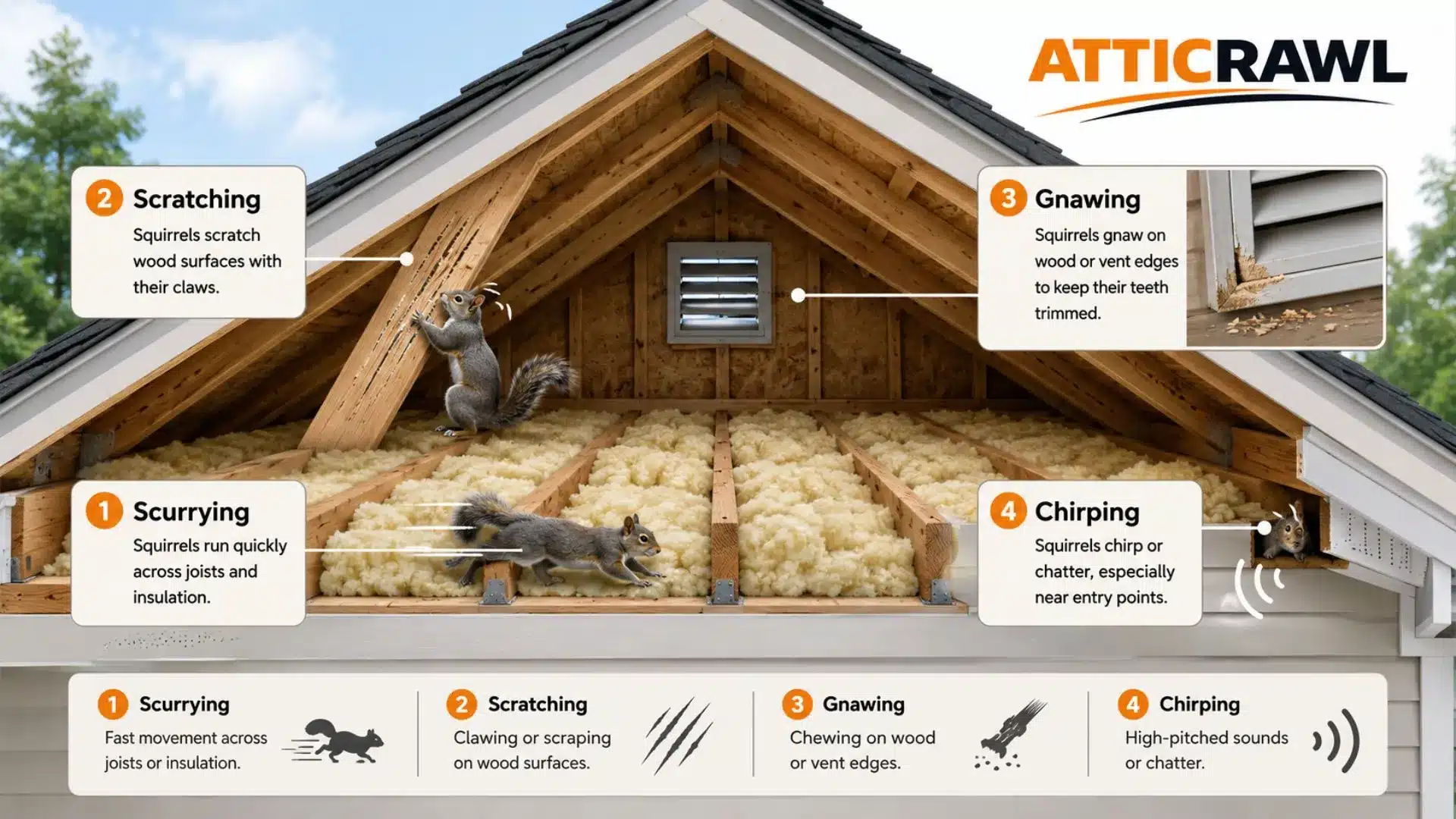
Fast Scurrying or Running
Fast scurrying is one of the most common squirrel clues. It can sound like quick movement across joists, attic flooring, or compressed insulation. Many homeowners describe it as a light to medium running sound that moves from one side of the attic to another.
Gray squirrels often create this kind of noise in the morning or near dusk. Flying squirrels may create a faster tapping or finger-drumming sound at night. If the sound is quick, repeated, and travels across the ceiling, squirrel activity is possible.
Scratching, Clawing, or Tapping
Scratching and clawing can happen when squirrels climb, grip wood, move near vents, or travel behind ceiling materials. The sound may also happen near soffits, roof edges, or attic openings because squirrels use their claws to move through tight areas.
At night, light tapping or fast claw sounds may stand out more because the rest of the home is quiet. If the noise happens in the same general roofline area, it may point to an entry point.
Chewing or Gnawing
Chewing or gnawing sounds are more concerning because they can point to active damage. Squirrels may chew wood, vents, fascia, insulation, or wiring. They may also enlarge a small opening so they can move in and out more easily.
This sound is typically rougher and more repetitive than running. If you hear gnawing near a wall, roof edge, or ceiling area, treat it as a sign that the animal may be changing the structure around the entry point.
Chirping, Chattering, or Barking Sounds
Squirrels can also make vocal sounds, especially when they are stressed, nesting, communicating, or moving near an entry point. Indoors, these sounds may come through as faint chirps, squeaks, chatter, or short bark-like noises.
Movement sounds are usually more common than vocal sounds inside an attic. Even so, chirping or chattering paired with scratching can be a useful clue, especially during nesting seasons.
Squirrel in Attic: Signs Beyond the Noise
Sound is only one clue, so visible evidence matters too. Check what you can see safely from the ground, and avoid entering a cramped or contaminated attic without proper protection. Critter Control says squirrels need only a 1.5-inch gap to enter a home, so even a small opening can create a big attic problem.
These are the signs of a squirrel in the attic to look for:
- Roofline gaps, soffit damage, or chewed openings
- Droppings or urine odor
- Torn, flattened, or nested insulation
- Chewed wires, vents, ducts, or wood
- Stains near soffits or attic entry areas
- Repeated activity near the same roofline area
- Tree branches close to the roof
If you see several of these signs together, the issue may involve more than a single visit from an animal. It may already be using the attic for shelter or nesting.
Why Squirrel Noises Should Not Be Ignored
Squirrel noises should not be ignored because repeated attic sounds can mean an animal is entering, nesting, chewing, contaminating insulation, or using the attic as shelter. Even when the sound seems minor, the activity behind it can affect the attic over time.
Droppings, urine, nesting material, and debris can contaminate insulation. If the insulation looks dirty, torn, or pest-damaged, our guide to attic insulation removal and replacement explains why cleanup should happen before new material goes in.
Chewing can also damage wires, vents, ducts, wood, or roofline materials. Odor and air-quality concerns may develop if the animal stays inside or if nesting material builds up.
Nesting seasons can make the issue more complicated. Alabama Extension says squirrels breed in February/March and July/August, and young squirrels do not leave the nest for 10 to 12 weeks. Because of this, sealing an opening without checking the attic can trap animals inside and create a bigger problem.
What Should You Do If You Hear Squirrel Sounds at Night?
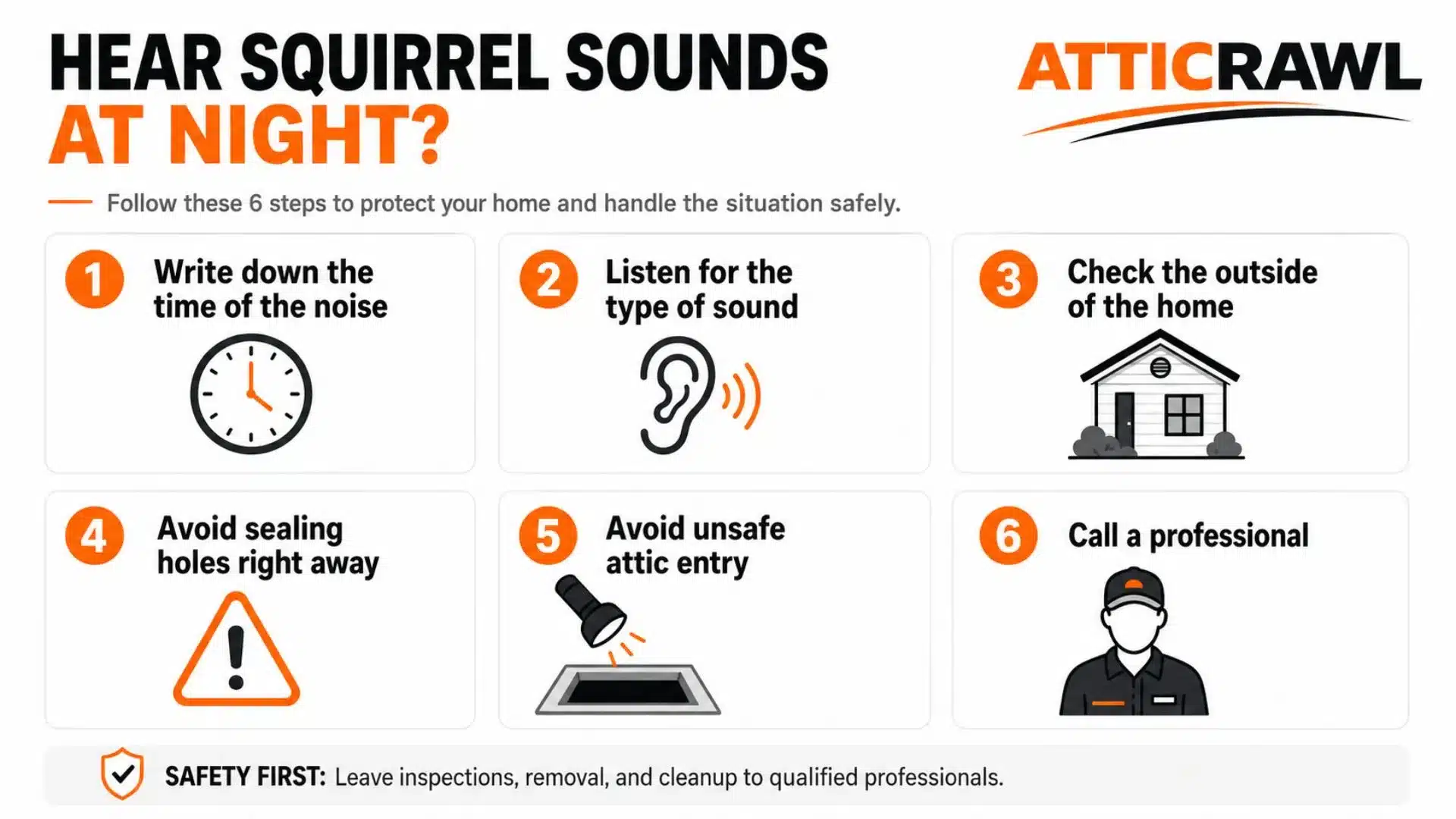
Here are steps you can take using noise patterns and outside clues to identify squirrel activity and decide what to do next:
- Write down the time of the noise: Timing helps separate gray squirrels, flying squirrels, bats, raccoons, and rodents.
- Listen for the type of sound: Fast running, tapping, gnawing, scratching, and heavy thumping each point to different possibilities.
- Check the outside of the home from the ground: Look for roofline openings, damaged soffits, vent damage, stains, and branches near the roof. Alabama Extension recommends keeping trees and overhanging branches at least 8 feet from buildings to reduce squirrel access.
- Avoid sealing holes right away: Animals or babies may still be inside, and blocked exits can make the problem worse.
- Avoid unsafe attic entry: Contamination, weak footing, wiring, insulation, and low visibility can make attic checks risky.
- Call a professional: A qualified pro can help with inspection, removal guidance, proofing, and cleanup.
Do not try to catch a squirrel in the attic by hand or improvise unsafe removal. A squirrel in an attic trap should be handled according to local rules and by qualified professionals when needed.
Pro tip: If pest activity has damaged your insulation, check out our guide on choosing the right insulation removal contractor before hiring a company.
How Atticrawl Can Help After Squirrel or Rodent Activity
At Atticrawl, we can help after suspicious attic sounds lead to signs of pest activity, insulation damage, contamination, or open entry points. We serve homeowners in New Jersey and Eastern Pennsylvania with attic and crawl-space services related to proofing, cleanup, sanitation, insulation, and restoration.
Our services connect well to this problem because attic noises often leave behind more than a sound issue. We offer rodent proofing services to find and seal hidden entry points, insulation removal when old or contaminated material is affected by pests, and attic cleaning or rubbish removal when debris, droppings, or damaged material are present.
We can also help with sanitation after rodent or wildlife contamination, air gap sealing, duct repair or replacement, and new insulation installation after cleanup. If the noises keep coming back or you notice attic damage, schedule an inspection or free estimate so we can help you understand the next step.
FAQs
Are Squirrels in the Attic Dangerous?
Squirrels in the attic can be dangerous because they may chew wiring, damage vents, contaminate insulation, and leave droppings or urine behind. The animal itself usually tries to avoid people, but the attic damage can still create practical home concerns. A professional inspection is the safest way to understand the level of risk.
Who to Call for Squirrels in Attic?
Call a wildlife removal, pest control, or attic remediation professional for squirrels in the attic. Wildlife or pest professionals can help identify and remove the animal. Atticrawl can help with the next part of the problem, such as proofing, cleanup, sanitation, contaminated insulation removal, and insulation restoration after pest activity.
How Does a Squirrel Get in the Attic?
A squirrel gets into the attic through roofline gaps, soffits, vents, fascia damage, loose materials, or openings near the edge of the roof. Branches close to the house can also give squirrels easier roof access. Once they find a weak spot, they may chew or push through it.
Will Squirrels Attack You in the Attic?
Squirrels usually will not attack you in the attic, but a trapped, stressed, injured, or nesting squirrel may act defensively. It is safer to give the animal space and avoid cornering it. If you suspect squirrels are inside, leave the area and call a professional.
Will Squirrels Leave the Attic on Their Own?
Squirrels may leave the attic to find food, but they can return if the entry point stays open. They may also stay longer if they are nesting or if babies are present. Any sealing work should be handled carefully so animals are not trapped inside.



Recent Comments