
An attic insulation rebate can make an upgrade easier to afford, but the offer has to match your home. In New Jersey and Eastern Pennsylvania, that means checking your utility before you settle on a budget.
Older advice about the home insulation tax credit can add confusion.
So, we recommend separating current support from expired offers before you compare quotes.
TL;DR
- Your utility is the first place to check for local rebates.
- PSE&G offers up to $7,500 for qualifying whole-home projects, subject to assessment results.
- Households meeting income requirements may receive approved weatherization at no cost.
- The federal insulation credit ended for installations after December 31, 2025.
- Required assessments and approvals should come before installation.
- Approved rebates reduce your final cost. Loans remain repayable, and upfront payment may differ.
- DIY and rental eligibility vary. Combined incentives need permission from both programs.
- Atticrawl offers free home visits and quotes. Rebate eligibility needs separate confirmation.
- Your application needs invoices and required photographs.
Which Attic Insulation Rebate Options Are Available in NJ and Eastern PA?
Your main options are utility rebates and income-based weatherization, subject to the rules for your household and property. Each has its own application route.
Here are your starting points.
Local Utility Insulation Rebates 2026
Utility insulation rebates depend on who supplies your energy and how the proposed work meets their rules. A whole-home offer may cover a package of improvements.
These official pages are the starting points.
| Provider | Type of Support | Where to Check the Current Offer |
| PSE&G | Whole Home Energy Solutions rebates based on assessment findings | PSE&G program details |
| New Jersey Natural Gas | SAVEGREEN rebates linked to projected whole-home energy savings | SAVEGREEN program details |
| PPL Electric | Residential rebates for qualifying insulation and air sealing | PPL’s rebate listings |
| PECO | Residential savings tools and energy assessments | PECO’s residential programs |
Your gas and electricity providers may offer different routes. PSE&G advertises up to $7,500 for eligible Whole Home Energy Solutions projects. That maximum applies to a qualifying project, so an attic insulation job does not automatically receive the full amount. Your assessment determines the recommended improvements and the potential rebate.
Existing utility offers operate separately from state-administered federal rebates.
New Jersey’s federal programs are preparing to launch, while Pennsylvania’s latest posted update says final approval is pending. An announced budget does not establish that applications are open. We recommend checking the state’s current notice before relying on that funding.
Income-Based Help Through the Weatherization Assistance Program
If your income meets the rules, New Jersey Comfort Partners or Pennsylvania’s county-based weatherization route may arrange approved improvements at no cost. These services follow an assessment, and the work offered depends on its findings and available funding.
New Jersey’s Comfort Partners lists an income threshold at or below 250% of federal poverty guidelines, while Pennsylvania’s program lists 200%. Household size affects the corresponding dollar limit. Other conditions apply.
If you are looking for insulation grants, support may come as approved work arranged through an agency. The program decides which measures it can provide. You cannot assume it will pay for any contractor or project you select independently.
Attic Insulation Tax Credit 2026 Availability
The former federal Section 25C credit ended for insulation installed after December 31, 2025. During 2023-2025, it covered 30% of qualifying material costs within a shared $1,200 annual limit. Installation labor was excluded.
That insulation tax credit expiration means a new 2026 project cannot use this former credit to reduce its cost. Older pages may still describe previous rules, so the installation date matters. The official IRS instructions explain the cutoff and earlier claims.
How Much Could You Pay After an Approved Rebate?
Your final cost is the project price minus the approved rebate, with any uncovered work still included in your bill. For a hypothetical $4,000 project, a confirmed $500 rebate would leave $3,500 to pay.
But that final amount may differ from the cash you need upfront. If reimbursement follows installation, you may initially need the full $4,000. A loan spreads repayment over time and remains money you owe.
We suggest you estimate your attic insulation project cost for your own home before comparing offers. Then check whether the quote includes preparation.
Future savings on your energy bills are separate from this calculation. They do not reduce the invoice you receive today.

How to Apply Before Starting Insulation Work
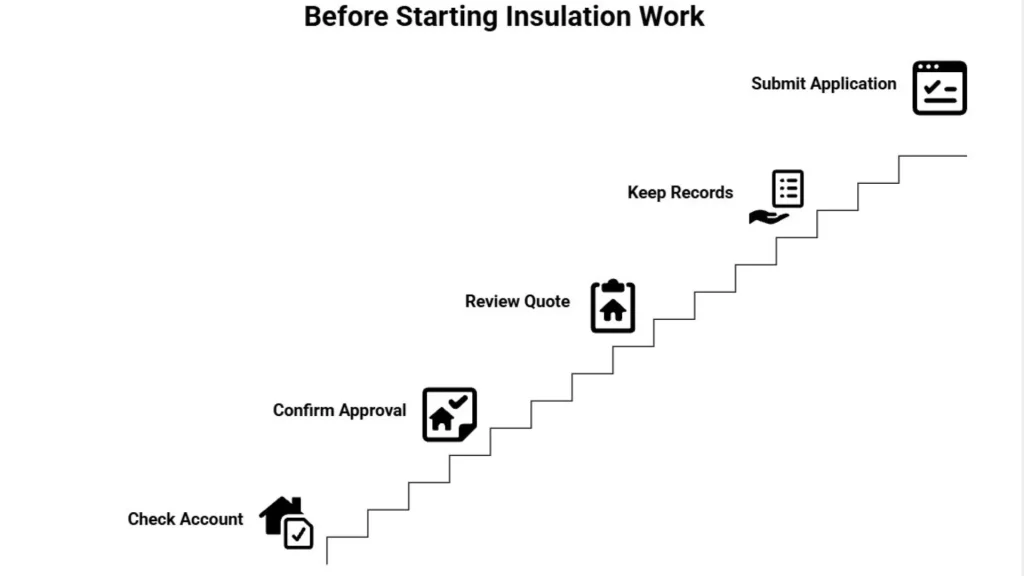
Before you apply for home insulation rebates, check who handles each stage of the claim. Responsibility may sit with you or a participating contractor.
These are the steps to agree on:
- Your first check is the utility account and property address. Confirm that the home and its heating setup meet the written requirements.
- Next, the attic insulation rebate program should confirm any assessment or participating-contractor requirement. Required approval needs to be in place before you authorize work.
- Your quote for attic insulation installation services should state the material specifications. It should also explain how much attic insulation your home needs to reach the proposed level.
- During the project, keep invoices and required photographs. Retain inspection records where the program requests them.
- Finally, the responsible applicant submits through the official route before the program’s deadline. A saved copy of the submission and acceptance provides a record if you need to follow up.
How Atticrawl Can Help Plan Your Attic Upgrade
At Atticrawl, we help homeowners across New Jersey and Eastern Pennsylvania work out what their attic needs before they commit to an upgrade. Our free home visit gives us a chance to inspect the existing insulation where access allows and discuss a price based on the proposed work.
That visit can help establish whether sound insulation can stay or damaged material needs removal. We can also discuss preparation and sealing air gaps in your attic where those services are relevant.
With the scope clearer, you can compare the quote with your program’s requirements. Our home visit remains separate from any program-required energy assessment, so that requirement needs its own confirmation.
Plan Your Upgrade Before You Commit
An attic insulation rebate is easier to plan around once you know what your home qualifies for. Before you accept a quote, confirm the program’s conditions and the work covered.
Then you can schedule a free home visit with Atticrawl to discuss your attic.
FAQs
Can Renters Qualify for Free Attic Insulation?
Yes, if the program accepts rental properties and the landlord gives any required permission. The agency can confirm who must apply and approve access and installation.
Can I Install Insulation Myself and Still Get a Rebate?
DIY work qualifies only if the program allows it. Check whether material-only purchases count and what evidence you need. Some programs require a participating contractor.
Can I Combine a Utility Rebate With Another Incentive?
Yes, if both programs allow it. You’ll need to disclose the other funding and confirm any restrictions on covering the same expense twice.
Can I Claim a Credit for Insulation Installed in 2025?
Yes, qualifying work may still be claimed through the relevant tax return or an amended return, subject to filing deadlines. The IRS Form 5695 instructions explain how to calculate your attic insulation tax credit.



Recent Comments