


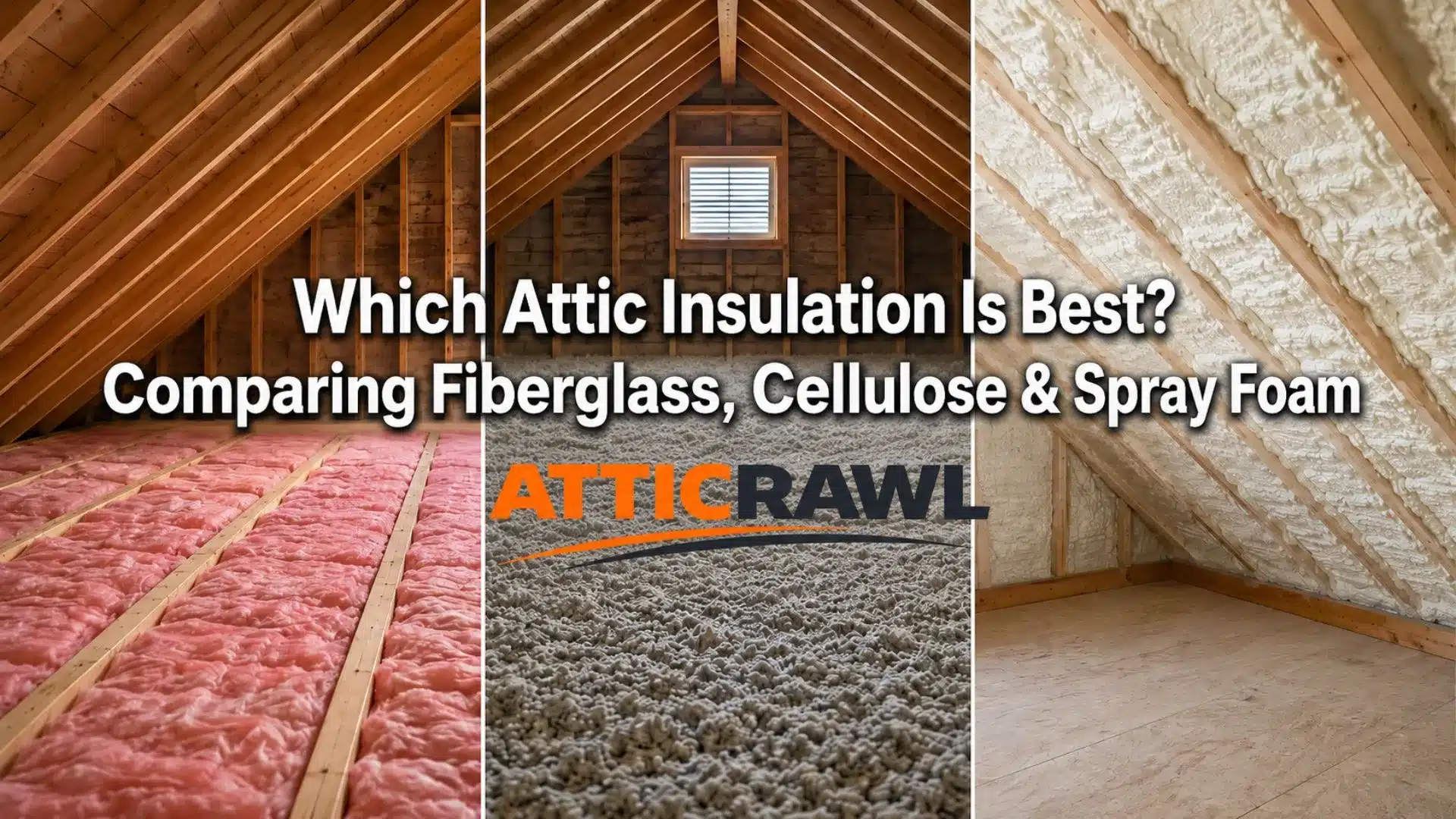
Choosing attic insulation usually starts with a real problem. Your attic may be under-insulated, the old material may be damaged, or two contractors may have recommended completely different products. So, which attic insulation is best for your home?
Fiberglass, cellulose, and spray foam solve different problems and may sit in different parts of the attic. Cost matters, but so do air leakage, moisture, available space, and attic design.
So, in this guide, we’ll compare all three and explain where each option makes sense. Let’s get started!
Which Attic Insulation Is Best?
The best attic insulation depends on the attic assembly, available budget, and performance goal.
Fiberglass usually works well for lower-cost attic-floor projects, while cellulose provides strong coverage across irregular areas and contains a high percentage of recycled material. Spray foam offers powerful air control and may suit a professionally designed roof-deck or conditioned-attic system.
The first decision is where the home’s thermal boundary belongs. A vented attic usually places insulation across the attic floor. But a sealed or conditioned attic may move that boundary to the roof deck.
That choice can have a measurable effect. ENERGY STAR estimates that air sealing and insulating key areas can save an average home about 15% on heating and cooling costs and 11% on total energy costs.
What Should You Check Before Choosing Attic Insulation?
Before choosing attic insulation, inspect the complete attic system and find out what may limit the new material’s performance. We regularly see homeowners focus on price while larger problems remain hidden nearby.
A leak, open air gap, damaged duct, blocked vent, or pest problem can weaken an otherwise sound installation. ResStock modeling found average energy savings of 4% from attic insulation alone and 5% from attic air sealing alone, so leakage control deserves equal attention.
So, these are the main factors you should check:
- Attic design: Determine whether insulation belongs across the attic floor or along the roof deck.
- Existing insulation: Check its depth, condition, coverage, contamination, and current R-value.
- Air leakage: Inspect gaps around wires, pipes, lights, attic hatches, and wall plates.
- Moisture: Address roof leaks, condensation, mold, and excess humidity first.
- Ventilation: Keep soffit vents clear and confirm that the ventilation strategy suits the insulation system.
- HVAC and ducts: Note any ducts or equipment located in the attic.
- Climate and code requirements: Identify the recommended R-value for your climate zone.
- Installation access: Review attic height, framing, wiring, obstacles, and safe working space.
Pro tip: Our guide to choosing the right replacement insulation explains how these conditions affect the final plan.
Fiberglass, Cellulose, and Spray Foam Compared
A fair fiberglass vs cellulose comparison needs to use the same criteria for each product. The same rule applies when spray foam enters the discussion because foam often changes the whole attic assembly rather than simply replacing loose-fill material.
We look at installation location, R-value, air control, moisture, price, and access. Here is how the three options compare:
| Factor | Fiberglass | Cellulose | Spray foam |
| Common attic application | Attic floor | Attic floor | Roof deck or specialized assemblies |
| Approximate R-value per inch | Low to moderate | Moderate to high | Moderate to very high |
| Air sealing | Requires separate work | Requires separate work | Strong when continuous |
| Initial cost | Usually lowest | Moderate | Usually highest |
| Irregular-area coverage | Good when blown | Very good | Very good |
| Settling | Usually modest | More noticeable | Minimal after curing |
| Moisture considerations | Loses performance when wet | Must remain dry | Assembly design is critical |
| DIY suitability | Batts may be DIY-friendly | Blower and experience needed | Professional installation |
| Recycled content | Moderate in many products | Usually high | Varies by formulation |
| Best general fit | Budget attic-floor retrofit | Irregular vented attic floor | Conditioned or roof-deck system |
Fiberglass Attic Insulation
Fiberglass comes as pre-cut batts or loose material installed with blowing equipment. Standard batts provide about R-3.1 per inch, while blown fiberglass commonly provides around R-2.2 to R-3.0 per inch.
Batts usually have a lower initial material cost and can work well between standard joists in an open, accessible attic. Blown fiberglass reaches around pipes, framing, and irregular areas more evenly.
However, fiberglass still needs separate air sealing. Gaps, compression, poor fitting, and disturbed sections can reduce its performance.
Properly installed loose-fill fiberglass has modest settling, and its glass fibers are noncombustible. Facings, binders, stored items, and nearby wood may still burn.
Cellulose Attic Insulation
Cellulose is a loose-fill insulation commonly made from recovered paper treated with fire-retardant chemicals. It usually delivers about R-3.6 to R-3.8 per inch, so it can reach a target R-value with less depth than many blown fiberglass products.
The material settles around framing and irregular attic-floor obstacles, which helps create consistent coverage. It also contains a high percentage of recycled material and resists airflow better than loosely installed fiberglass.
Even so, cellulose does not replace attic-floor air sealing. Installers must account for expected settling and follow the product’s coverage chart so the finished depth remains adequate.
Roof leaks and humidity problems should also be fixed first because cellulose must remain dry. Professional blowing equipment usually produces the most consistent result.
Spray Foam Attic Insulation
Spray foam comes in open-cell and closed-cell forms, and the difference matters. Open-cell foam usually provides around R-3.7 to R-4.0 per inch and remains more vapor permeable. Closed-cell foam generally provides R-6.0 to R-6.8 per inch, so it can reach a high nominal R-value where space is limited.
Both forms can create strong air control when they are installed as a continuous layer. For that reason, spray foam is typically considered for roof decks and conditioned-attic assemblies.
Installation quality shapes everything from airtightness to moisture behavior. The contractor must review the roof, ventilation plan, combustion equipment, and any required ignition or thermal barriers.
Spray foam also costs more and requires trained installation. Once it bonds to the roof deck, future roof inspections and repairs can become more complicated
Which Insulation Works Best for Different Attic Situations?
The right insulation for a specific attic depends on what the project needs to accomplish. General attic insulation recommendations can point you in the right direction, though the attic’s condition still decides the final plan.
Climate also affects the required depth. Based on the 2021 IECC, ENERGY STAR recommends R-30 for an uninsulated attic in Climate Zone 1, R-49 in Zones 2 and 3, and R-60 in Zones 4 through 8
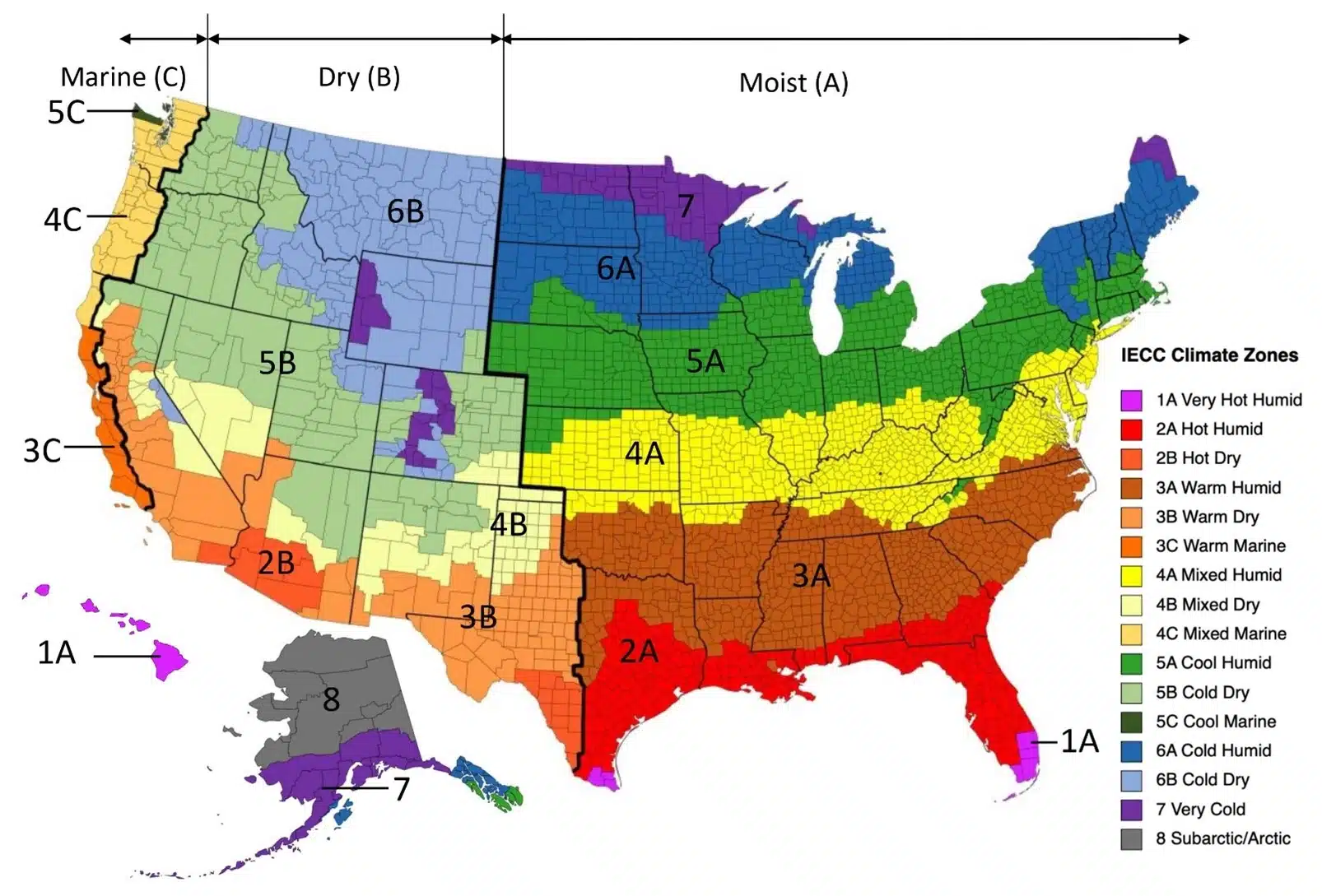
Source: ENERGY STAR
Here are the most practical starting points:
- Lowest initial budget: Fiberglass batts or blown fiberglass may offer the most accessible starting price.
- Irregular vented attic floor: Cellulose or blown fiberglass can create more even coverage after air gaps are sealed.
- Limited available depth: Closed-cell spray foam provides more R-value per inch, subject to code and assembly requirements.
- Conditioned attic with ducts: A professionally designed roof-deck system may help bring ducts and equipment inside the thermal boundary.
- High recycled-content priority: Cellulose usually offers the strongest fit.
- Simple accessible DIY project: Properly fitted fiberglass batts may suit an experienced homeowner who understands safety and ventilation.
- Existing loose-fill top-off: The existing material’s depth, weight, condition, and compatibility should be reviewed first.
When choosing fiberglass or cellulose insulation for a top-off, avoid assuming that every existing layer is suitable to remain.
Should Old Attic Insulation Be Removed First?
Old attic insulation should be removed when damage, contamination, or access problems make it unsuitable to remain. Clean, dry, evenly distributed material may sometimes stay beneath a compatible top-off after a proper inspection.
Removal is usually appropriate when insulation is wet, moldy, pest-contaminated, compressed, heavily soiled, fire-damaged, or blocking areas that require sealing and repair. The source of the problem must be corrected before replacement. Common causes include roof leaks, rodent entry points, damaged ducts, and open penetrations.
Pro tip: Our guide to attic insulation removal and replacement explains the preparation process in more detail.
What Does Attic Insulation Cost Over Time?
Removing old attic insulation and installing new material usually costs around $2 to $6 per square foot, with complete projects often totaling between $1,500 and $8,000.
Attic insulation cost over time depends on the complete project scope and the energy savings the finished system delivers. Attic size, material, target R-value, installation location, access, removal, contamination, air sealing, ventilation, and duct repairs can all affect the price.
A low material price may still lead to a larger final bill when the attic requires extensive preparation. For a clearer breakdown, review our guide to attic insulation removal and replacement costs.
The U.S. Department of Energy says insulation projects often have an estimated energy-savings payback of about 5 to 10 years. Actual results depend heavily on climate, energy prices, existing insulation, and project cost.

How Can Atticrawl Help Improve Your Attic Insulation System?
Our attic insulation installation services help homeowners in New Jersey and Eastern Pennsylvania build a plan around the actual condition of their attic.
We can inspect existing insulation, review its coverage, and identify connected issues that may affect the result. Depending on what our team finds, the project may include insulation removal, rubbish removal, cleaning, sanitation, air-gap sealing, rodent proofing, duct repair, and new insulation installation.
Our team offers several insulation options and can explain which available approach fits the space. With more than 33 years of field experience, Atticrawl is licensed, bonded, and insured. In our view, the best attic insulation company should look beyond material alone and examine the entire attic system.
Schedule an attic inspection before deciding on the final scope.
Conclusion: What Is the Best Type of Insulation for an Attic?
The best choice depends on the attic itself. Fiberglass often suits affordable attic-floor projects, cellulose works well across irregular vented floors, and spray foam may fit a carefully designed roof-deck system.
When deciding which attic insulation is best, include air sealing, moisture control, ventilation, installation quality, and the findings from a full attic inspection.
FAQs
Does Attic Insulation Help in Summer?
Yes, attic insulation slows heat transfer from the attic into your living space. Air sealing, ventilation, and duct condition also influence summer comfort.
How Often Should Attic Insulation Be Replaced?
Attic insulation has no fixed replacement schedule. Its condition, moisture exposure, pest damage, compression, contamination, coverage, and current R-value matter more than age.
Which Type of Insulation Is Most Effective?
The most effective type depends on the attic design. Closed-cell foam offers high R-value per inch, while cellulose and fiberglass suit many vented attic floors.
Is Spray Foam Better Than Regular Insulation?
Spray foam offers strong air control. Fiberglass and cellulose can provide a more affordable and practical solution across a traditional vented attic floor.
What Loft Insulation Is Best?
Loose-fill cellulose, blown fiberglass, and properly fitted fiberglass batts can all work well across a vented loft floor after gaps and penetrations are sealed. The right choice depends on the available depth, required R-value, budget, and condition of the existing insulation.
Which Is Better, Spray Foam or Fiberglass Insulation?
Spray foam may suit a sealed roof-deck system, while fiberglass often suits lower-cost attic-floor projects. Installation location, depth, budget, and air control guide the decision.
Why Are People Removing Spray Foam Insulation?
People may remove spray foam because of poor installation, moisture concerns, odors, difficult roof inspections, limited repair access, or an attic assembly that was designed incorrectly. Removal is usually considered when the foam creates a confirmed problem that cannot be corrected through a smaller repair.
Which Is Better, Cellulose or Fiberglass Attic Insulation?
The fiberglass vs cellulose attic insulation choice depends on the project. Cellulose offers denser irregular-area coverage, while fiberglass may cost less and settle less when installed correctly.
What Is the Best Attic Stair Insulation Cover?
The best attic stair insulation cover is durable, correctly sized, well sealed, and rated close to the R-value of the surrounding attic insulation. A rigid cover with weatherstripping can also help reduce drafts around the attic opening.
What Is the Best Roof Insulation for Hot Climates?
The best roof insulation for hot climates depends on whether the assembly is vented or sealed, along with humidity control, vapor behavior, roofing materials, and local code. Proper air sealing and ventilation planning are just as important because trapped heat and moisture can weaken the system’s performance.



Recent Comments