


Heavy footsteps above the ceiling, torn material near the roofline, or a strong odor from the attic can point to a wildlife problem that needs attention. If a raccoon may be inside, the first priority is to confirm the signs and avoid actions that could put people, pets, the animal, or dependent kits at risk.
In this guide, we’ll walk through the sounds and physical clues, the health concerns, the damage raccoons can cause, the safest first steps, and what should happen after removal.
Let’s get right to it! But first of all…
Can You Hear Raccoons in the Attic?
Yes, raccoons can be heard in an attic, and their movements are usually heavier than the sounds made by mice or other small rodents. A typical raccoon in the attic noise may sound like slow footsteps, dull thumps, scratching, or something shifting across the floor above you.
You may also hear dragging sounds or chattering and vocalizations when young raccoons are present. Because raccoons are most active after dark, homeowners usually notice raccoons in the attic sounds at night more clearly when the house becomes quiet.
If you are comparing different noises and don’t know what you’re up against, our guide to scratching noises in the attic at night can help you narrow down what you may be hearing. Sound gives you a useful clue, although it cannot confirm the species on its own.
What Other Signs Suggest a Raccoon Is in the Attic?
One of the most obvious raccoon in the attic signs is physical evidence. Here are the main signs worth checking from safe, accessible areas:
- Torn or displaced soffit material
- Damage around roof vents or roof edges
- Paw prints or dirty rub marks
- Disturbed or compressed insulation
- Nesting material
- Droppings or concentrated latrine areas
- Urine staining or a strong odor
- Larger openings around vulnerable roof components
A single mark or odor can have another explanation, so we recommend looking for a pattern rather than one isolated clue. Faster, lighter activity may point toward another attic animal, and our guide to the signs of a squirrel in the attic can help with that distinction.
Are Raccoons in the Attic Dangerous?
Yes, raccoons in an attic can create safety concerns through direct contact, rabies exposure, and contaminated droppings. The level of risk depends on the animal, the condition of the attic, and whether people or pets have come into contact with it.
Direct Contact and Defensive Behavior
Raccoons should be given space. So, we recommend avoiding attempts to corner, grab, chase, or push one into another part of the home because a frightened animal may defend itself. Children and pets should also stay away from the affected area until the situation has been assessed.
Rabies Exposure
Raccoons are an important wildlife rabies reservoir in the United States, although the presence of one in a home does not mean the animal has rabies. According to the JAVMA rabies surveillance study, 1,085 raccoons were confirmed with rabies in the United States in 2023, which accounted for 28.9% of all reported rabid animals.
Around of raccoons submitted for testing were positive. That testing percentage comes from a selected surveillance population. It should not be read as the share of all wild raccoons that carry rabies.
Droppings and Raccoon Roundworm
Raccoon feces can contain eggs from Baylisascaris procyonis, commonly called raccoon roundworm. Established latrine areas need careful handling for that reason.
A 2025 CDC report states that up to 80% of raccoons in the Northeast, Midwest, and West Coast may carry this parasite, so droppings should be treated as a potential contamination concern.
What Raccoon in Attic Damage Can Occur?
Raccoons can damage insulation, wiring, ductwork, roof components, ceilings, and stored belongings while they use an attic for shelter. The amount of damage varies with how long they have been inside, where they are nesting, and whether waste has accumulated.
Because raccoons are strong enough to pull at weak materials, a small access problem can also turn into a larger repair issue. These are the main attic areas that may be affected:
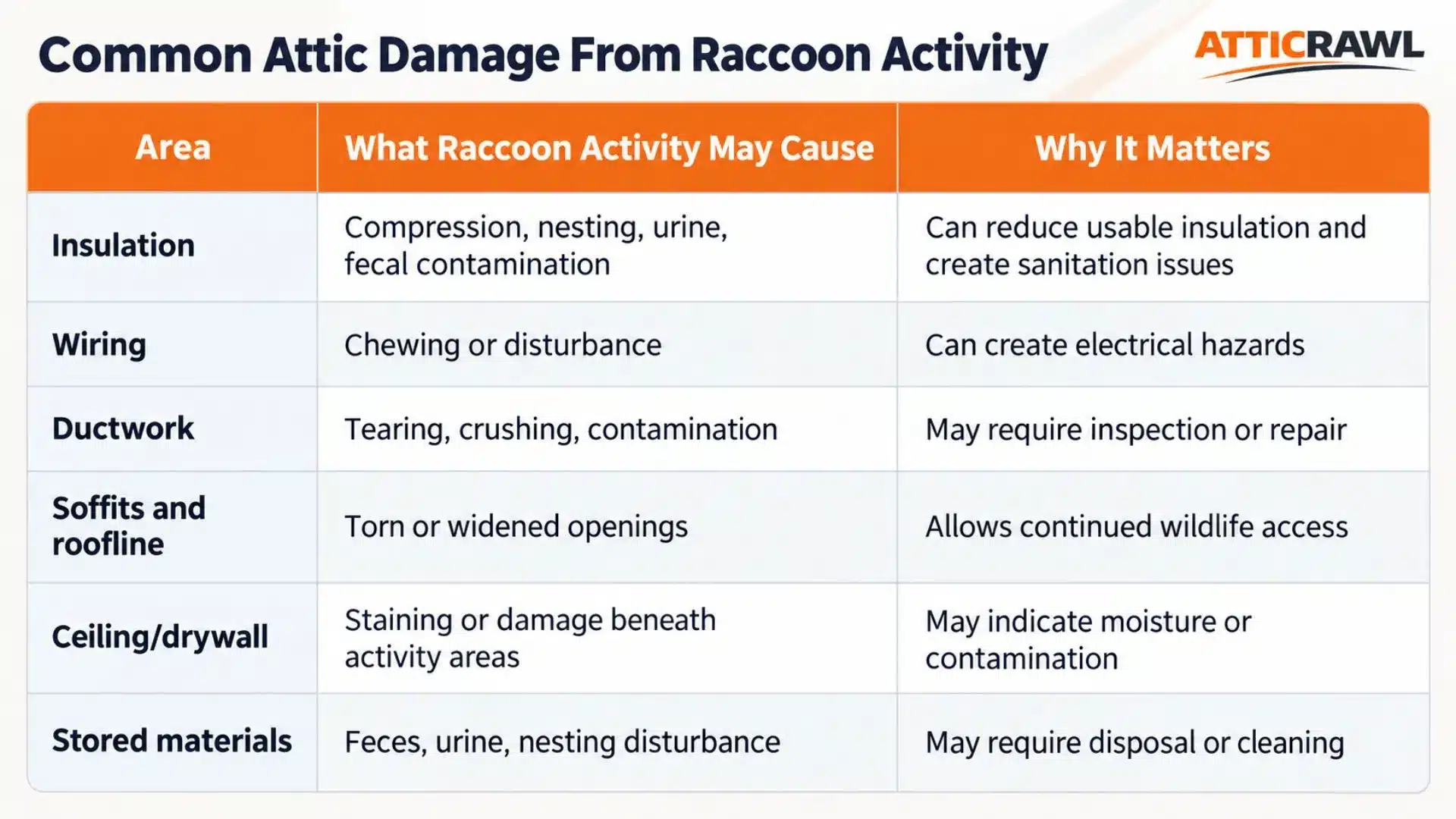
If we were in your shoes, we would pay particular attention to damage that affects the attic beyond the animal’s den area. A torn soffit can leave the home open to future wildlife, while contaminated insulation or damaged wiring may require separate cleanup or repair after the animal is gone.
What to Do If a Raccoon Is in Your Attic
If you suspect a raccoon is in your attic, keep people and pets away, confirm the activity from a safe distance, consider whether kits may be present, avoid sealing active openings, and arrange proper removal. Getting rid of a raccoon in the attic is safest when each step happens in the right order.
The early decisions matter because one rushed action can make the problem harder to resolve. We recommend treating the attic as an active wildlife area until you know exactly what is happening.
Here are the steps that matter most.
1. Keep People and Pets Away From the Attic
Limit access to the affected attic and keep children and pets away from the area. If the animal enters the living space, create as much distance as you can and avoid physical contact.
2. Confirm Where the Activity Is Coming From
Observe from safe, accessible areas and look for patterns in sound, odor, visible damage, or activity around the roofline. There is no reason to climb onto the roof or crawl toward an animal to confirm its location.
3. Consider Whether Baby Raccoons May Be Present
Female raccoons commonly use protected structures as maternity dens. They generally produce one litter per year, with an average of about four kits, and attics, garages, barns, abandoned buildings, and tree cavities can all serve as den sites.
This changes how the situation should be handled. If the adult is excluded while kits remain inside, the young can be trapped in the attic, and the mother may continue trying to regain access.
This video from Toronto Wildlife Centre shows why checking for baby raccoons matters before an adult is excluded from the attic.
4. Do Not Seal the Opening or Attempt Relocation Too Early
An active opening should stay accessible until you know every animal is out. Premature sealing can trap a raccoon inside or separate a mother from her young.
We also recommend avoiding improvised trapping, poisoning, grabbing, or chasing. Each approach creates extra risk and can complicate the removal process.
5. Arrange Safe Removal and Inspect the Attic Afterward
Professional raccoon in the attic removal starts with understanding where the animal is, how it is entering, whether young are present, and what condition the attic is in. A wildlife professional can choose the appropriate method based on those factors.
After the animal is gone, the work shifts to the attic itself. The space should be checked for feces, urine, damaged insulation, affected wiring or ducts, nesting material, and openings that still need repair.
How Does a Raccoon Get in the Attic?
A raccoon usually gets into an attic through a weak, damaged, or already-open part of the roofline or exterior. Once it finds a vulnerable area, its size and strength may allow it to widen the opening enough to enter.
We usually see the access problem and the attic problem develop together. A loose exterior component gives the animal a starting point, and repeated use can make that weak area easier to reopen. From the ground, the opening may also be hard to spot.
These are common attic raccoon entry points:
- Loose or damaged soffits
- Roof vents
- Fascia gaps
- Roof-to-wall intersections
- Openings around chimneys
- Damaged roof edges
- Existing wildlife damage
Small exterior defects can become larger access routes over time. That is why the visible opening may look more severe by the time the homeowner notices activity inside.
What Happens After the Raccoon Is Removed?
After the raccoon is removed, the attic should be inspected for contamination, damaged materials, affected insulation, and any openings that still need repair. Removal ends the wildlife activity, while the condition left behind determines what restoration work is actually necessary.
The inspection may include visible nesting debris, feces and urine contamination, insulation condition, odors or staining, ducts, wiring, roofline damage, and stored materials. From there, the next step could be cleaning, sanitation, repair, or partial or full insulation removal.
Our guide to attic insulation removal and replacement explains how damaged or contaminated insulation is evaluated. We recommend replacing insulation only when its condition justifies it.
How Much Does Attic Raccoon Removal Cost?
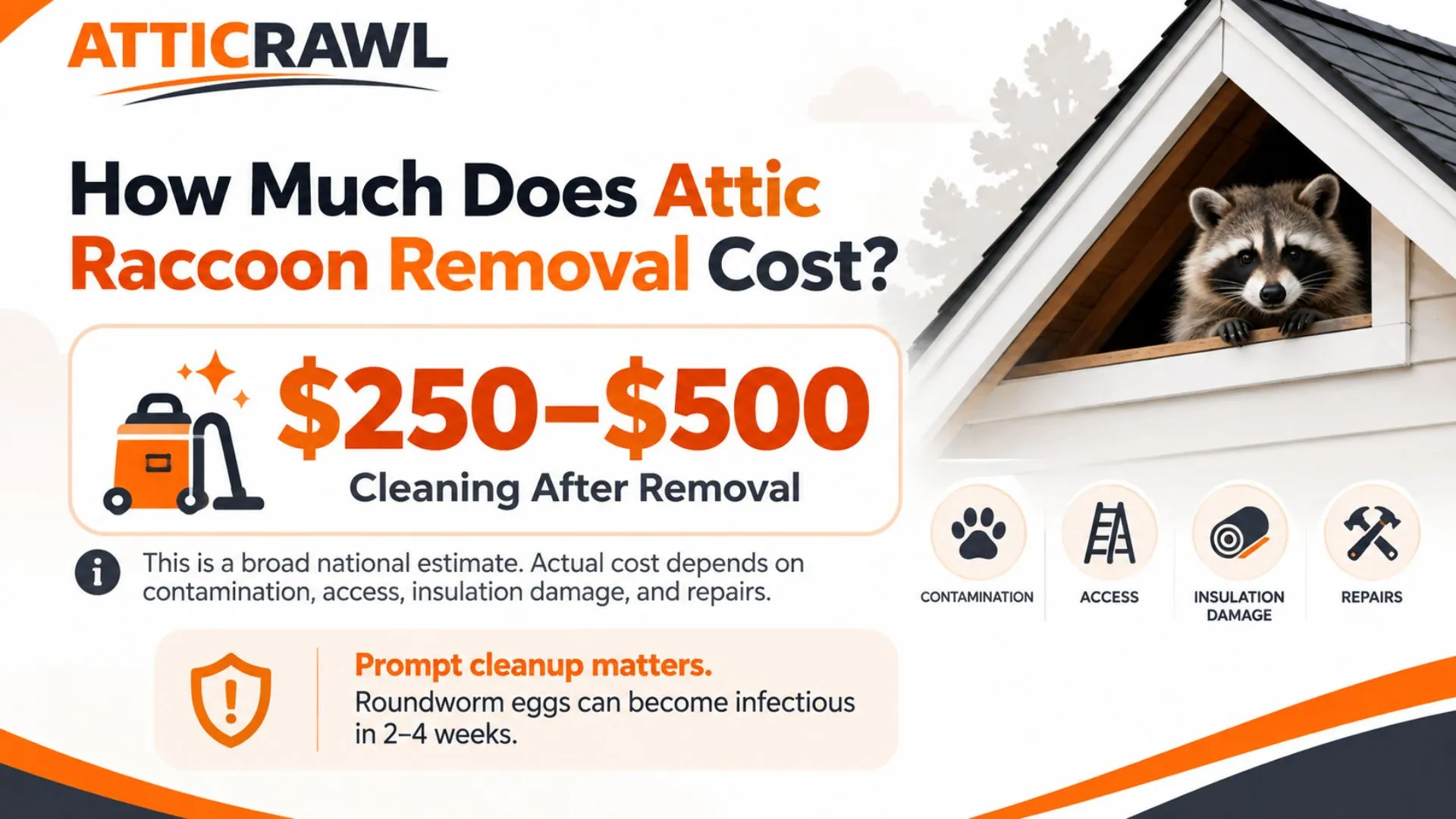
HomeAdvisor’s 2026 consumer-market estimate places cleaning after removal at about $250 to $500, although that is a broad national estimate. Actual work depends on contamination, access, insulation damage, and repairs.
Prompt cleanup matters when droppings are present. Newly deposited raccoon roundworm eggs generally need at least two to four weeks in the environment before they become infectious, so contaminated areas should be addressed carefully and without unnecessary delay.
How Can Atticrawl Help With a Raccoon in Your Attic?
Atticrawl can help homeowners in New Jersey and Eastern Pennsylvania with raccoon removal and the attic problems that may remain afterward. Our professional raccoon removal services are the first step when an animal needs to be evaluated and removed safely.
From there, the condition of the attic determines what else may be needed. Our team can address animal contamination, droppings, attic cleanup, damaged insulation, and wildlife entry points. We can also help with proofing, sanitation, insulation replacement where needed, and related attic repairs.
Atticrawl focuses on the whole attic because a safe result depends on both removing the animal and dealing with the conditions it leaves behind.
Contact Atticrawl today to schedule an inspection and get help restoring your attic safely.
FAQs
Howdy, Benjamin Gibber

Who Removes Raccoons From an Attic?
Atticrawl removes raccoons from attics for homeowners in New Jersey and Eastern Pennsylvania. Wildlife-removal professionals can evaluate entry points, check for dependent young, choose an appropriate removal method, and inspect the attic for damage or contamination afterward.
Do Raccoons Live in Attics?
Yes, raccoons can live in attics because these spaces offer shelter and protection. Females may use them as den sites for young, and attic use can be temporary or seasonal when food, shelter, and access remain available nearby.
Why Do Raccoons Keep Coming Back to My Attic?
Raccoons may return when an entry point was never fully repaired, a weak soffit reopens, food or garbage remains accessible, or the attic still offers a protected den site. After removal, exclusion and repair help reduce the chance of repeat access.



Recent Comments