



Old, damaged, wet, contaminated, or pest-infested insulation can create bigger problems than poor comfort. It can affect indoor air, odors, cleanup quality, disposal, energy performance, and the success of new insulation.
That matters because 89% of U.S. single-family homes are under-insulated. That means many homeowners may already be dealing with poor attic or crawl space performance.
So, in this guide, we’ll explain what to check before hiring a contractor, what to ask, what to avoid, and how to compare quotes with more confidence.
When Should You Hire an Insulation Removal Contractor?
You should hire an insulation removal contractor when the insulation is damaged, contaminated, wet, compacted, moldy, smoky, pest-infested, or no longer performing well.
Old insulation does not always need to be removed, especially if it is dry, clean, and still in good condition. However, removal becomes more important when the material is unsafe, ineffective, or blocking a proper replacement job.
Common signs include:
- Rising energy bills
- Uneven room temperatures
- Musty odors
- Visible droppings
- Roof leaks
- Stained insulation
- Heavy dust
- Cold drafts
These signs usually point to more than normal aging. They can mean the attic or crawl space has moisture, animal activity, air leaks, or insulation that can no longer do its job.
In those cases, insulation removal contractors can inspect the space and explain whether removal is the right next step.
What Should a Good Insulation Removal Contractor Actually Do?
A good insulation removal contractor should inspect the space, remove damaged material safely, clean the area, handle disposal properly, and prepare the home for new insulation if needed.
The job should start with a clear look at why the insulation failed in the first place. That matters because removing old material without checking for moisture, pests, air leaks, or odors can leave the same problem behind.
These are the main things the service should include:
- In-home inspection before the quote
- Dust control and safe work practices
- Proper removal equipment
- Bagging, hauling, and disposal
- Cleanup and sanitation when needed
- Moisture, rodent, mold, or odor checks
- Air sealing recommendations before new insulation
- Clear explanation of what is included and excluded
The best contractor is usually the one who explains the full scope clearly. A low price can look attractive at first, but it may leave out cleanup, disposal, sanitation, or prep work that the home actually needs.
The 7-Step Framework for Choosing the Right Insulation Removal Contractor
Choosing the right contractor is easier when you compare each company by the same standards. A good estimate should show how the contractor thinks, what they check, and how they plan to protect your home.
These are the steps that matter most.
1. Verify Licensing, Insurance, and Local Legitimacy
Start by asking for license details, proof of insurance, workers’ compensation coverage, and a real business address. This may feel basic, but attic and crawl space work can involve ladders, tight spaces, electrical wiring, ducts, pests, and contaminated materials.
If a worker gets hurt or the home is damaged, proper insurance can protect both the homeowner and the contractor.
Also, check whether the company serves your area regularly. A local contractor is more likely to understand common home styles, weather patterns, moisture issues, and insulation needs in your region.

2. Ask About Removal-Specific Experience
Insulation removal is different from basic insulation installation.
A contractor may know how to install batts or blown-in material. But removal can involve damaged fiberglass, cellulose, spray foam, rodent contamination, water damage, attic access problems, disposal, and prep for replacement insulation.
This is especially important when comparing attic insulation removal contractors. This is true because attic work usually includes dust, debris, ductwork, roof leaks, animal entry points, and uneven access.
So, ask how many similar jobs they have handled and what their process looks like from inspection to cleanup.
3. Require an Inspection Before the Estimate
A quote without an inspection can miss important details. Moisture, pests, mold, air leaks, damaged ducts, unsafe materials, and access challenges can all change the scope and price of the job.
The contractor should look at the actual attic or crawl space before giving a final estimate. They should also explain what caused the insulation problem. If the issue came from rodents, roof leaks, poor ventilation, or air gaps, removal alone may only solve part of the problem.
4. Compare Written, Itemized Quotes
A written quote should separate the main parts of the job. That includes removal, labor, disposal, cleanup, sanitation, air sealing, replacement insulation, and any extra repairs.
When comparing companies, do not look only at the final number. Compare what each quote includes.
One contractor may include cleanup and disposal, while another may charge extra for those same tasks. An itemized quote makes it easier to see the real value of the service.
5. Ask How They Handle Dust, Debris, and Disposal
Insulation removal can create dust and debris, especially when the old material is loose, damaged, or contaminated. The contractor should explain how they remove the material, how they protect the living space, and how they reduce mess during the job.
They should also explain where the debris goes after removal. Disposal matters because wet, pest-damaged, moldy, or potentially hazardous materials may require more care than ordinary household waste.
6. Check Reviews, References, and Before-and-After Proof
Reviews can tell you how a company works when the crew is inside someone’s home. Look for details about punctuality, cleanliness, communication, fair pricing, and cleanup quality.
Also, pay attention to reviews that mention whether the crew solved the real problem.
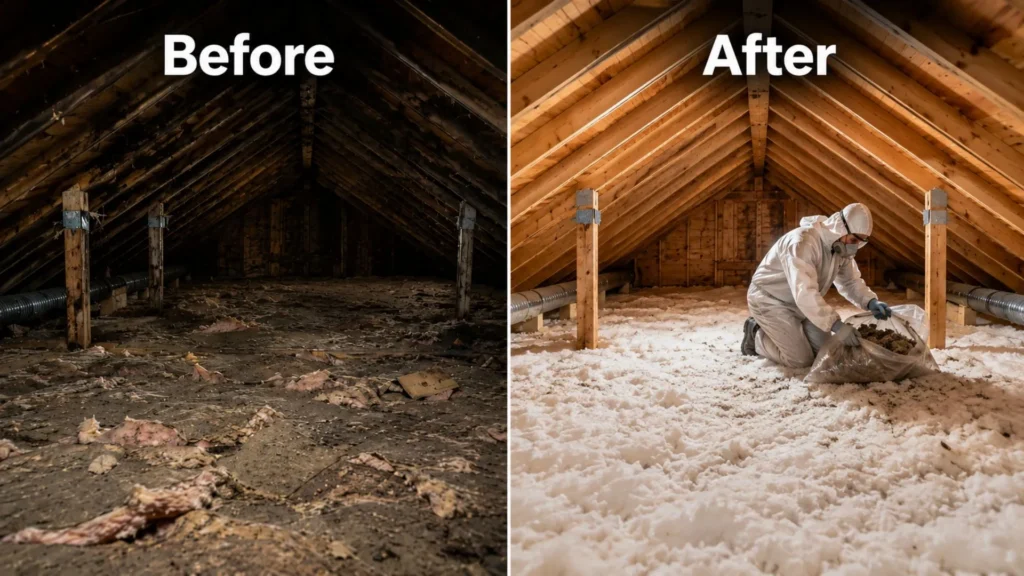
For example, a strong review may mention that the contractor removed contaminated insulation, sealed entry points, cleaned the space, and explained what needed to happen next. Before-and-after photos can also help you see the quality of their work.
7. Review the Contract Before You Sign
Before work starts, review the contract carefully. It should include the scope, price, timeline, materials, disposal, cleanup, payment schedule, and warranty or workmanship details.
Be careful with vague promises. A clear contract helps prevent confusion about what is included. It also gives both sides a shared plan before the crew arrives.
What Red Flags Should You Avoid?
You should avoid contractors who cannot prove their credentials, refuse to inspect the space, give vague quotes, or make the job sound too simple before seeing the actual conditions.
A rushed hiring decision can lead to poor cleanup, hidden fees, or unfinished prep work. And once new insulation covers the area, missed problems become harder to find.
These are the red flags to watch for:
- No license or insurance proof
- Quote given without looking at the attic or crawl space
- No explanation of disposal
- No cleanup or sanitation details
- No written scope of work
- Pressure to sign immediately
- Very low quote compared with other estimates
- No plan for pests, water damage, mold, or odors
- Refusal to discuss asbestos or vermiculite concerns
- Poor communication before the job starts
Walk away if a contractor makes the project sound simple without checking the actual condition of the space.
What Should Be Included in an Insulation Removal Quote?
An insulation removal quote should include the inspection findings, removal method, labor, disposal, cleanup, timeline, and any related services the home needs.
A quote should help you understand the scope rather than leave you guessing after the job begins. Since attic insulation removal typically averages $600-$1,200, with most homeowners paying around $900, it helps to know exactly what that price includes.
These are the quote details to compare:
| Quote Item | Why It Matters |
| Inspection findings | Shows what the contractor found and why removal is recommended |
| Insulation type and removal method | Helps explain the difficulty of the job and the equipment needed |
| Labor and access difficulty | Accounts for tight spaces, attic height, crawl space access, and setup time |
| Dust control and home protection | Helps keep debris from spreading into living areas |
| Bagging, hauling, and disposal | Confirms what happens to the old insulation after removal |
| Sanitation or deodorizing, if needed | Matters when pests, odors, or contamination are present |
| Air sealing recommendations | Helps prepare the space for better energy performance |
| Replacement insulation option | Shows whether the contractor can complete the full project |
| Timeline | Sets expectations for how long the work should take |
| Warranty or workmanship details | Gives the homeowner clarity after the project is complete |
After reviewing the quote, ask whether the price covers removal only or removal plus cleanup, sealing, and replacement insulation. That one question can prevent a lot of confusion.
How Atticrawl Can Help Homeowners Choose the Right Solution
Atticrawl helps homeowners in New Jersey and Eastern Pennsylvania with more than basic insulation removal. Our services include:
- Insulation removal
- Insulation installation
- Attic cleaning
- Sanitation
- Rodent proofing
- Air gap sealing
- Air duct repair and replacement
- Crawl space insulation
- Vapor barriers
- Crawl space encapsulation
That makes us a practical option for homeowners who want a team that can inspect the problem and remove damaged or contaminated insulation safely. We can also clean and sanitize the area when needed, address pest or air leak concerns, and prepare the space for new insulation.
Atticrawl brings 33+ years of field experience, is fully licensed, bonded, and insured, and has served 30K+ satisfied customers across 30K+ completed projects. We have also removed 65M+ square feet of insulation!
If you’re a homeowner and need help with insulation removal, make sure to contact us today.
FAQs
How Much Does It Cost to Remove Insulation From an Attic?
It usually costs $600-$1,200 to remove insulation from an attic, with many homeowners paying around $900. The final cost depends on attic size, insulation type, access, contamination, disposal, and whether sanitation or replacement insulation is included.
How to Choose the Right Insulation for Your Home?
Choose insulation based on the area of the home, climate, target R-value, moisture conditions, air sealing needs, budget, and past damage. A good contractor should explain the material type, depth, R-value, and why that choice fits your home.
What Time of Year Is Insulation Cheapest?
Insulation may be easier to schedule or more competitively priced in spring or fall. However, urgent removal should not wait if there is water damage, pests, mold, odors, or suspected hazardous material in the attic or crawl space.
Why Choose Insulation Contractors?
Choose insulation contractors because they bring the right equipment, safety practices, disposal process, and installation knowledge. They can also spot air leaks, duct problems, moisture issues, and contamination that a homeowner may miss.



Recent Comments