


You might be standing in a home-improvement store, comparing two nearly identical rolls of insulation. Or maybe you are looking at old attic batts and wondering whether that paper backing serves a real purpose.
Faced and unfaced insulation can provide similar thermal performance. The facing mainly changes how moisture moves through the ceiling or roof assembly. So, the right choice depends on where the insulation will go, what is already there, how the attic is ventilated, and what your local climate requires.
What Is Faced vs. Unfaced Insulation?
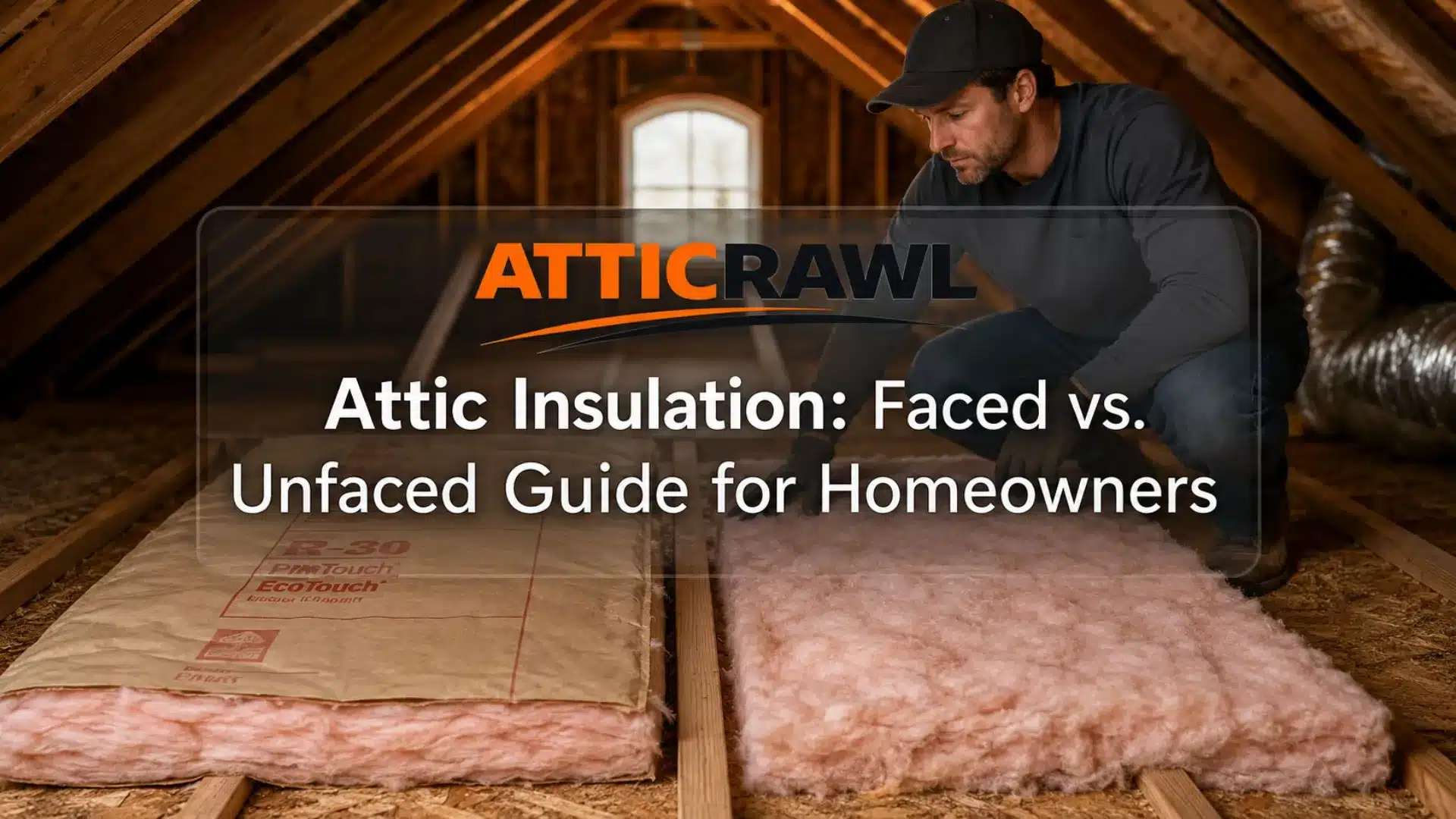
Faced insulation has an attached vapor-retarding layer, while unfaced insulation has no attached facing and allows the assembly more room to dry.
The attached material is usually kraft paper, foil, or another manufactured facing. When it sits in the correct location, it can slow water vapor as it moves through a wall or ceiling assembly. Kraft-faced fiberglass is usually rated at 1.0 perm or less, which generally places it within the Class II vapor-retarder range under U.S. code definitions.
Unfaced insulation contains the insulating material alone. It is often used where another part of the assembly already provides vapor control or where a second insulation layer is being added.
That basic distinction explains much of the faced vs unfaced insulation decision. The fiberglass, mineral wool, or other insulating material supplies most of the R-value. And the facing mainly affects vapor movement and how the product is secured.
Kraft facing should also be understood as a vapor retarder rather than a complete air barrier. Painted drywall may already provide some vapor control, even when the insulation above it is unfaced.
And because standard kraft and foil facings can burn, they should not remain exposed unless the product instructions and local code specifically permit that installation.
Here’s a YouTube video that explains this further:
When To Use Faced and Unfaced Insulation?
Faced insulation may suit a first layer that needs vapor control. Unfaced insulation is generally used for added layers and assemblies that already have a vapor-control component.
The practical faced vs unfaced attic insulation choice starts with the location and stage of the project. These are the main situations to consider.
The First Insulation Layer on a Vented Attic Floor
Faced insulation may be appropriate as the first layer between ceiling joists when the ceiling assembly requires a vapor retarder on the conditioned side.
In a typical vented attic within a heating-dominated climate, the facing usually points downward toward the rooms below. Still, we would check the climate, ceiling finish, product instructions, and local requirements before choosing it automatically.
The home may already have enough vapor control within the ceiling assembly.
A Second Layer Over Existing Attic Insulation
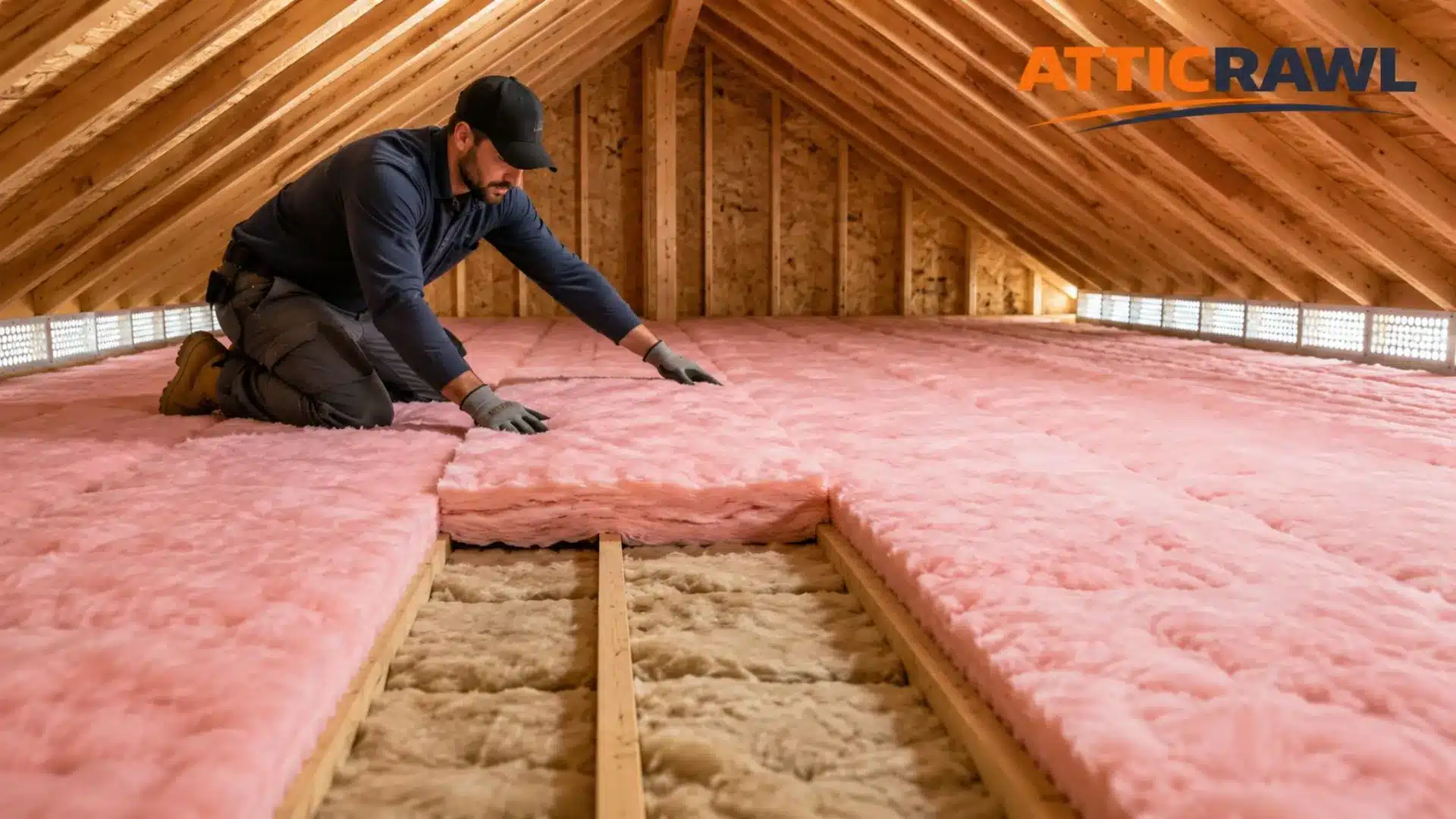
A second insulation layer should generally be unfaced. Another facing can create a vapor-retarding surface between the two layers, which may reduce the assembly’s ability to dry.
ENERGY STAR specifies unfaced insulation for a second layer of attic batts. It also recommends running the new layer perpendicular to the first, so it covers joists and reduces thermal bridging.
That crosswise layout also helps cover seams and small gaps. When both layers are installed correctly, their R-values can be added together to estimate the total thermal resistance.
Roof Rafters, Knee Walls, and Conditioned Attics
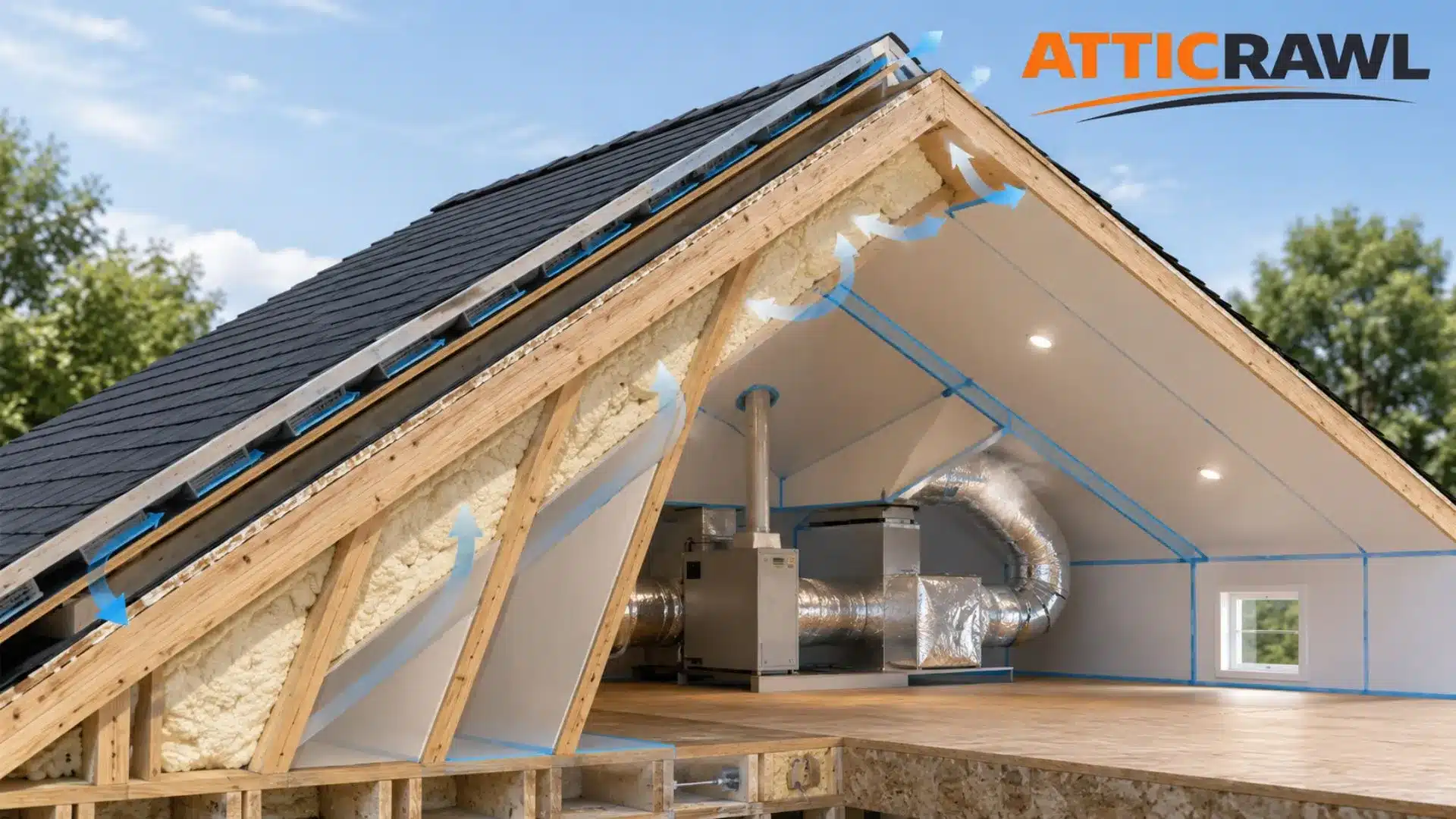
Rules for an attic floor should not be carried over automatically to roof rafters, knee walls, or conditioned attic spaces.
These assemblies need a more complete moisture-control plan. Roof-deck temperature, ventilation channels, fibrous insulation, air barriers, and any spray foam must work as one system.
We recommend having these areas reviewed before selecting a facing. An unsuitable setup can allow humid indoor air to reach a cold roof surface, where condensation and moisture damage may follow.
Crawl Spaces Require a Separate Decision
Attics and crawl spaces face different moisture conditions. For that reason, faced vs unfaced insulation crawl space guidance should be evaluated separately.
A crawl space may be vented, encapsulated, damp, or exposed to ground moisture. Advice meant for a dry attic floor may perform poorly beneath the home.
Is Faced or Unfaced Insulation Better?
Neither faced nor unfaced insulation is universally better. The stronger choice is the one that supports the assembly’s vapor control, drying potential, and thermal performance.
In our experience, problems usually begin when a product is chosen by appearance alone. A search for faced vs unfaced insulation for attic projects becomes much easier once you identify the exact location and existing materials.
Here are the most common starting points:
| Attic situation | Likely starting choice | Why | What to confirm |
| Empty vented attic floor | Faced may be appropriate | It can provide a vapor-retarding layer on the conditioned side | Climate, ceiling materials, and code |
| Adding batts over existing insulation | Unfaced | It avoids a second facing between layers | Existing insulation is clean and dry |
| Adding batts over loose-fill insulation | Unfaced | It preserves drying potential and avoids buried facing | Loose fill is evenly distributed |
| Roof rafters or unvented attic | Assembly-specific | Condensation control depends on the complete roof system | Foam, ventilation, climate, and roof design |
| Existing vapor control already present | Often unfaced | Another vapor-retarding layer may be unnecessary | Type and location of the existing layer |
Before adding material, look for signs your attic insulation may need replacement. Wet, compressed, contaminated, or badly displaced insulation can undermine the new layer.
Also, remember that facing does not increase the labeled R-value of the batt. Thickness, material density, compression, gaps, and overall installation quality have a much greater effect on thermal performance.
Which Way Should Faced Insulation Point in an Attic?
Faced insulation generally points toward the warm-in-winter side of the assembly. In a conventional vented attic insulated at the ceiling plane, the facing usually points downward toward the conditioned rooms.
The fiberglass side then faces upward into the unconditioned attic. Facing tabs should be secured according to the manufacturer’s instructions so the batts remain properly positioned.
Kraft or foil facing should not remain exposed in an accessible attic unless the product has approval for that use. Standard facings can present a fire-safety concern.
The usual direction may also change in hot-humid climates or unusual roof assemblies. So, the warm-side rule should be treated as a starting point rather than a universal shortcut.
And while the paper surface can make a batt easier to staple, that convenience should never place the facing between two insulation layers.
Can You Install New Insulation Over Old Attic Insulation?
Yes, new unfaced insulation can often be installed over old attic insulation when the existing material is dry, clean, stable, and evenly distributed.
A top-off can improve thermal resistance without the cost and disruption of full removal. Still, the old layer needs a careful inspection because new material can hide damage that should have been addressed first.
Here are the main warning signs to check:
- Water stains, active leaks, or damp sections
- Rodent droppings, nesting materials, or strong odors
- Mold or widespread contamination
- Heavy compression or large uncovered areas
- Debris that prevents the new layer from lying evenly
- Faced batts with the facing in the wrong position
- Blocked soffit vents or missing ventilation channels
When these issues appear, it helps to review whether old attic insulation should be removed or topped off.
Full removal is not necessary in every older attic. Clean and stable insulation may remain in place, while damaged or contaminated areas may need removal before the upgrade continues.
What Installation Mistakes Reduce Performance or Create Moisture Problems?
Installation mistakes reduce performance when they leave gaps, compress the insulation, interrupt ventilation, or allow air and moisture to move around the batts.
A good product can still perform poorly when the surrounding details are overlooked. These are the mistakes we would check first:
- Using faced insulation for every layer: Multiple facings can create unnecessary vapor-retarding surfaces between the batts and limit drying.
- Skipping attic-floor air sealing: Facing cannot close gaps around wiring, plumbing, framing, fixtures, or attic hatches. An Oak Ridge National Laboratory guide estimates that air leakage accounts for about 70% to 90% of moisture movement through an exterior envelope.
- Compressing thick batts into shallow cavities: Compression lowers the total R-value. Industry data estimate that a 14-inch R-49 batt compressed into an 11⅞-inch cavity performs at about R-44, which is roughly a 10.2% reduction.
- Leaving gaps or misaligned seams: Empty spaces and exposed framing create direct paths for heat flow.
- Blocking soffit vents: Insulation at the eaves can interrupt airflow when ventilation channels are missing or covered.
- Covering recessed lights incorrectly: Fixtures that are not rated for insulation contact generally require clearance.
- Leaving kraft or foil facing exposed: Standard facings may create a fire-safety concern.
- Covering wet or pest-damaged insulation: The moisture source or infestation should be resolved before new material hides it.
How Can Atticrawl Help You Choose the Right Attic Insulation?
Through our professional attic insulation installation services, we can inspect your attic, evaluate the existing materials, and explain which insulation approach fits the condition of the space.
General guidance can take you part of the way. Still, an attic may contain hidden gaps, compressed batts, pest contamination, damaged ductwork, or moisture that changes the scope of the project.
Depending on what we find, the work may involve an insulation top-off, damaged material removal, cleaning, sanitation, air-gap sealing, rodent proofing, duct repairs, or a complete insulation upgrade.
Atticrawl serves homeowners throughout New Jersey and Eastern Pennsylvania. Our team also offers free estimates, so you can understand the attic’s condition before committing to a particular material or installation plan.
Contact us today to learn more!
Final Thoughts: Match the Insulation to the Attic
Faced insulation may work well as an initial layer when the ceiling assembly requires vapor control. Unfaced insulation is usually the better starting point when another layer is being added.
Even then, the final choice depends on location, existing materials, ventilation, climate, moisture, and installation quality. When the attic is damaged, confusing, or more complex than a standard vented space, a professional inspection can prevent an expensive mistake.
FAQs
Is there a cost difference between faced and unfaced insulation?
Yes, faced batts usually cost slightly more because of the attached material. However, attic size, R-value, labor, removal, access, repairs, and preparation have a larger impact on total attic insulation removal and replacement costs.
What is the main difference between faced and unfaced insulation?
The main difference is the attached vapor-retarding layer. Faced insulation includes kraft paper, foil, or another facing, while unfaced insulation does not. Both can provide similar R-values when material, thickness, and installation quality are comparable.
When should I use faced insulation in my attic?
Faced insulation may be appropriate as the first layer in an attic-floor assembly that requires a vapor retarder on the conditioned side. Confirm the climate, ceiling materials, manufacturer instructions, and local requirements before installation.
Is it okay to mix faced and unfaced insulation in the same wall or ceiling?
Yes, they can be used in the same assembly when the faced layer is correctly positioned, and later layers are unfaced. Avoid placing facing between insulation layers or creating vapor-retarding surfaces on both sides without an assembly-specific review.



Recent Comments