


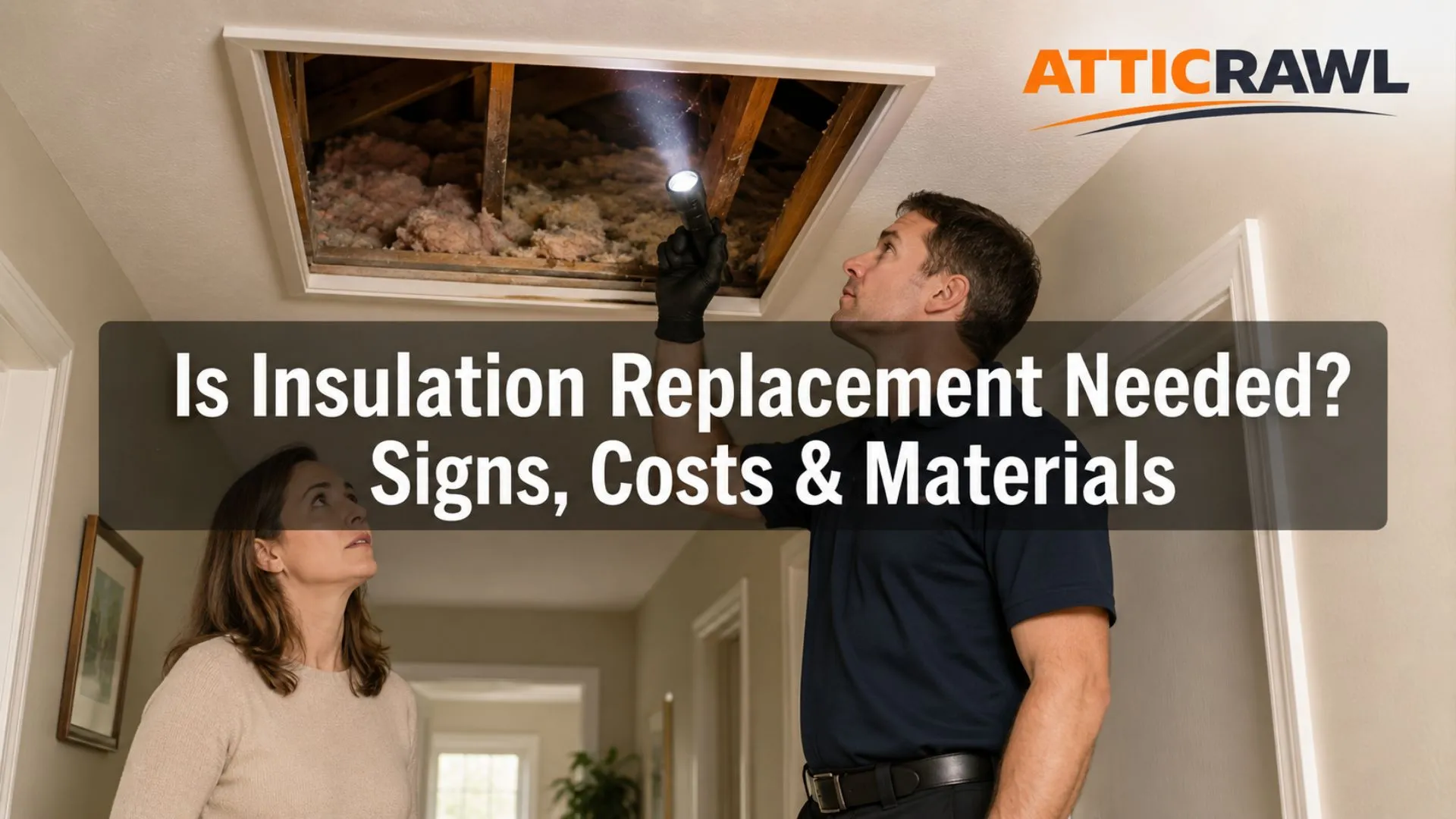
High bills, cold rooms, drafts, damp areas, pest activity, and an attic that looks dirty or old can all point to a larger comfort problem. Many homeowners do not think about insulation replacement until the house starts feeling harder to heat, cool, or keep dry. And by that point, the insulation may be only part of the issue.
In this guide, we’ll explain the main warning signs, common material options, cost factors, and when a professional inspection makes sense.
When Does Insulation Actually Need to Be Replaced?
Insulation usually needs to be replaced when it is wet, moldy, pest-contaminated, heavily compressed, missing in key areas, or no longer helping the home hold temperature. Old insulation can still stay in place when it is clean, dry, and performing well.
Age matters, though, because real home conditions can shorten performance. Moisture, rodents, settling, dust, poor ventilation, and air leaks can all reduce the value of insulation long before the material reaches its advertised lifespan.
This is one reason the issue is so common. According to research commissioned by NAIMA and conducted by ICF Consulting in October 2024, 89% of U.S. single-family homes are under-insulated.
7 Signs It May Be Time to Replace Your Insulation
Some insulation problems show up in obvious ways, while others build slowly over several seasons. A single symptom may come from several causes, so it helps to look at the full pattern before deciding what to do.
Here are the signs worth checking first.
High Energy Bills Keep Rising
Insulation helps slow heat transfer, so thin or damaged insulation can make the heating and cooling system work harder. If your utility bills keep climbing, we recommend comparing them to the same season from previous years. That gives you a clearer picture than comparing winter bills to summer bills.
This also matters because insulation upgrades can make a measurable difference when air leaks are addressed as well. EPA estimates homeowners can save an average of 15% on heating and cooling costs, or 11% on total energy costs. You can do this just by air sealing and adding insulation in attics, floors over crawl spaces, and accessible basement rim joists.
Rooms Feel Uneven, Drafty, or Hard to Heat and Cool
One room may feel cold while another feels warm because insulation coverage is uneven, settled, missing, or paired with air leaks. This typically shows up in bedrooms, bonus rooms, top floors, and rooms above crawl spaces.
From our experience, we’ve seen that drafts near attic hatches, knee walls, outlets, baseboards, or basement rim joists can also point to hidden gaps. When insulation and air sealing are weak together, comfort problems tend to feel worse during temperature swings.
You See Moisture, Mold, or Musty Odors
Wet insulation loses effectiveness and can hold moisture against nearby surfaces. That can create a bigger problem if the moisture reaches wood, drywall, or other building materials.
Musty odors, staining, damp attic decking, damp crawl space surfaces, or visible mold are warning signs. So, try to avoid disturbing the material when you see these conditions. A professional should inspect the source of the moisture before any new insulation goes in.
Pests Have Been in the Attic or Crawl Space
Rodents, raccoons, squirrels, and other pests can contaminate insulation with droppings, urine, nesting material, and odors. They can also move insulation around, tear it apart, or create gaps that reduce coverage.
This is usually a removal-and-replacement issue because adding new material over contaminated insulation can trap odors and leave the underlying problem in place. Pest entry points also need to be sealed, or the same damage can happen again.
The Insulation Looks Compressed, Dirty, Thin, or Uneven
A safe visual check can reveal a lot. Because of that, we recommend looking for sagging batts, gaps, bare spots, dusty material, insulation below joist level, or blown-in insulation that has settled into uneven patches.
Compressed insulation cannot perform at its full rated value because trapped air is part of what helps it resist heat flow. If the attic floor looks patchy or thin across large areas, the home may need more than a simple touch-up.
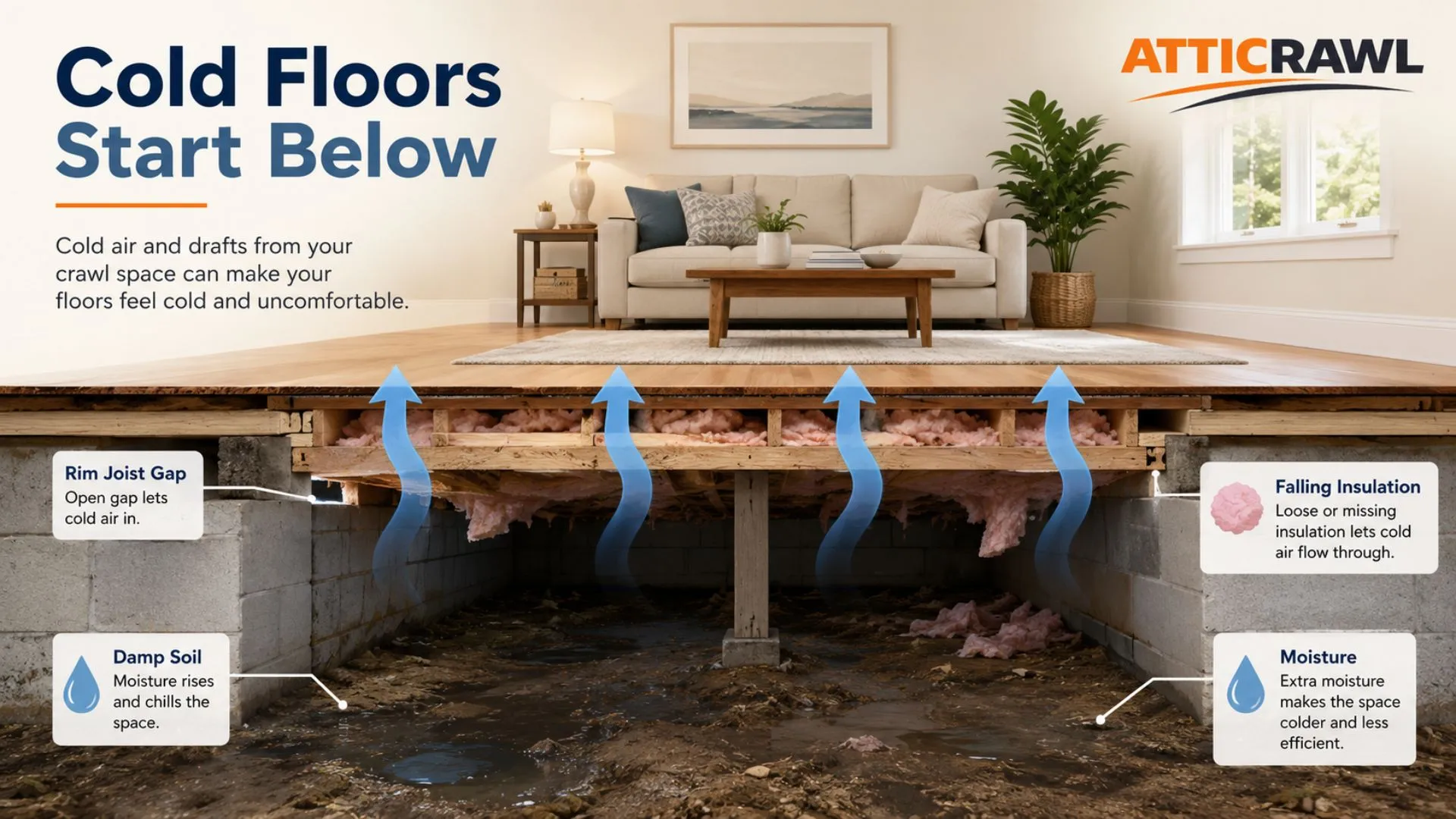
Cold Floors, Damp Crawl Spaces, or Basement Drafts are Becoming Noticeable
Insulation problems can also happen below the living area. Cold floors, damp crawl spaces, and rim joist drafts can point to missing, damaged, or poorly installed material under the home.
In some cases, insulation repair in crawl space areas may solve a limited issue. But when moisture, pests, or falling insulation are involved, the crawl space may need cleaning, sealing, moisture control, and new insulation.
Ice Dams or Roof Heat Loss Keep Showing Up in Winter
Ice dams can happen when heat escapes into the attic and warms the roof deck unevenly. That heat can melt snow on the roof, and then the water can refreeze near the colder edges.
An estimated 25% of all home heat loss occurs through the attic or roof, so this warning sign deserves attention in cold climates. If you need to replace insulation in roof areas or attic spaces, ventilation and air sealing should be checked at the same time.
What Insulation Materials Should You Compare?
Homeowners should compare fiberglass, cellulose, spray foam, mineral wool, and foam board based on where the material will be installed and what problem it needs to solve. The best choice for an open attic floor may differ from the best choice for rim joists, crawl spaces, or moisture-prone areas.
Material also affects cost, access, R-value, and long-term performance. These are the main options to compare:
| Material | Common Use | Main Benefit | Watch-Out |
| Fiberglass batts | Attics, walls, crawl spaces | Affordable and common | Can compress or leave gaps if poorly installed |
| Blown-in fiberglass | Attic floors | Good coverage for open attic areas | Can settle or shift |
| Cellulose | Attics and retrofit areas | Dense coverage and recycled content | Can absorb moisture |
| Spray foam | Air sealing, rim joists, and some attic applications | Strong air sealing value | Higher cost and installation sensitivity |
| Mineral wool | Walls, floors, sound/fire resistance | Durable and fire-resistant | Often costs more than basic fiberglass |
| Foam board | Basements, crawl spaces, rim areas | Rigid and useful for moisture-prone zones | Needs careful sealing at edges |
Keep in mind: The right material depends on location, moisture risk, budget, access, climate, and whether old insulation needs to be removed first.
How Much Does Replacing Insulation Cost?
Replacing insulation usually costs $1,500-$4,500 for many attic projects that include removal. Meanwhile, full projects can cost more when access, contamination, or higher-end materials are involved.
Average cost to insulate an attic is $1,500-$3,500 for a new install and $1,500-$4,500 for replacement including removal.
Real pricing depends on square footage, access, material, contamination, disposal, and air sealing. It also depends on whether the project involves an attic, crawl space, roofline, walls, or basement rim joists.
These are the common insulation removal cost factors to review.
| Cost Factor | Typical Range |
| Old insulation removal | $1.00-$2.00 per sq. ft. |
| Air sealing | $250-$1,500 |
| Basic attic insulation install | $1,500-$3,500 |
| Replacement with removal | $1,500-$4,500 for many attic projects |
| Full removal and replacement | Around $3.50-$7.00 per sq. ft. |
DIY can reduce labor costs for simple, clean fiberglass projects. However, insulation removal and replacement can become risky when the job involves contaminated material, tight attic spaces, crawl space moisture, electrical hazards, rodent waste, or disposal requirements.
How to Check Your Insulation Before Calling a Contractor
A quick self-check can help you understand whether the problem looks minor or urgent. For this to work properly and safely, we think you should stay at the access point when the area feels unsafe.
Also, avoid disturbing insulation if you see pests, droppings, mold, vermiculite-like material, damaged wiring, wet areas, or unstable flooring.
Here are the steps you should follow:
- Check energy bills from the same season last year.
- Look for room-to-room temperature differences.
- Safely inspect visible attic or crawl space insulation from an access point.
- Look for signs of moisture, staining, droppings, odors, or bare spots.
- Check whether insulation sits below the joists in the attic.
- Note cold floors, drafts near rim joists, or damp crawl space smells.
- Call a pro if the issue involves contamination, moisture, pests, or hard-to-access areas.
You may need to replace insulation in crawl space areas when the material is damp, falling, pest-damaged, or no longer covering the underside of the home properly.
When Professional Replacement Makes More Sense
Professional replacement usually makes more sense when the project involves old material removal, pest contamination, crawl space moisture, attic cleaning, air sealing, duct issues, roofline insulation, or hard-to-access spaces. The job usually involves more than placing fresh material over the old layer.
A contractor can inspect the surrounding conditions before recommending the next step. That includes ventilation, air leaks, moisture sources, rodent entry points, damaged ducts, and unsafe access.
This is especially important when attic cleaning and insulation replacement need to happen together. After all, cleanup, sanitation, sealing, and installation may all affect the final result.

How Atticrawl Can Help You With Insulation Replacement
Atticrawl helps homeowners in New Jersey and Eastern Pennsylvania with attic and crawl space services related to damaged, old, or underperforming insulation.
Our work can include insulation removal, insulation installation, air gap sealing, attic cleaning, sanitation, and rodent proofing. We also provide crawl space insulation, vapor barriers, crawl space encapsulation, basement rim joist insulation, and air duct repair or replacement when needed.
That matters when the problem involves drafts, high bills, pest contamination, old insulation, cold floors, moisture, or attic debris. Instead of guessing from the access hatch, Atticrawl can evaluate the space and recommend the right next step for your home.
Contact us to schedule an inspection and find out whether your home needs repair, cleanup, air sealing, or full replacement.
FAQs
How Do I Choose the Right Type of Insulation?
Choose the right type of insulation by matching the material to the area, moisture risk, R-value needs, budget, and access. Attics, crawl spaces, rim joists, and roofline applications may need different materials, especially when air sealing or removal is needed first.
Can I Replace Insulation Myself, or Should I Hire a Professional?
You can replace insulation yourself when the project is small, clean, easy to access, and limited to simple fiberglass. But hire a professional for blown-in insulation, spray foam, crawl spaces, pest waste, mold, moisture, electrical hazards, damaged ducts, unknown old materials, or large removal jobs.
What Areas of the House Should I Prioritize for Insulation Replacement?
Prioritize the attic, crawl space, basement rim joists, floors over unconditioned spaces, and any area with moisture, pest damage, or missing insulation. The best starting point depends on where you notice comfort problems, drafts, high bills, or visible damage.



Recent Comments