


Before you call a contractor or commit to an insulation project, you probably want a rough idea of the cost. Attic size matters, though it only tells part of the story. Material choice, existing insulation, access, air sealing, and removal work can all move the final price.
This calculator gives you a quick planning range, and the rest of this guide explains what may raise or lower it. Here’s the calculator, so make sure to try it out:
Planning estimate
Attic Insulation Cost Calculator
Enter a few project details to estimate a low, typical, and high budget. The result includes insulation installation and any preparation work you select.
How Does This Attic Insulation Cost Calculator Work?
This attic insulation cost calculator works by combining your project details with estimated material, labor, and preparation costs. We use the information you enter to build a practical budget range rather than a single rigid number.
The process is simple:
- Enter the attic’s square footage or dimensions.
- Select the condition of the current insulation and your preferred new material.
- Choose the target R-value, installation method, and any additional work.
- Review the low, typical, and high budget estimates.
A useful insulation cost estimator should also show the estimated cost per square foot and separate materials, labor, removal, and optional preparation work when those fields apply. That breakdown matters because a low headline number can leave out several real project costs.
So, treat the result as a planning estimate. A contractor still needs to inspect the attic before confirming the final scope and price.
How Much Does Attic Insulation Cost?
Attic insulation costs about $2,100 for the average U.S. project in 2026, with a typical range of $1,700 to $2,500, according to Angi. The average cost for insulation per square foot is usually around $1 to $3 based on Angi’s July 2026 data. Your total may fall above or below those figures because the job itself can be simple, messy, or somewhere in between.
A clean attic that only needs more material usually costs less than a space with damaged insulation, debris, pests, or air leaks. Here are the main cost categories:
| Cost category | What it usually covers | Why the price varies |
| Basic insulation top-off | Additional material installed over usable insulation | Existing depth, target R-value, and material |
| New insulation installation | Material and professional installation | Attic size, labor, access, and climate requirements |
| Removal and replacement | Old material removal, disposal, and new insulation | Contamination, insulation type, and attic condition |
| Full attic preparation | Removal, cleaning, air sealing, baffles, and installation | Moisture, pests, ducts, ventilation, and repairs |
The attic insulation types and costs also vary because each material has its own installation method. For example:
- Fiberglass batts can work well in open, regular spaces.
- Blown-in fiberglass and cellulose can cover irregular areas more evenly.
- Mineral wool tends to cost more than basic fiberglass.
- Spray foam usually requires skilled installation and a higher budget.
A full replacement costs more than a top-off because the crew has to remove and dispose of the old material before installing anything new. Our guide to attic insulation removal and replacement costs explains how those extra steps affect the budget.
Main Factors Behind the Final Price
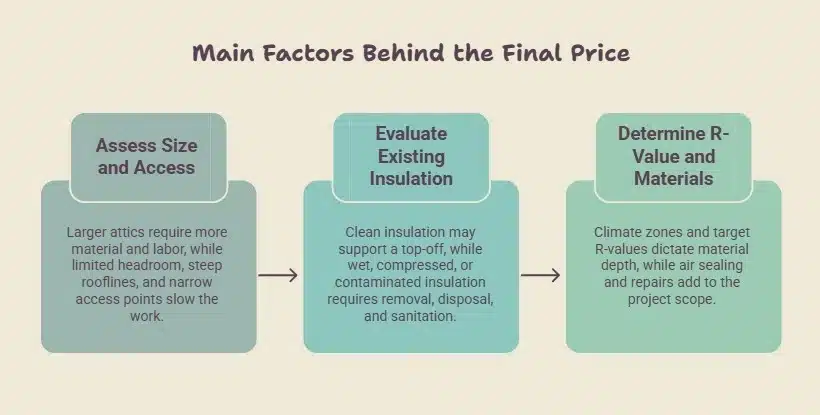
Two attics with the same floor area can produce very different estimates because the work inside each space may be completely different. These are the main factors that shape the final number.
Attic Size, Access, and Location
A larger attic needs more material and more labor. Limited headroom, steep rooflines, narrow access openings, and tight corners can slow the work. Regional labor rates also matter, especially when crews have to move hoses, tools, bags, or equipment through a difficult entry point.
Existing Insulation and Preparation Work
Clean insulation that still performs well may support a simple top-off. Wet, compressed, pest-damaged, or contaminated insulation may need to come out first. That change can add removal, disposal, cleaning, and sanitation to the project.
Pro tip: Atticrawl’s guide explains the attic insulation removal and replacement process in more detail.
R-Value, Materials, and Additional Work
Your climate zone and target R-value affect how much insulation the attic needs. A higher target usually means greater depth and more material. Air sealing, ventilation baffles, attic hatch insulation, duct repairs, sanitation, and pest proofing can also add to the scope.
According to Angi’s 2026 data, professional attic air sealing commonly adds about $250 to $750.
How Can I Lower My Attic Insulation Cost?
You can lower your attic insulation cost by defining the real scope early and comparing quotes on the same basis. A cost calculator for insulation gives you a starting point, though the biggest savings come from avoiding bad assumptions and rework.
Here are the steps we recommend:
- Measure the attic carefully before estimating materials.
- Determine whether the project needs a top-off or complete removal.
- Compare itemized contractor quotes that use the same material, R-value, and project scope.
- Fix active roof leaks or moisture problems before new insulation goes in.
- Skip services that an inspection shows the attic does not need.
- Ask about current state, utility, or income-qualified rebate programs.
- Review whether related preparation work can be completed during the same visit.
We also suggest asking each contractor what the quote includes. A cheaper bid can become expensive once disposal, air sealing, baffles, cleanup, or access charges appear later.
When a Calculator Estimate Needs an Attic Inspection
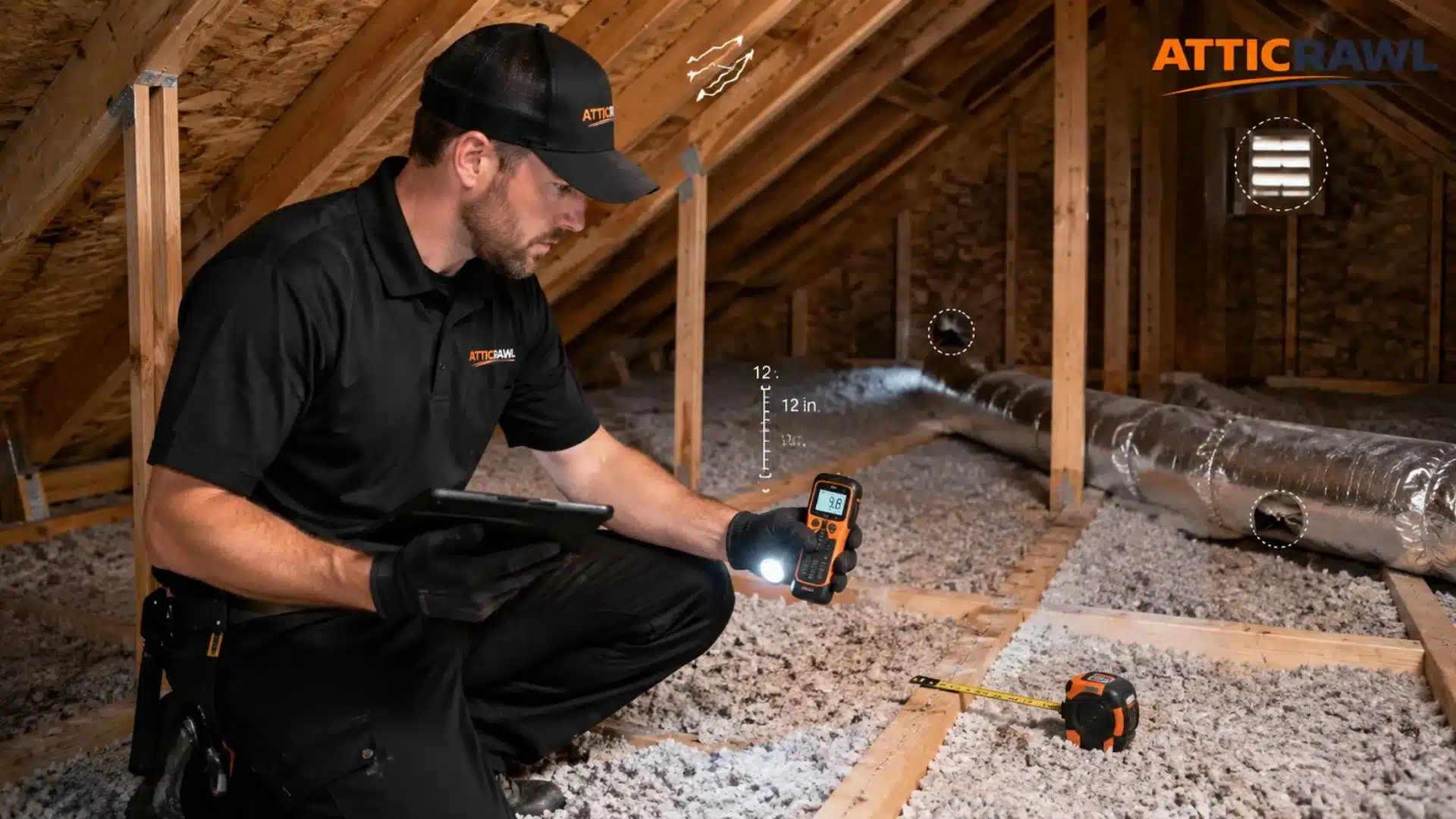
An online calculator cannot see hidden moisture, animal contamination, damaged ducts, blocked vents, compressed insulation, mold concerns, or difficult access. An inspection becomes especially important when you notice odors, visible droppings, water stains, drafts, uneven temperatures, high energy bills, or insulation that looks flattened or disturbed.
Our guide on when home insulation should be replaced can help you understand those warning signs. Removal may also change the budget quickly. Angi’s dedicated 2026 data places existing attic insulation removal at about $1 to $2 per square foot.
Get a Project-Specific Estimate From Atticrawl
For homeowners in New Jersey and Eastern Pennsylvania, Atticrawl can turn the calculator result into a project-specific estimate based on the attic itself. Our team can measure the space, inspect the existing insulation, and evaluate the conditions that affect the scope.
From there, we can determine whether the attic needs a top-off, complete removal, cleaning, sanitation, air sealing, rodent proofing, duct work, or new insulation. That connected approach gives you a clearer picture of the full project before work begins. You can also learn more about our professional attic insulation installation service and the options available for your home.
So, feel free to request a free estimate so the final recommendation reflects the attic’s actual condition rather than a general online range.
FAQs
Does Insulation Cost More for Older Homes?
Insulation can cost more in older homes when the attic needs extra preparation. Age alone does not set the price. Removal, air sealing, wiring precautions, ventilation corrections, and difficult access can all increase the scope.
What’s the Cheapest Type of Insulation?
Fiberglass batts and some loose-fill products are usually among the lowest-cost choices. The best value still depends on labor, coverage, the attic layout, and the R-value the home needs.
Should I Insulate the Walls or the Attic First?
An accessible, under-insulated attic is usually the first priority. Heat transfer through the upper part of the home can have a strong effect on comfort and energy use, and attic work is usually easier to complete than wall retrofits.
Is DIY Insulation Worth It?
DIY insulation may reduce labor costs in a clean, open, and easy-to-reach attic. Professional help is usually safer when the space has pests, moisture, wiring hazards, damaged insulation, or limited access.
Does Insulation Pay for Itself?
Insulation can pay for itself over time, though the timeline depends on climate, current insulation levels, energy prices, project cost, and air leakage. ENERGY STAR estimates that homeowners can save an average of 15% on heating and cooling costs through air sealing and added insulation in attics and other accessible areas.



Recent Comments