


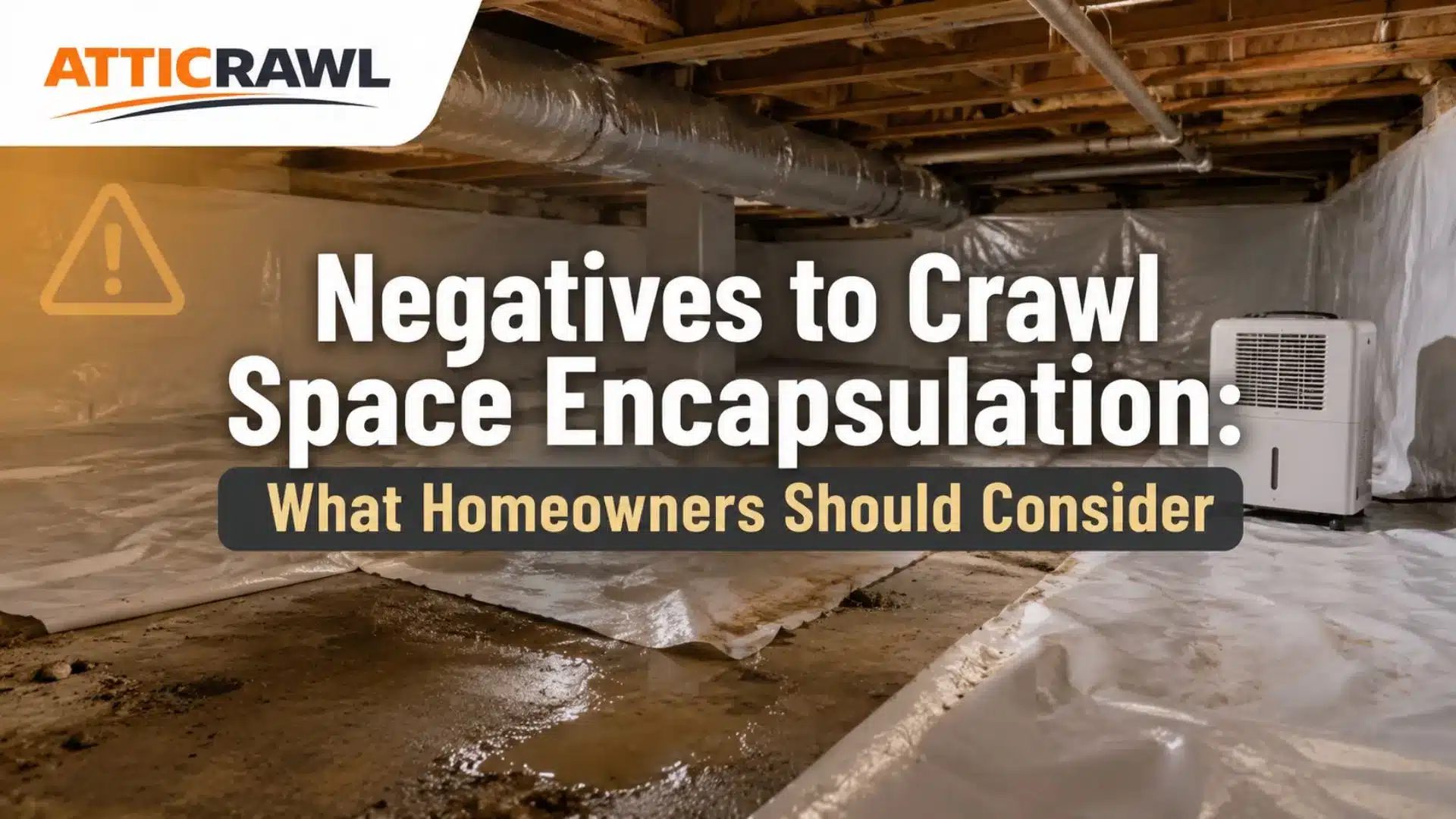
A crawl space quote can feel hard to judge when you are already dealing with musty odors, moisture, pests, cold floors, or rising energy bills. Encapsulation may sound like the complete fix, especially if a contractor says the space needs to be sealed right away.
Still, the negatives to crawl space encapsulation matter before you spend thousands of dollars. This article explains the cost, prep work, moisture risks, maintenance needs, and situations where another repair should come first.
Is Crawl Space Encapsulation Always a Good Idea?
Crawl space encapsulation is a good idea for some homes, although it can be a poor choice when the space has unresolved water, mold, pest, or insulation problems.
In a damp or dirty crawl space, sealing the floor and walls can help control moisture, reduce air leakage, and make the area cleaner. That can be useful when humidity is affecting comfort, pests are entering through gaps, or musty air is moving into the home.
The issue usually comes from rushing the project. If a contractor installs a liner over active water intrusion, rodent contamination, damaged insulation, or drainage issues, the crawl space may still have the same underlying problem under a cleaner-looking surface.
The Biggest Negatives to Crawl Space Encapsulation
Encapsulation has real benefits, but homeowners should understand the trade-offs before approving a quote. Some problems come from the cost of the project, while others come from poor prep or long-term maintenance.
These are the main drawbacks to consider first.
High Upfront Cost Can Make the Project Hard to Justify
The first concern is usually price. Encapsulation is one of the more expensive crawl space projects because it may include cleaning, liner installation, sealing, insulation, and humidity control. Angi’s 2026 data shows an average cost of about $5,500, with most projects ranging from $5,000 to $15,000. Larger spaces can cost more, depending on size and condition.
Costs also increase when the crawl space has damage, moisture issues, or limited access. Basic encapsulation may cost $2 to $4 per square foot, while more complex jobs can reach $3 to $10 per square foot. This range matters because each crawl space has different needs, which can significantly affect the final price.
Energy Savings May Take Years to Pay Back
Lower heating and cooling costs are typically used as a selling point. That can be true, especially when the crawl space has major air leaks, poor insulation, or duct problems. Still, energy savings alone may take a long time to cover the project cost.
Building America research found that unvented, conditioned crawl spaces can reduce heating and cooling energy use by 15% to 18%, while also reducing humidity by more than 20%. That sounds useful, but it does not automatically mean the project pays for itself quickly. In practice, the return depends on climate, HVAC usage, duct condition, insulation quality, air leakage, and the condition of the crawl space before the work.
If the home already performs well, the energy savings may be modest. If the crawl space is damp, leaky, and poorly insulated, the value may come from comfort and moisture control as much as utility savings.
Poor Installation Can Trap Moisture
Encapsulation can backfire when wet conditions are sealed inside the crawl space. This can happen when standing water, damp insulation, plumbing leaks, or moldy material gets covered instead of corrected. A sealed liner may make the space look clean, yet it can also hide moisture movement if the crawl space was never dried and repaired.
Crawl space encapsulation materials matter, but the installation details matter just as much. Thick liners help, although seams, wall coverage, piers, edges, drainage, and sealing quality decide how well the project performs. If those details are rushed, moisture can keep finding its way behind or under the barrier.
Mold and Pest Problems Need Cleanup First
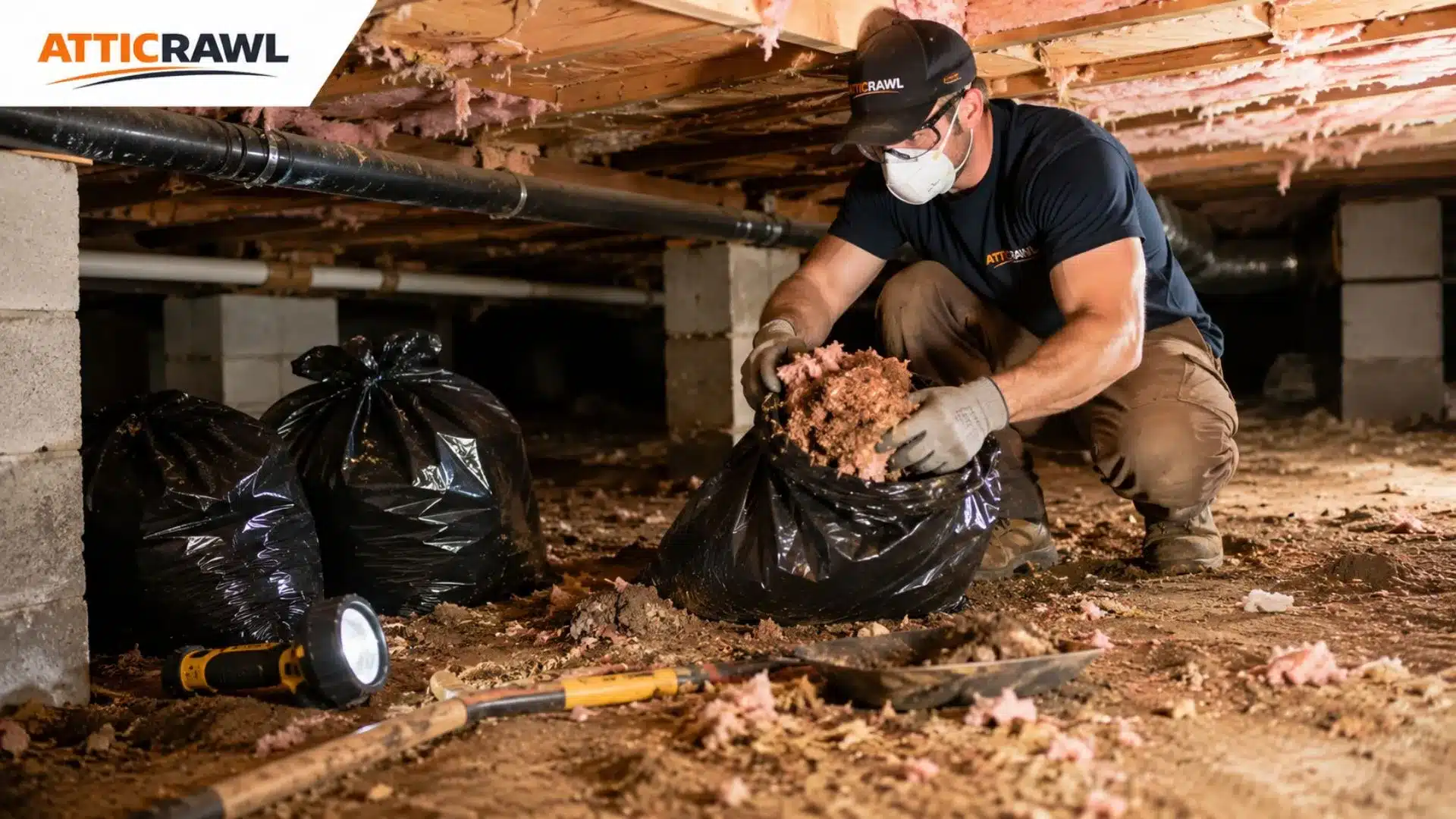
Encapsulation should never be treated as a cover for mold, droppings, odors, dead pests, or contaminated insulation. These issues can affect indoor air quality and may keep causing problems after the crawl space looks better from the outside.
This is especially important for homeowners who already smell musty odors, hear rodents, see droppings, or notice damaged insulation. Before the liner goes down, the crawl space may need cleaning, sanitation, rodent proofing, and insulation removal. Those steps help turn the project into a real repair instead of a cosmetic cover-up.
Dehumidifiers Add Maintenance and Ongoing Cost
Many sealed crawl spaces need a dehumidifier to keep humidity under control. That adds another part to maintain. The unit may need power, drainage, filter cleaning, service, and eventual replacement.
A crawl space encapsulation system is easier to trust when homeowners understand this from the start. A dehumidifier typically needs replacement or major service every 8 to 12 years. If the unit fails and nobody checks the space, humidity can rise again. So the project should include a realistic maintenance plan.
Access for Repairs Can Become More Complicated
A sealed crawl space can still be accessed, but repairs may become more delicate. Plumbing, wiring, HVAC lines, and foundation areas may sit behind liners, insulation, or sealed wall sections. If a future repair is needed, a contractor may have to move, cut, or reseal part of the system.
This does not make encapsulation a bad idea. It simply means access should be planned before the work starts. Clean entry points, visible inspection areas, and clear pathways can make future plumbing, electrical, HVAC, or foundation work easier.
Radon, Gas Appliances, Termites, and Flood Rules May Need Extra Planning
Some crawl spaces need extra safety checks before full sealing. Radon testing, fuel-burning appliances, termite inspection gaps, and flood-zone requirements can all affect the right approach.
The EPA action level for radon is 4 pCi/L, and the EPA also recommends considering action between 2 and 4 pCi/L because there is no known safe level of exposure. That matters because crawl spaces connect directly with soil. Homeowners should also ask whether gas appliances need ventilation planning, whether termite inspection areas must remain visible, and whether flood rules affect how the space can be sealed.
How Much Does Crawl Space Encapsulation Cost Once Prep Work Is Included?
Once prep work is included, crawl space encapsulation can cost much more than the liner itself. The final quote should separate installation, cleaning, repairs, waterproofing, and long-term equipment.
These are the common cost items to compare.
| Cost item | Average or common range | Why it matters |
| Average professional project | About $5,500 | Gives homeowners a baseline before comparing quotes |
| Typical professional range | $5,000 to $15,000 | Covers many standard projects based on size and condition |
| Basic per-square-foot cost | $2 to $4 per square foot | Applies to simpler encapsulation jobs |
| More extensive per-square-foot cost | $3 to $10 per square foot | Applies when cleaning, repairs, or extra features are needed |
| Small crawl space, around 1,000 sq. ft. | $2,000 to $10,000 | Shows how size affects the starting price |
| Medium crawl space, around 2,000 sq. ft. | $4,000 to $20,000 | Helps explain why larger homes get higher quotes |
| Large crawl space, around 3,000 sq. ft. | $6,000 to $30,000 | Shows how large or damaged spaces can become major projects |
| Vent issue repairs | $100 to $500 | Vents may need sealing, covers, or correction |
| Crack sealing | $200 to $1,000 | Foundation cracks should be handled before sealing |
| Pest-related repairs or treatment | $500 to $10,000 | Pest damage can raise prep costs quickly |
| Mold issues | $1,000 to $3,500 | Mold should be addressed before the crawl space is sealed |
| Water damage | $1,000 to $10,000 | Active or past water damage can change the whole project scope |
| Waterproofing | $1,500 to $7,000 | Needed when moisture is entering the crawl space |
| Structural repairs | $1,500 to $16,000 | Sagging floors or damaged framing can make the project much larger |
| Permits | $50 to $250 | Some municipalities require permits before work begins |
| Dehumidifier | $800 to $1,200 | Often needed to control humidity after sealing |
| Ongoing inspections | $100 to $300 | Helps check moisture, insulation, ductwork, and system condition |
Angi also notes that labor can make up 50% to 70% of the total project cost, especially when the crawl space needs prep work before installation. And when crawl space encapsulation insulation work is needed, old or damaged material may need to be removed and replaced before the space is sealed.
Is DIY Crawl Space Encapsulation a Bad Idea?
DIY crawl space work is a bad idea when the space has moisture damage, mold, pests, poor access, standing water, radon concerns, or HVAC equipment that needs proper planning. It may only make sense for a small, dry, clean, easy-to-access area where the homeowner understands moisture control, seam sealing, wall coverage, drainage, and safe material handling.
A crawl space encapsulation kit may save money upfront. However, the homeowner still has to clean the space, place the liner correctly, seal seams, handle disposal, manage humidity, and avoid covering up problems. If the prep is wrong, the savings can disappear once repairs are needed.
When Should You Fix Other Crawl Space Problems First?
Some crawl space problems should be handled before the space is sealed. Otherwise, encapsulation may hide the issue and make later repairs more frustrating. EPA guidance says indoor humidity should stay below 60% RH, with an ideal range of 30% to 50%, so moisture control should guide the entire project.
These are the problems to address first.
- Standing water or poor drainage: Encapsulation is not a replacement for drainage repair. Water should be directed away from the space before sealing.
- Mold or musty insulation: Affected materials may need removal or remediation first.
- Rodent droppings or pest damage: Cleanup and rodent proofing should happen before sealing.
- Damaged ducts or plumbing leaks: Leaks can keep creating moisture behind the liner.
- Cold floors or drafts: Crawl space insulation, air sealing, or rim joist insulation may be part of the better fix.
- Soil gas or radon concerns: Testing may be needed before and after sealing.
Encapsulation vs. Vapor Barrier vs. Crawl Space Insulation
Homeowners do not always need the most expensive option first. The right fix depends on the actual condition of the crawl space, the local climate, and whether the main issue is moisture, comfort, contamination, or air leakage.
These are the basic differences to compare.
| Option | Best for | Limitation |
| Basic vapor barrier | Dirt-floor crawl spaces with mild moisture | May not fully address humidity, vents, walls, or air leakage |
| Full encapsulation | Damp crawl spaces with recurring moisture and air quality concerns | Higher cost and more maintenance |
| Crawl space insulation | Cold floors, comfort issues, and energy loss | Does not solve standing water or pest contamination by itself |
| Cleaning and sanitation | Rodent waste, debris, odors, or contaminated areas | Does not control future moisture alone |
| Air sealing or rim joist work | Drafts and comfort issues | May need to be paired with moisture control |
This comparison helps homeowners avoid choosing based only on an energy bill. The better choice starts with what the crawl space is actually showing.
What Should You Ask Before Hiring a Contractor?
These are the questions to ask before you approve the project:
- What moisture or drainage problem did you find?
- Does the crawl space need cleaning, sanitation, or insulation removal first?
- Will you check for mold, pest damage, and plumbing leaks?
- What liner thickness and sealing method will be used?
- Will the walls, floor, piers, and seams be sealed correctly?
- Does the crawl space need a dehumidifier?
- How will future plumbing, HVAC, or electrical access be handled?
- Are there radon, termite, fuel-burning appliance, or flood-zone concerns?
- What maintenance will the homeowner be responsible for?
Is Crawl Space Encapsulation Still Worth It?
Crawl space sealing can still be worth it when the home has real moisture problems, pest concerns, poor air sealing, musty odors, or comfort issues, and the work is done correctly. The crawl space encapsulation benefits can include better moisture control, cleaner access, improved comfort, and fewer crawl space odors.
However, it may be excessive for a clean, dry, well-drained space with no humidity, mold, odor, or insulation problem. The best decision starts with an inspection instead of a pressure-based quote.
How Atticrawl Can Help You Choose the Right Crawl Space Fix
At Atticrawl, we help homeowners in New Jersey and Eastern Pennsylvania understand what is actually happening inside their crawl space before they invest in a larger project.
Our crawl space encapsulation services fit into a broader home-care approach that can include vapor barriers, crawl space insulation, crawl space and basement cleaning, rodent proofing, sanitation, insulation removal, air gap sealing, air duct repair, and basement rim joist insulation.
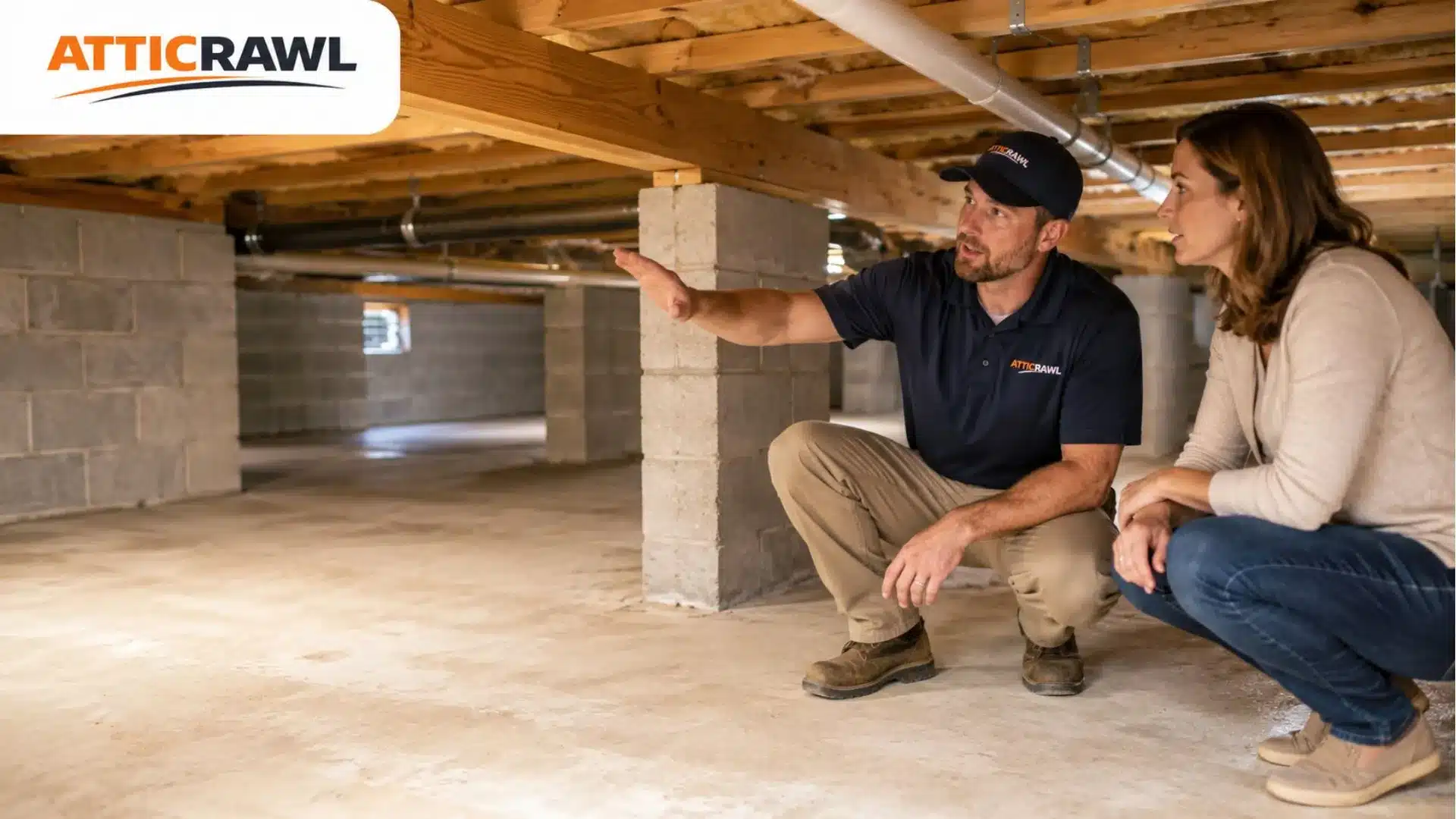
That matters because some homes need cleanup, moisture control, pest work, or insulation correction before full encapsulation makes sense. We can inspect the space, identify the real issue, and recommend a practical path based on what your home needs.
FAQs
What Is the Lifespan of an Encapsulated Crawl Space?
An encapsulated crawl space usually lasts about 15 to 25 years when it is installed correctly and maintained over time. The exact lifespan depends on the vapor barrier thickness, seam quality, drainage, humidity control, and how often the space is inspected.
Dehumidifiers, seals, and access points may need service sooner, so routine maintenance is what helps the full system last.
Is It Better to Encapsulate or Ventilate a Crawl Space?
It is better to encapsulate in many humid crawl spaces, while ventilation may work better in some dry, well-drained homes. The right choice depends on climate, moisture, drainage, and home design. In humid areas, open vents can bring damp air into the crawl space.
Is Sealing Your Crawl Space Worth It?
Sealing your crawl space is worth it when moisture, odors, pests, drafts, or comfort issues are affecting the home. It may have less value when the crawl space is already clean, dry, stable, and free from humidity or insulation problems.
Does Crawl Space Encapsulation Cause Mold?
Crawl space sealing should not cause mold when moisture is controlled correctly. Mold risk increases when wet materials, leaks, poor drainage, or high humidity are sealed inside the space. That is why cleaning, drying, repair work, and humidity control should come before the final seal.



Recent Comments