

Insulation removal costs can vary because no two attics or crawl spaces age the same way. A clean, easy-to-reach space may only need basic vacuuming and disposal. But old insulation mixed with rodent droppings, water damage, mold, or packed-down material takes more labor, safety steps, and cleanup.
Apart from that, the 2023 American Housing Survey found 15.7 million homes had signs of mice or rats, so hidden attic issues are not rare.
And for that reason, we’ll explain the main factors that affect insulation removal pricing and what services may be included in a quote. Here, you’ll also learn how to compare estimates and avoid unexpected costs.
How Much Does Insulation Removal Usually Cost?
According to HomeAdvisor, the insulation removal cost for a basic attic project usually falls between $600 and $1,200, with the average price near $900. HomeGuide says the insulation removal cost per sq ft is often $1 to $2 for removal only.
If you remove and replace the insulation, the price climbs because you are paying for cleanup, new material, and installation. Because of that, HomeGuide says removing and replacing attic insulation averages $2 to $6 per square foot.
For many homes, insulation removal and replacement costs can range between $1,500 and $8,000. But this depends on attic size, insulation type, access, disposal, and cleanup needs. Think of it like opening a suitcase you have not touched in years. You may find only old clothes, or you may find a bigger mess.
That is why Atticrawl offers free estimates based on the real condition of your attic or crawl space. Contact us today at 800-682-1602 if you want to learn more!
What Affects the Average Price of Attic Insulation Removal in 2026?
The cost of attic insulation removal in 2026 depends on what the contractor finds once the attic is opened. Some jobs are simple, while others turn into cleanup, sealing, and repair work.
Here are the main factors that can change your final price.
Size of the Attic or Crawl Space
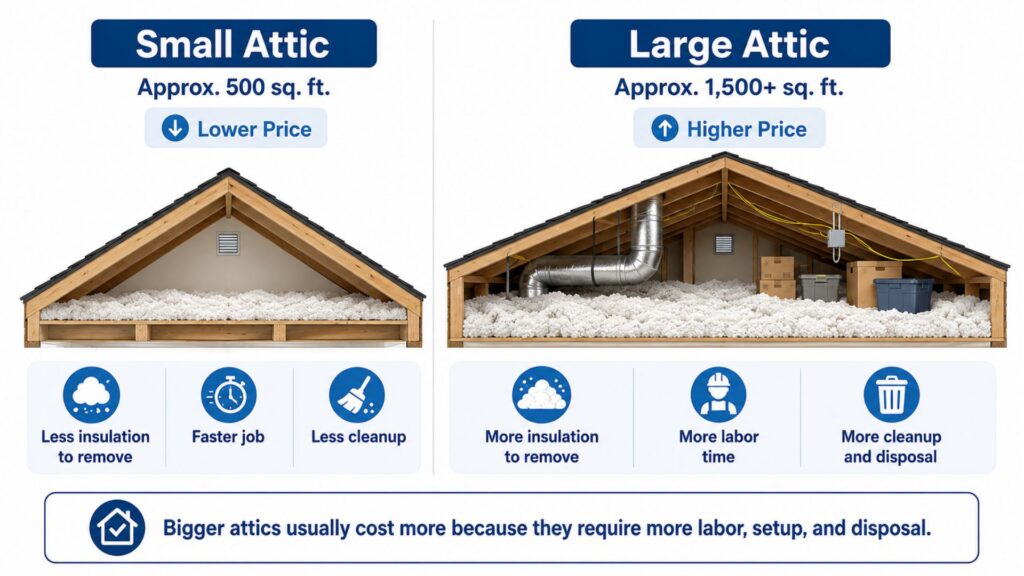
Square footage is one of the first things contractors check. A larger attic or crawl space means more insulation to remove, bag, vacuum, carry out, and dispose of. It also means more time in protective gear, more setup, and more cleanup.
A small, open attic may be a half-day job. A large attic with deep insulation can take much longer, especially if the crew needs to move around ducts, wiring, stored items, or tight corners.
Type of Insulation
Over the years, we’ve also seen that the type of insulation affects the tools, labor, and time needed. Loose-fill insulation is typically removed with a large vacuum system. Batt insulation usually has to be rolled, bagged, and carried out by hand.
Spray foam is harder to remove because it sticks to wood, roof decking, and framing. Also, it may need scraping, cutting, or more careful hand removal.
That extra labor can raise the price fast.
Access to the Space
Easy access keeps the work smoother.
A wide attic opening, enough headroom, and clear walking space can help crews work faster. But costs may rise when the attic has a small hatch, low clearance, steep rooflines, tight crawl areas, or blocked sections.
Think of it like moving furniture through a narrow hallway. The job is still possible, but every step takes more time.
Rodent Contamination
Old insulation can become a nesting area for mice, rats, squirrels, raccoons, bats, or other pests. If there are droppings, urine, nesting, odors, or torn insulation, the job is no longer just removal.
The CDC says rodent diseases can spread through contact with droppings, urine, saliva, bites, or contaminated air and food. That is why contaminated insulation may need careful removal, sanitation, and rodent proofing before new material goes in.
Atticrawl offers insulation removal, sanitation, and rodent proofing. This helps solve the full issue instead of only taking out the old insulation.
Mold, Moisture, or Water Damage
Wet insulation can lose its value and may lead to musty odors, mold, or wood damage. If water damage is present, the contractor may need to remove the damaged insulation, clean the area, and look for the source of the leak.
The EPA says water-damaged areas and items should be dried within 24 to 48 hours to help prevent mold growth. So if insulation has been wet for a while, cleanup may become part of the project before new insulation is added.
Cleanup, Sanitizing, and Disposal
Some attic jobs include more than removing insulation. The space may also need debris removal, odor treatment, sanitation, or special disposal. These services can raise the cost, but they help make the attic safer and cleaner.
This is also the best time to check for air leaks before new insulation is installed. Did you know that homeowners can save an average of 15% on heating and cooling costs by air sealing and adding insulation in attics, crawl spaces, and basement rim joists?
To better understand why insulation removal costs can vary, watch this short video showing what the process can involve. Keep in mind that the full job may also include cleanup, sanitation, disposal, air sealing, or replacement insulation, depending on the condition of the space.
Insulation Removal Only vs. Removal and Replacement
Removal only means the old insulation is taken out, but the attic is left without a fresh thermal layer. Removal and replacement costs more because it also includes new insulation material and installation labor.
Here is a simple comparison to show what each option includes and when it makes sense:
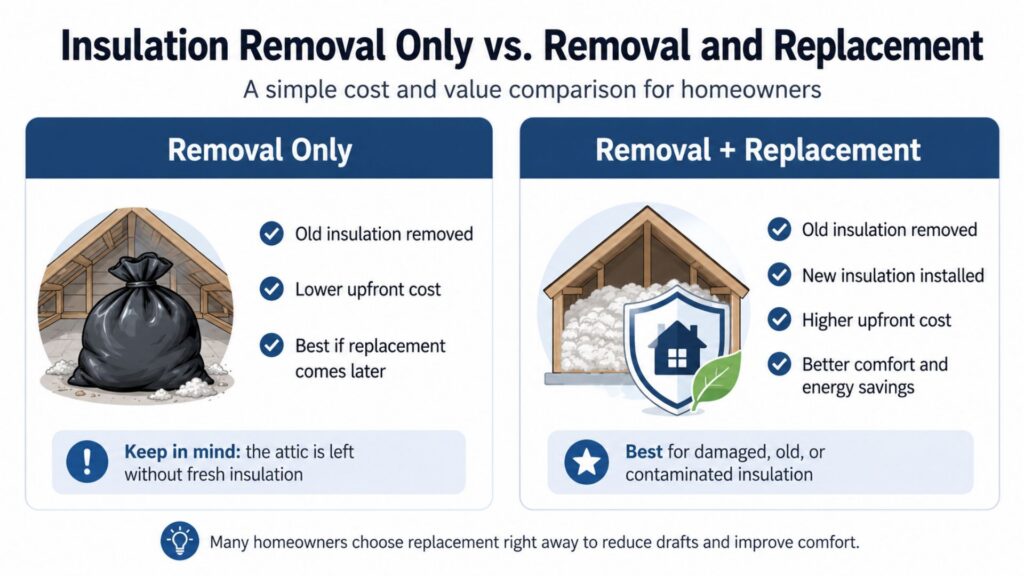
Atticrawl provides both insulation removal and insulation installation, so the old material can be removed, and the attic can be prepared for new insulation in one project. This can help improve comfort, reduce drafts, and limit wasted heating and cooling.Atticrawl provides both insulation removal and insulation installation, so the old material can be removed, and the attic can be prepared for new insulation in one project. This can help improve comfort, reduce drafts, and limit wasted heating and cooling.
Extra Services That Can Change the Final Price
Sometimes the attic tells a bigger story than the old insulation alone. The average price of attic insulation removal can change when the space needs repair, cleanup, or sealing before new material goes in.
Here are the extra services that may affect your quote:
- Attic cleaning
- Rubbish or debris removal
- Sanitation
- Rodent proofing
- Air gap sealing
- Air duct repair or replacement
- Mold or moisture-related cleanup
- New insulation installation
Note: We would not treat these services as “extras” that every home needs. But when there are hidden problems, they can be the difference between a quick cleanup and a real fix. For example, if rodents damaged the insulation and entered through small gaps, removal alone will not stop them from coming back. Those entry points may need to be sealed.
Atticrawl offers insulation removal, attic cleaning, sanitation, rodent proofing, air gap sealing, air duct repair, air duct replacement, crawl space services, and insulation installation.
That makes us a strong fit when insulation removal is only one part of the full attic or crawl space solution.
Contact us today to see how we can help you!
How to Compare Insulation Removal Quotes
The lowest quote is not always the best value. A low price may leave out cleanup, sanitation, disposal, air sealing, pest proofing, or new insulation, which can turn into a second bill later.
Before you choose a contractor, ask what is included in the price:
- Is disposal included?
- Is sanitation included if there is contamination?
- Will the contractor check for rodent entry points?
- Will they inspect for moisture or mold?
- Is new insulation included?
- Are air gaps or duct issues checked?
- Is the estimate based on square footage and condition?
This matters because air leakage can account for 25% to 40% of the energy used for heating and cooling. If gaps are left open after old insulation is removed, your attic may still waste energy.
A clear estimate should explain the full scope of work and not just the final price.
FAQs
Is It Worth Removing Old Insulation?
Yes, it can be worth it if the insulation is wet, moldy, compressed, dirty, pest-damaged, or no longer working well. Removing old insulation can also help prepare the attic for air sealing and new insulation.
How Much Does Attic Insulation Removal Cost?
Attic insulation removal often costs around $600 to $1,200, with an average of around $900. Larger attics, poor access, contamination, or damaged insulation can raise the price.
Is It Easy to Remove Insulation?
It may look simple, but it can be messy and unsafe. Old insulation may contain dust, pest waste, mold, sharp debris, or other contaminants. Professional removal is usually safer, especially in attics and crawl spaces.
When to Remove Insulation?
Insulation may need to be removed if there are high energy bills, drafts, musty odors, rodent signs, water damage, mold, heavy dust, or old compressed material. We think you should also remove it before installing new insulation if the existing material is damaged or contaminated.